
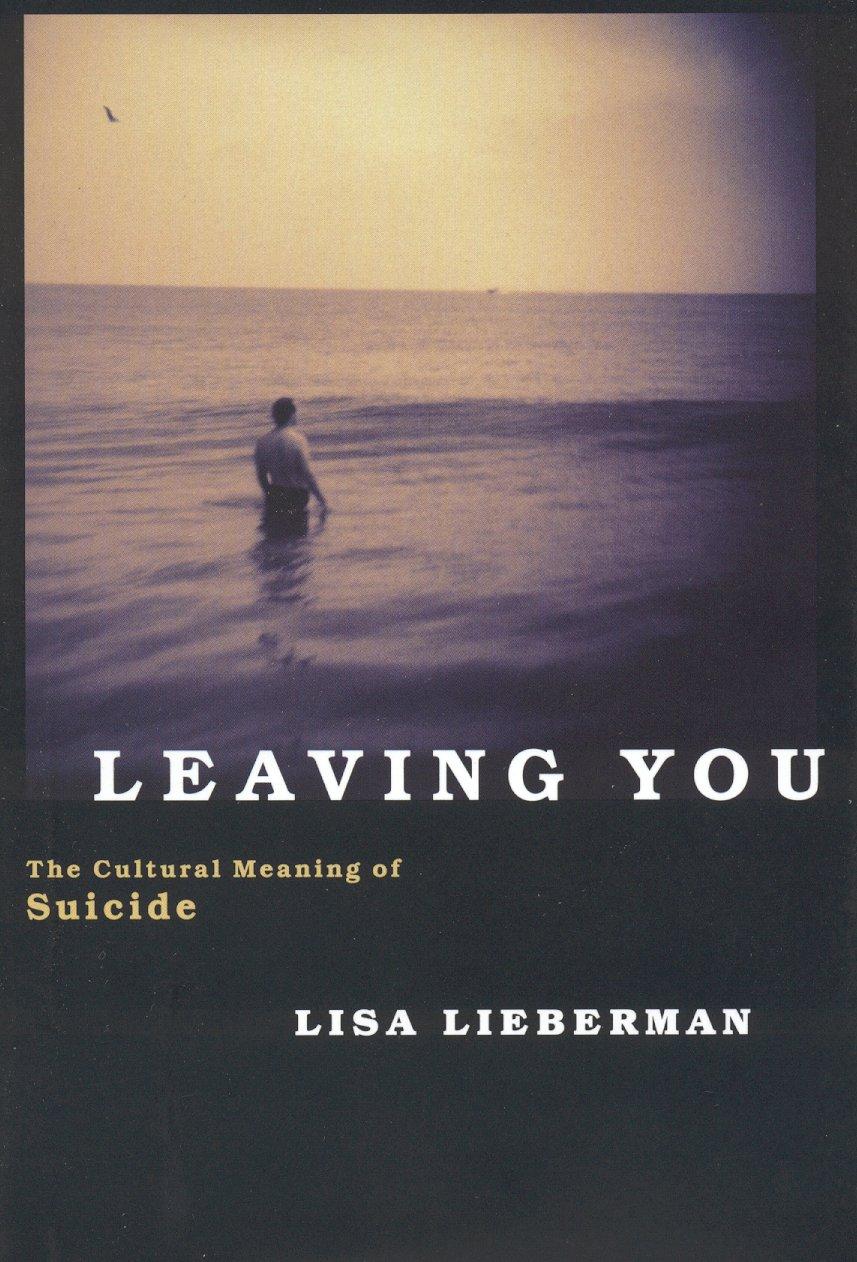
At heart, suicide is a subversive act: the assertion of individual will against public authority. How is it, then, that the act of suicide–one with defiant political implications–has come to be viewed as the last refuge of the self-destructive victim? In Leaving You, Lisa Lieberman explores the puzzle of this reigning perception of suicide. Drawing on diverse sources, from biblical stories to Romantic novels, philosophical theories, and psychiatric diagnoses, along with contemporary memoirs of suicidal depression, she shows how the idea of suicide as an act of protest has pervaded Western attitudes toward self-destruction, yet how our contemporary view attempts to deny suicide's disruptive potential by depriving the act of its defiance. Efforts to read meaning out of suicide are not hard to find today, Ms. Lieberman finds. Therapeutic strategies that treat suicide as an illness–medicating the depression while ignoring the underlying motivations that drive people to end their lives– effectively diminish individual responsibility for the decision to die. Sociological explanations that emphasize social causes over individual intentions serve to make suicides passive. Our reluctance to recognize the right to die, to concede this right even to the terminally ill, betrays our uneasiness with the power implied in the act of self-destruction. Ms. Lieberman aims to restore autonomy to the so-called victims by showing how suicide came to function as a vehicle for constructing identity.
Płać wygodnie kartą, Klarną, Apple Pay lub Google Pay. Nie jesteś zadowolony? Zawsze masz 14-dniową gwarancję zwrotu pieniędzy. Więcej przeczytasz w naszych warunkach. Masz pytania? Napisz do nas na hello@memmo.org.
Memmo ułatwia naukę – gdziekolwiek jesteś na świecie. U nas znajdziesz podręczniki i sprytne narzędzia do nauki w jednym miejscu: streszczenia, quizy, podcasty i fiszki. A do tego Ted, Twój kumpel do nauki, który odpowie na wszystko, co Cię nurtuje. Ponad 50 000 studentów już tu się uczy – stworzone, byś uczył się szybciej i mniej stresował.