
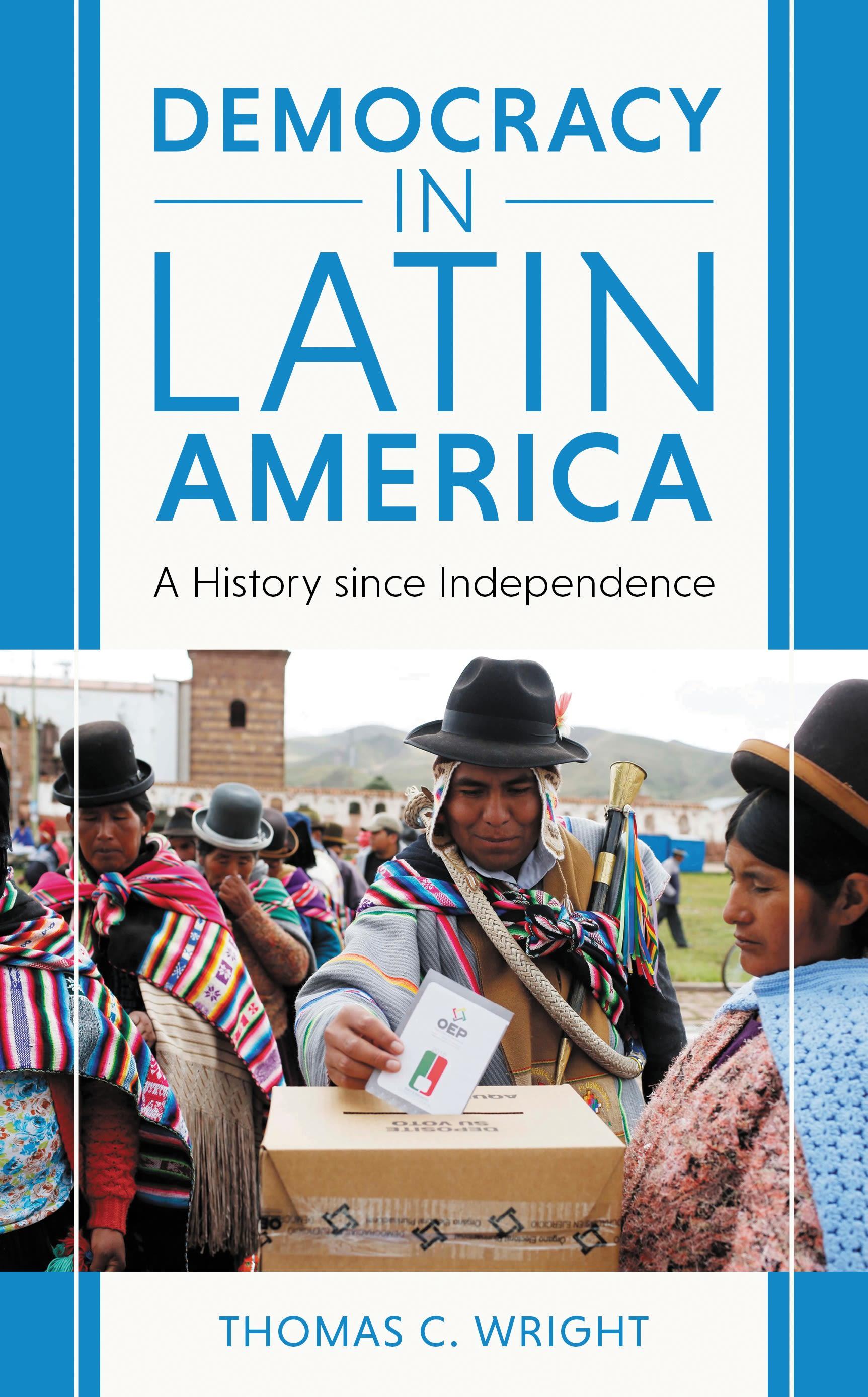
This book expertly traces the long, erratic, and incomplete path of Latin America’s political and socioeconomic democratization, from a group of colonies lacking democratic practice and culture up to the present. Using the lens of democracy defined by the charter of the Organization of American States (OAS), it examines the periods of US gunboat diplomacy in the Caribbean Basin, the Cold War, the state terrorist dictatorships of the 1970s and 1980s, the imposition of neoliberalism in the 1990s, and the rise of the Pink Tide in the new millennium.
The meaning of democracy has changed over time, from nineteenth-century liberalism—in which only a handful of wealthy males voted and individuals were responsible for their economic and social conditions—to governments in the late twentieth century that have embraced socioeconomic democracy by assuming responsibility (at least formally) for citizens’ welfare. Latin America’s movement toward democracy has not been linear. The book follows the appearance and evolution of both proponents and opponents of democracy over the last two centuries. The balance of these forces has shifted periodically, often in waves that swept across the entire region. Commitment to democracy does not guarantee implementation, but despite many setbacks, Latin America has made significant progress toward the democratic aspirations set forth in the OAS charter.
Thorough and accessibly written, Democracy in Latin America is an essential text for students studying Latin American politics and history.
The meaning of democracy has changed over time, from nineteenth-century liberalism—in which only a handful of wealthy males voted and individuals were responsible for their economic and social conditions—to governments in the late twentieth century that have embraced socioeconomic democracy by assuming responsibility (at least formally) for citizens’ welfare. Latin America’s movement toward democracy has not been linear. The book follows the appearance and evolution of both proponents and opponents of democracy over the last two centuries. The balance of these forces has shifted periodically, often in waves that swept across the entire region. Commitment to democracy does not guarantee implementation, but despite many setbacks, Latin America has made significant progress toward the democratic aspirations set forth in the OAS charter.
Thorough and accessibly written, Democracy in Latin America is an essential text for students studying Latin American politics and history.
Strony: 238
Kategoria: Statsvetenskap & Politik
e-ISBN: 9781538149355
Waga przesyłki: 1.2 kg
Wysyłka w ciągu: 1-2 dni
Płać wygodnie kartą, Klarną, Apple Pay lub Google Pay. Nie jesteś zadowolony? Zawsze masz 14-dniową gwarancję zwrotu pieniędzy. Więcej przeczytasz w naszych warunkach. Masz pytania? Napisz do nas na hello@memmo.org.
Memmo ułatwia naukę – gdziekolwiek jesteś na świecie. U nas znajdziesz podręczniki i sprytne narzędzia do nauki w jednym miejscu: streszczenia, quizy, podcasty i fiszki. A do tego Ted, Twój kumpel do nauki, który odpowie na wszystko, co Cię nurtuje. Ponad 50 000 studentów już tu się uczy – stworzone, byś uczył się szybciej i mniej stresował.