
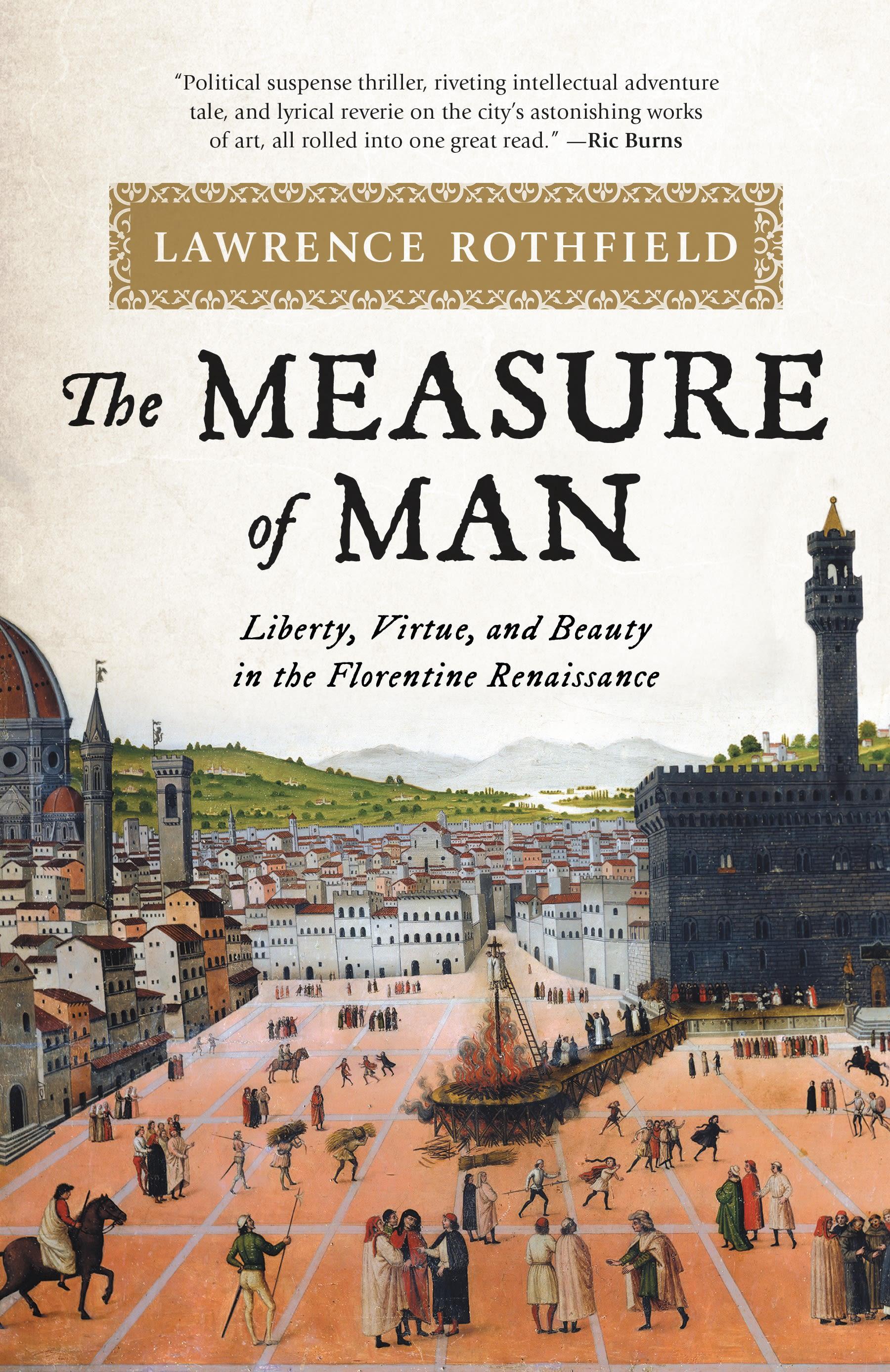
It was one of the most concentrated surges of creativity in the history of civilization. Between 1390 and 1537, Florence poured forth an astonishing stream of magnificent artworks. But Florentines did more during this brief period than create masterpieces. As citizens of a fractious republic threatened from below, without, and within, they also were driven to reimagine the political and ethical basis of their world, exploring the meaning and possibilities of liberty, virtue, and beauty.
This vibrant era is brought to life in rich detail by noted historian Lawrence Rothfield in The Measure of Man. His highly readable account introduces readers to a city teeming with memorable individuals and audacious risk-takers, capable of producing works of the most serene beauty and acts of the most shocking violence. Rothfield’s cast of characters includes book hunters and book burners, devout Christians and assassins, humble pharmacists and arrogant oligarchs, all caught up in a dramatic struggle—a tragic arc running from the cultural heights of republican idealism in the early fifteenth century, through the aesthetic flowerings and civic vicissitudes of the age of the Medici and Savonarola, to the brooding meditations of Machiavelli and Michelangelo over the fate of the dying republic.
This vibrant era is brought to life in rich detail by noted historian Lawrence Rothfield in The Measure of Man. His highly readable account introduces readers to a city teeming with memorable individuals and audacious risk-takers, capable of producing works of the most serene beauty and acts of the most shocking violence. Rothfield’s cast of characters includes book hunters and book burners, devout Christians and assassins, humble pharmacists and arrogant oligarchs, all caught up in a dramatic struggle—a tragic arc running from the cultural heights of republican idealism in the early fifteenth century, through the aesthetic flowerings and civic vicissitudes of the age of the Medici and Savonarola, to the brooding meditations of Machiavelli and Michelangelo over the fate of the dying republic.
Płać wygodnie kartą, Klarną, Apple Pay lub Google Pay. Nie jesteś zadowolony? Zawsze masz 14-dniową gwarancję zwrotu pieniędzy. Więcej przeczytasz w naszych warunkach. Masz pytania? Napisz do nas na hello@memmo.org.
Memmo ułatwia naukę – gdziekolwiek jesteś na świecie. U nas znajdziesz podręczniki i sprytne narzędzia do nauki w jednym miejscu: streszczenia, quizy, podcasty i fiszki. A do tego Ted, Twój kumpel do nauki, który odpowie na wszystko, co Cię nurtuje. Ponad 50 000 studentów już tu się uczy – stworzone, byś uczył się szybciej i mniej stresował.