
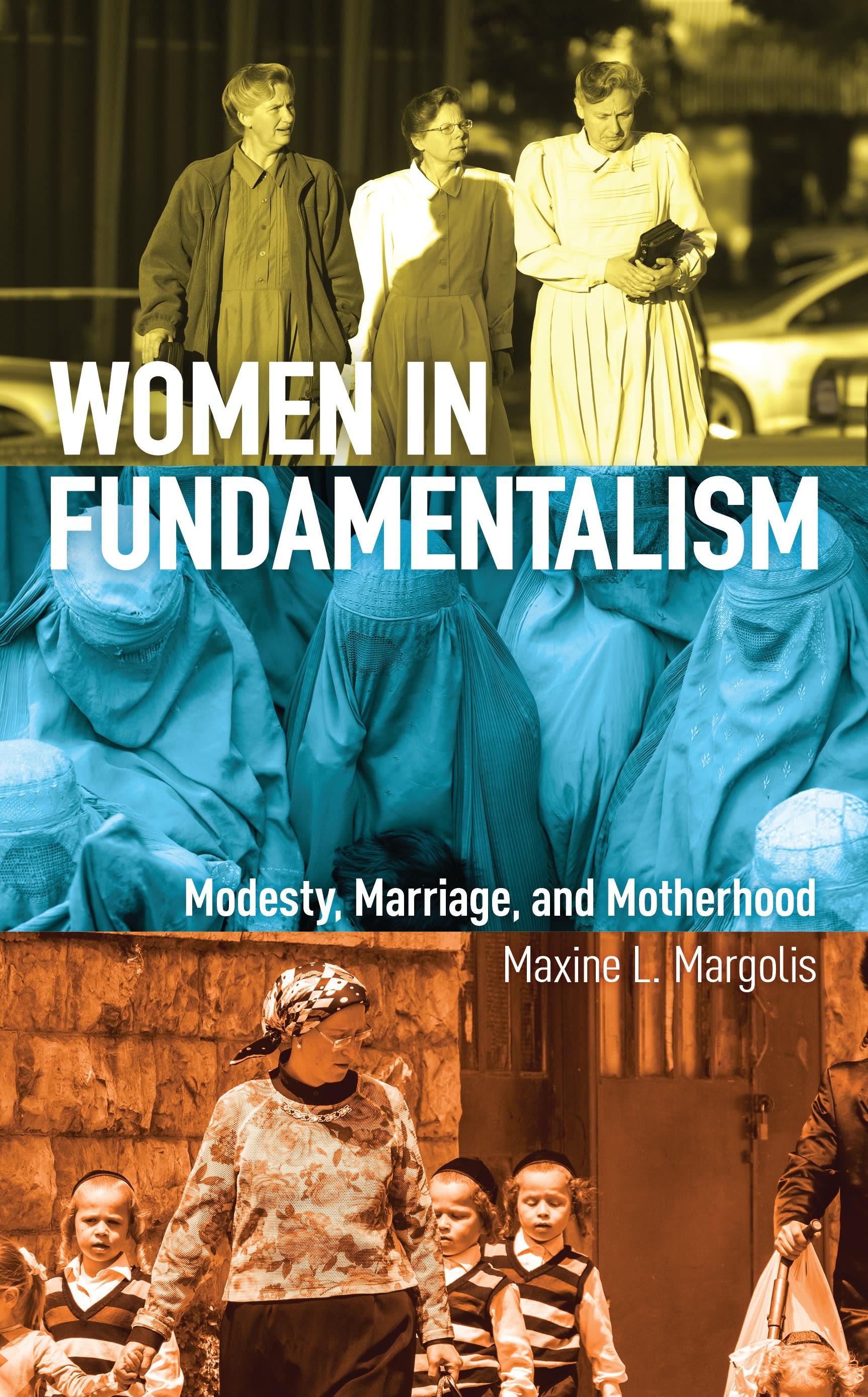
Women in Fundamentalism examines the striking similarities in three extreme fundamentalist religious communities in their views about and treatment of women. Whether Christian, Jewish or Muslim, the fundamentalist offshoots of these religions subject women to myriad restrictions in their daily lives. All three seek to maintain male control over women’s bodies, women’s activities, and the people with whom women associate. The three also share common ideologies about women's “true nature" and proper place. The specific cases covered in this text are (1) Mormon polygamists, specifically the Fundamentalist Church of Jesus Christ of Latter-Day Saints (FLDS), who live in Utah, Arizona, Texas, and isolated enclaves in Canada and Mexico; (2) the Satmar Hasidim of Williamsburg, Brooklyn, Kiryas Joel a town in Orange County, New York, and several settlements in Israel; and (3) an extreme brand of Islam practiced by the Pashtun ethnic group of Afghanistan and neighboring areas of Pakistan.
This book effectively bridges the disciplines of women’s studies, religion, and anthropology, making it a valuable resource for professors and students seeking new qualitative and quantitative material on women’s positions in various religious traditions.
This book effectively bridges the disciplines of women’s studies, religion, and anthropology, making it a valuable resource for professors and students seeking new qualitative and quantitative material on women’s positions in various religious traditions.
Płać wygodnie kartą, Klarną, Apple Pay lub Google Pay. Nie jesteś zadowolony? Zawsze masz 14-dniową gwarancję zwrotu pieniędzy. Więcej przeczytasz w naszych warunkach. Masz pytania? Napisz do nas na hello@memmo.org.
Memmo ułatwia naukę – gdziekolwiek jesteś na świecie. U nas znajdziesz podręczniki i sprytne narzędzia do nauki w jednym miejscu: streszczenia, quizy, podcasty i fiszki. A do tego Ted, Twój kumpel do nauki, który odpowie na wszystko, co Cię nurtuje. Ponad 50 000 studentów już tu się uczy – stworzone, byś uczył się szybciej i mniej stresował.