
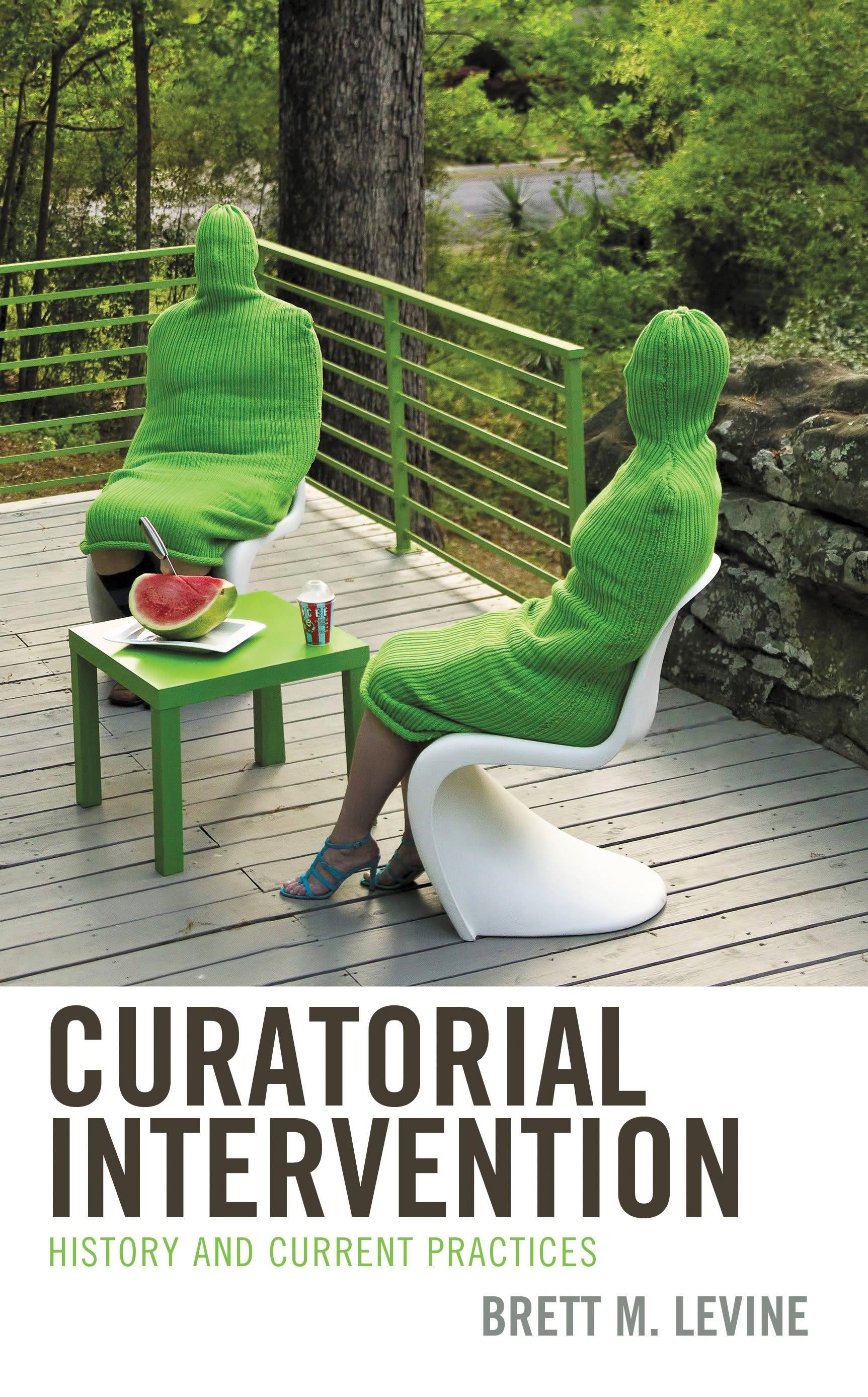
Curatorial Intervention: History and Current Practice, is a critical analysis of the dynamic roles curators play in shaping, mediating and, at times, redefining the artist-audience exchange.
Focusing on contemporary curatorial practice, this work critically examines the ways in which curators impact artists’ intentionality, and how this alters audiences’ experiences of reception. Through discussions with leading artists, curators, and arts administrators, Brett Levine posits a new paradigm for defining and contextualizing curatorial practice, while exploring how the former dialectic of intention and reception is today defined by the triad intention-intervention-reception. After situating the more traditional artist-audience relationship, he explores how extant theories of the art experience fail to either provide for curatorial practice or contextualize its operations while also overlooking questions of transparency, agency, and power.
Offering a new professional and operational model, Curatorial Intervention highlights how the artist-curator and curator-audience relations displace and, at times redefine, the experience of works of art. In response to the disenfranchisement of curatorial practice, and the emergence of every act of discernment being transformed into curating—as little more than a fashionable pastime—the author reasserts the dynamic roles that exist between artist, curator, and audience, and between object, operation, and experience.
Focusing on contemporary curatorial practice, this work critically examines the ways in which curators impact artists’ intentionality, and how this alters audiences’ experiences of reception. Through discussions with leading artists, curators, and arts administrators, Brett Levine posits a new paradigm for defining and contextualizing curatorial practice, while exploring how the former dialectic of intention and reception is today defined by the triad intention-intervention-reception. After situating the more traditional artist-audience relationship, he explores how extant theories of the art experience fail to either provide for curatorial practice or contextualize its operations while also overlooking questions of transparency, agency, and power.
Offering a new professional and operational model, Curatorial Intervention highlights how the artist-curator and curator-audience relations displace and, at times redefine, the experience of works of art. In response to the disenfranchisement of curatorial practice, and the emergence of every act of discernment being transformed into curating—as little more than a fashionable pastime—the author reasserts the dynamic roles that exist between artist, curator, and audience, and between object, operation, and experience.
Płać wygodnie kartą, Klarną, Apple Pay lub Google Pay. Nie jesteś zadowolony? Zawsze masz 14-dniową gwarancję zwrotu pieniędzy. Więcej przeczytasz w naszych warunkach. Masz pytania? Napisz do nas na hello@memmo.org.
Memmo ułatwia naukę – gdziekolwiek jesteś na świecie. U nas znajdziesz podręczniki i sprytne narzędzia do nauki w jednym miejscu: streszczenia, quizy, podcasty i fiszki. A do tego Ted, Twój kumpel do nauki, który odpowie na wszystko, co Cię nurtuje. Ponad 50 000 studentów już tu się uczy – stworzone, byś uczył się szybciej i mniej stresował.