
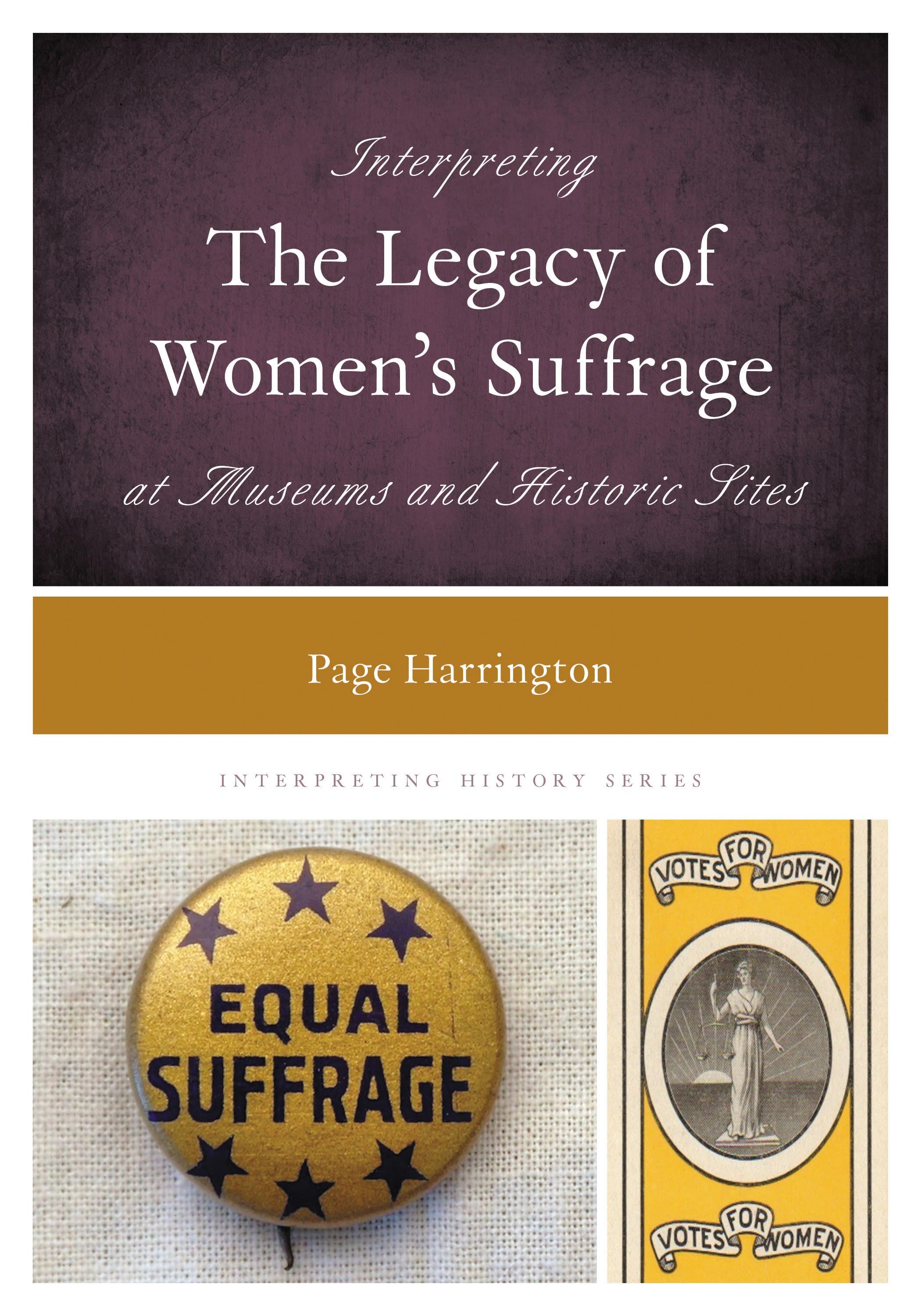
Interpreting the Legacy of Women’s Suffrage at Museums and Historic Sites is an invaluable guide for public historians and practitioners who wish to share an updated historic narrative that is inclusive of the full breadth of the movement, including the pervasive bias and racism. This book acknowledges the barriers faced by history practitioners, from the difficulty in finding materials that document the political actions by women of color, to our own reluctance to broach this disparity, and then offers practical solutions and techniques for bringing about a larger shift in organizational culture.
To begin, this book includes a chronological primer on the US women’s suffrage movement and the events around the 50th, 75th, and finally the centennial of the ratification of the 19th Amendment that took place in 2020. Additionally, four women’s history practitioners share case studies from their work at the National Woman’s Party, the Frances Willard House, and the General Federation of Women’s Clubs. Each organization is moving forward to confront the racist tactics, or documented racism within their own history. The final case study written by Chick History showcases their multi-year project to digitize and make available family and local history related to African American women’s political history in Tennessee before 1930. The case studies can be used as models for best practices, cautionary examples of lessons learned, and can be replicated at sites of all sizes.
Lastly, the book provides an expansive list of online resources as well as a discussion guide on the history of women’s voting rights. Interpreting the Legacy of Women’s Suffrage at Museums and Historic Sites will be helpful to both practitioners and community organizations as they engage in public discussions or convene focus groups around the sensitive topics of bias and racism within the larger women’s suffrage movement.
To begin, this book includes a chronological primer on the US women’s suffrage movement and the events around the 50th, 75th, and finally the centennial of the ratification of the 19th Amendment that took place in 2020. Additionally, four women’s history practitioners share case studies from their work at the National Woman’s Party, the Frances Willard House, and the General Federation of Women’s Clubs. Each organization is moving forward to confront the racist tactics, or documented racism within their own history. The final case study written by Chick History showcases their multi-year project to digitize and make available family and local history related to African American women’s political history in Tennessee before 1930. The case studies can be used as models for best practices, cautionary examples of lessons learned, and can be replicated at sites of all sizes.
Lastly, the book provides an expansive list of online resources as well as a discussion guide on the history of women’s voting rights. Interpreting the Legacy of Women’s Suffrage at Museums and Historic Sites will be helpful to both practitioners and community organizations as they engage in public discussions or convene focus groups around the sensitive topics of bias and racism within the larger women’s suffrage movement.
Płać wygodnie kartą, Klarną, Apple Pay lub Google Pay. Nie jesteś zadowolony? Zawsze masz 14-dniową gwarancję zwrotu pieniędzy. Więcej przeczytasz w naszych warunkach. Masz pytania? Napisz do nas na hello@memmo.org.
Memmo ułatwia naukę – gdziekolwiek jesteś na świecie. U nas znajdziesz podręczniki i sprytne narzędzia do nauki w jednym miejscu: streszczenia, quizy, podcasty i fiszki. A do tego Ted, Twój kumpel do nauki, który odpowie na wszystko, co Cię nurtuje. Ponad 50 000 studentów już tu się uczy – stworzone, byś uczył się szybciej i mniej stresował.