
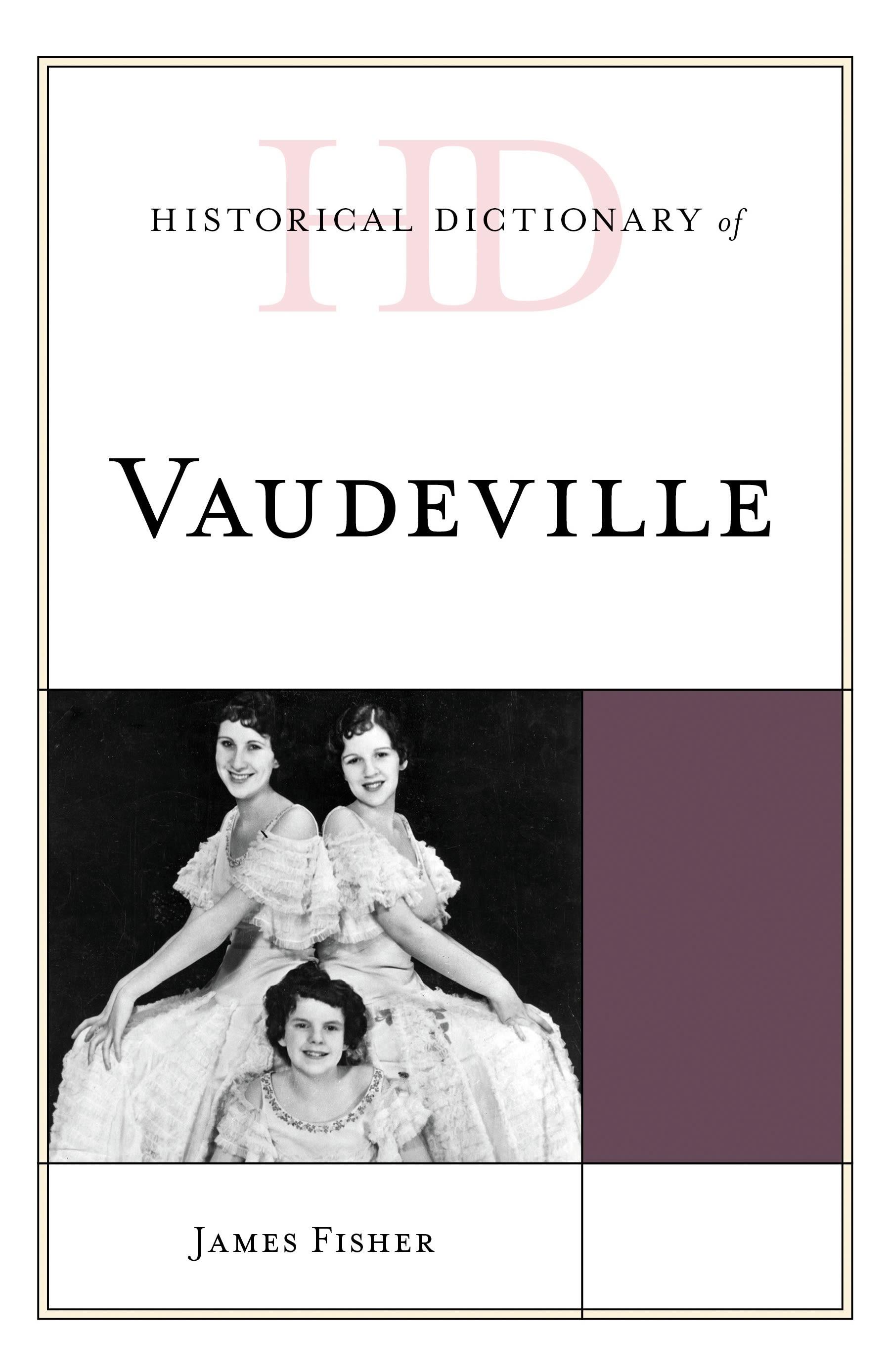
Vaudeville, as it is commonly known today, began as a response to scandalous variety performances appealing mostly to adult, male patrons. When former minstrel performer and balladeer Tony Pastor opened the Fourteenth Street Theatre in New York in 1881, he was guided by a mission to provide family-friendly variety shows in hopes of drawing in that portion of the audience – women and children – otherwise inherently excluded from variety bills prior to 1881. There he perfected a framework for family-oriented amusements of the highest obtainable quality and style.
Historical Dictionary of Vaudeville contains a chronology, an introduction, an extensive bibliography, and the dictionary section has more than 1,000 cross-referenced entries on performing artists, managers and agents, theatre facilities, and the terminology central to the history of vaudeville. This book is an excellent resource for students, researchers, and anyone wanting to know more about vaudeville.
Historical Dictionary of Vaudeville contains a chronology, an introduction, an extensive bibliography, and the dictionary section has more than 1,000 cross-referenced entries on performing artists, managers and agents, theatre facilities, and the terminology central to the history of vaudeville. This book is an excellent resource for students, researchers, and anyone wanting to know more about vaudeville.
Płać wygodnie kartą, Klarną, Apple Pay lub Google Pay. Nie jesteś zadowolony? Zawsze masz 14-dniową gwarancję zwrotu pieniędzy. Więcej przeczytasz w naszych warunkach. Masz pytania? Napisz do nas na hello@memmo.org.
Memmo ułatwia naukę – gdziekolwiek jesteś na świecie. U nas znajdziesz podręczniki i sprytne narzędzia do nauki w jednym miejscu: streszczenia, quizy, podcasty i fiszki. A do tego Ted, Twój kumpel do nauki, który odpowie na wszystko, co Cię nurtuje. Ponad 50 000 studentów już tu się uczy – stworzone, byś uczył się szybciej i mniej stresował.