
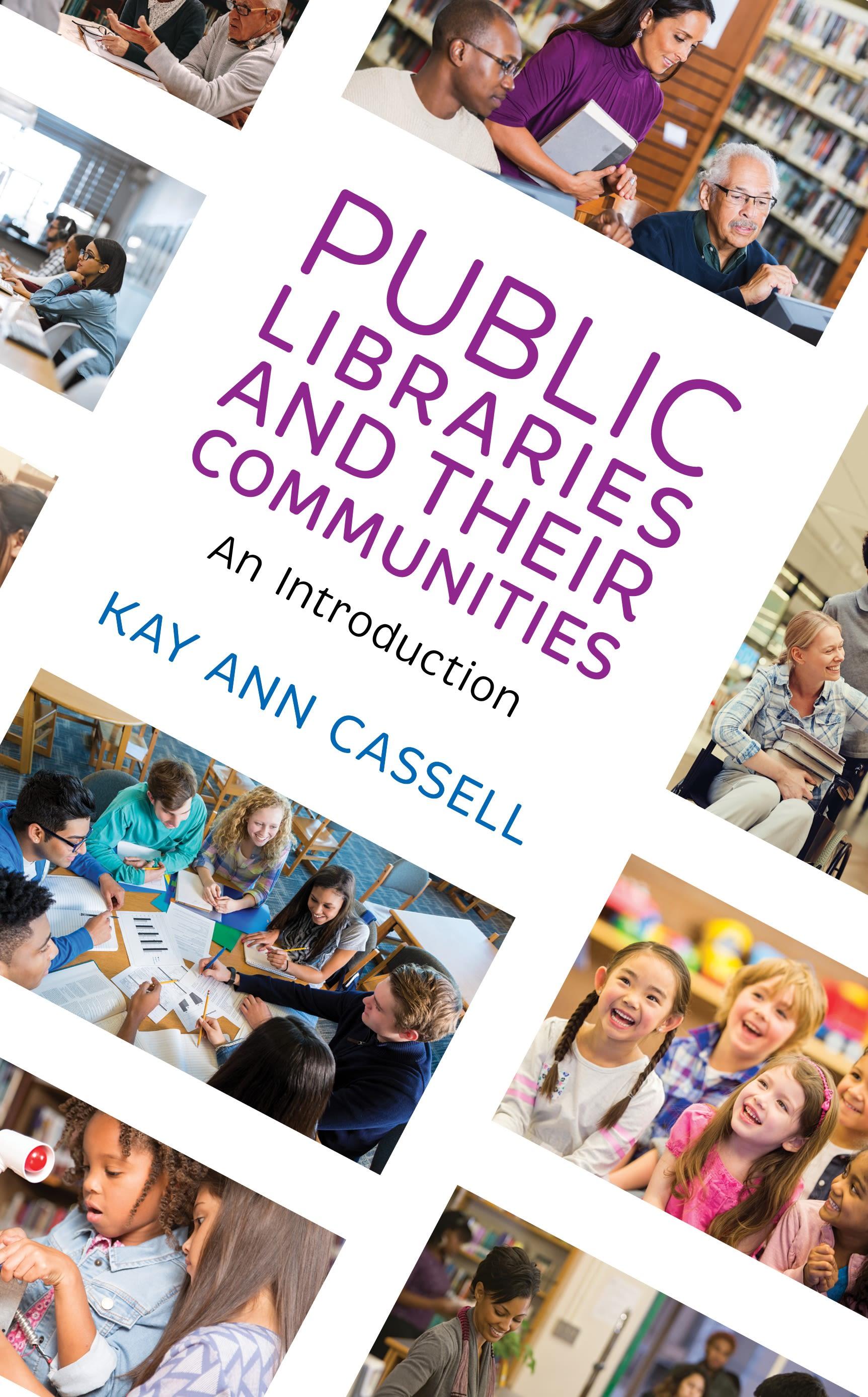
Public Libraries and Their Communities: An Introduction provide an overview of public librarianship today.
It covers library organization, policy development, staffing, fiscal organization including funding sources and budgets, the legal framework, relationships with local and state governments, advocacy, services and service development for different age groups and for different groups of users, development of programming and outreach, collection development, promotion and marketing, and current issues and trends.
In addition to context and concepts, the book uses many examples from both large and small public libraries to bring principles to life. Examples include real library policies, case studies, strategic planning, organization charts and library budgets.
Many think that public libraries are not complicated to run.This book aims to show that public libraries are very complicated and require much skill on the part of the director, staff, and Board of Trustees to meet the needs of their local users.Advocacy and marketing have become important parts of the work of public libraries. Funding is always challenging so public libraries must constantly be making the local government and its citizens aware of the public library – its programs, collections, and services.
This book's focus is on how public libraries reach beyond the walls of their buildings and touch the lives of their citizens.Meeting community interests and needs is essential for 21st century public libraries.
For students the book offers discussion questions at the end of each chapter. These questions also provide discussion starters for public library staff development.
It covers library organization, policy development, staffing, fiscal organization including funding sources and budgets, the legal framework, relationships with local and state governments, advocacy, services and service development for different age groups and for different groups of users, development of programming and outreach, collection development, promotion and marketing, and current issues and trends.
In addition to context and concepts, the book uses many examples from both large and small public libraries to bring principles to life. Examples include real library policies, case studies, strategic planning, organization charts and library budgets.
Many think that public libraries are not complicated to run.This book aims to show that public libraries are very complicated and require much skill on the part of the director, staff, and Board of Trustees to meet the needs of their local users.Advocacy and marketing have become important parts of the work of public libraries. Funding is always challenging so public libraries must constantly be making the local government and its citizens aware of the public library – its programs, collections, and services.
This book's focus is on how public libraries reach beyond the walls of their buildings and touch the lives of their citizens.Meeting community interests and needs is essential for 21st century public libraries.
For students the book offers discussion questions at the end of each chapter. These questions also provide discussion starters for public library staff development.
Płać wygodnie kartą, Klarną, Apple Pay lub Google Pay. Nie jesteś zadowolony? Zawsze masz 14-dniową gwarancję zwrotu pieniędzy. Więcej przeczytasz w naszych warunkach. Masz pytania? Napisz do nas na hello@memmo.org.
Memmo ułatwia naukę – gdziekolwiek jesteś na świecie. U nas znajdziesz podręczniki i sprytne narzędzia do nauki w jednym miejscu: streszczenia, quizy, podcasty i fiszki. A do tego Ted, Twój kumpel do nauki, który odpowie na wszystko, co Cię nurtuje. Ponad 50 000 studentów już tu się uczy – stworzone, byś uczył się szybciej i mniej stresował.