
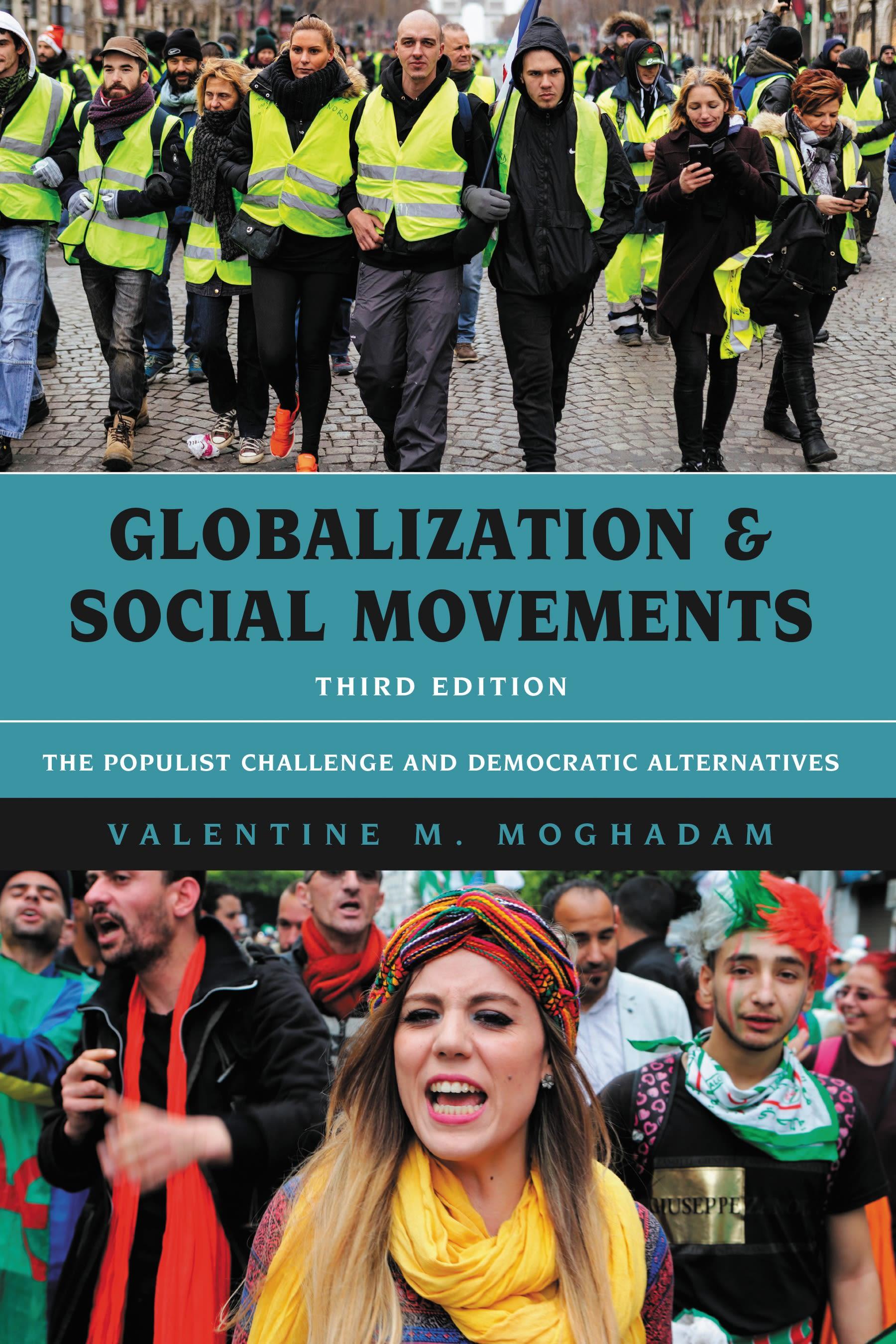
What is the connection between globalization and social movements? How have people collectively responded to globalization’s economic, political, and cultural manifestations and challenges? And how are contemporary social movements and networks affecting the progression of globalization? This clear and concise book answers these questions by examining social movements and transnational networks in the context of globalization in all its forms—economic, political, cultural, and technological alike. Deftly combining nuanced theory with rich empirical examples, leading scholar Valentine M. Moghadam provides four in-depth case studies: global feminism and transnational feminist networks; global Islamism ranging from parliamentary to extremist; the global justice movement and the World Social Forum; and varieties and gender dynamics of populisms. In a new chapter, she draws attention to the emergence and growth of right-wing populist movements, political parties, and governments, not only in Europe but in the Global South as well. Defining globalization as a complex process in which the movement of capital, peoples, organizations, movements, and ideas takes on an increasingly international form, the author shows how growing physical and electronic mobility has helped to create dynamic global social movements.
Exploring the historical roots of Islamism, feminism, global justice, and populism, Moghadam also shows how these movements have been stimulated by relatively recent globalization processes. She reveals their similarities and differences, internal differentiation, relationship to globalization and states, and the opportunities and challenges that the movements face. Assessing the extent to which the movements contribute to democracy, or—conversely—endanger it, she considers prospects for a renewed and more robust form of democracy. Informed by feminist, world-systems, world polity, and social movement theories in a seamlessly integrated framework, her work will be essential reading for all students of globalization.
Exploring the historical roots of Islamism, feminism, global justice, and populism, Moghadam also shows how these movements have been stimulated by relatively recent globalization processes. She reveals their similarities and differences, internal differentiation, relationship to globalization and states, and the opportunities and challenges that the movements face. Assessing the extent to which the movements contribute to democracy, or—conversely—endanger it, she considers prospects for a renewed and more robust form of democracy. Informed by feminist, world-systems, world polity, and social movement theories in a seamlessly integrated framework, her work will be essential reading for all students of globalization.
Płać wygodnie kartą, Klarną, Apple Pay lub Google Pay. Nie jesteś zadowolony? Zawsze masz 14-dniową gwarancję zwrotu pieniędzy. Więcej przeczytasz w naszych warunkach. Masz pytania? Napisz do nas na hello@memmo.org.
Memmo ułatwia naukę – gdziekolwiek jesteś na świecie. U nas znajdziesz podręczniki i sprytne narzędzia do nauki w jednym miejscu: streszczenia, quizy, podcasty i fiszki. A do tego Ted, Twój kumpel do nauki, który odpowie na wszystko, co Cię nurtuje. Ponad 50 000 studentów już tu się uczy – stworzone, byś uczył się szybciej i mniej stresował.