
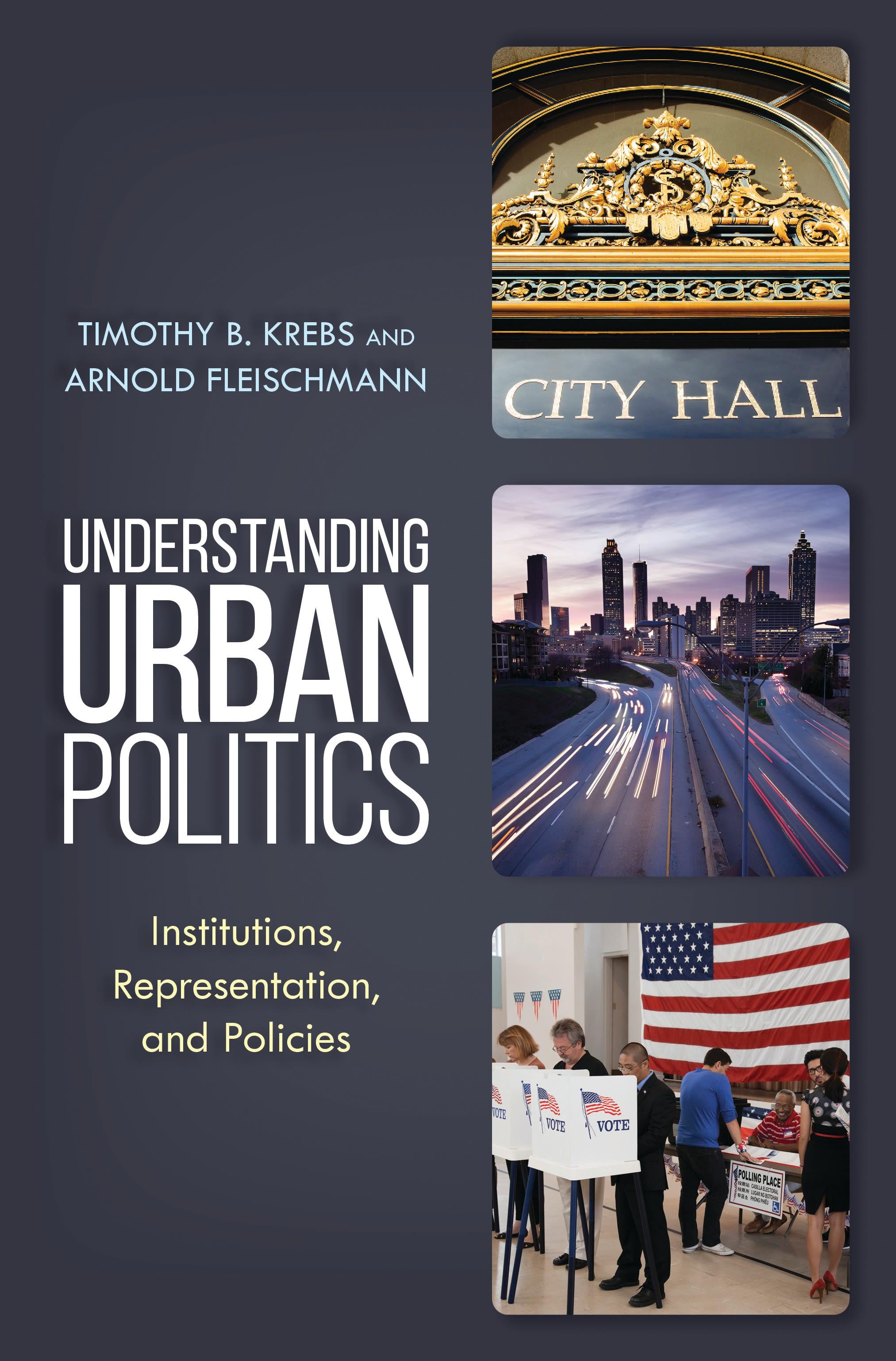
In Understanding Urban Politics: Institutions, Representation, and Policies, Timothy B. Krebs and Arnold Fleischmann introduce a framework that focuses on the role of institutions in establishing the political “rules of the game,” the representativeness of city government, the influence of participation in local democracy, and how each of these features influences the adoption and implementation of public policies. Part 1 lays the groundwork for the rest of the book by exploring the many meanings of “urban,” analyzing what local governments do, and providing a history of American urban development.
Part 2 examines the organizations and procedures that are central to urban politics and policy making: intergovernmental relations, local legislatures, and the local executive branch. Part 3 looks at elections and voting, local campaigns, and non-voting forms of participation. The four chapters in Part 4 focus on the policy process and the delivery of local services, local government finances, “Building the City” (economic development, land use, and housing), and policies affecting the quality of life (public safety, the environment, “morality” issues, and urban amenities).
Krebs and Fleischmann bolster students’ learning and skills with guiding questions at the start of each chapter, which ends with key terms, a summary, discussion questions, and research exercises. The appendix and website aid these efforts, as does a website for instructors.
Part 2 examines the organizations and procedures that are central to urban politics and policy making: intergovernmental relations, local legislatures, and the local executive branch. Part 3 looks at elections and voting, local campaigns, and non-voting forms of participation. The four chapters in Part 4 focus on the policy process and the delivery of local services, local government finances, “Building the City” (economic development, land use, and housing), and policies affecting the quality of life (public safety, the environment, “morality” issues, and urban amenities).
Krebs and Fleischmann bolster students’ learning and skills with guiding questions at the start of each chapter, which ends with key terms, a summary, discussion questions, and research exercises. The appendix and website aid these efforts, as does a website for instructors.
Strony: 368
Kategoria: Statsvetenskap & Politik
e-ISBN: 9781538105238
Waga przesyłki: 1.2 kg
Wysyłka w ciągu: 1-2 dni
Płać wygodnie kartą, Klarną, Apple Pay lub Google Pay. Nie jesteś zadowolony? Zawsze masz 14-dniową gwarancję zwrotu pieniędzy. Więcej przeczytasz w naszych warunkach. Masz pytania? Napisz do nas na hello@memmo.org.
Memmo ułatwia naukę – gdziekolwiek jesteś na świecie. U nas znajdziesz podręczniki i sprytne narzędzia do nauki w jednym miejscu: streszczenia, quizy, podcasty i fiszki. A do tego Ted, Twój kumpel do nauki, który odpowie na wszystko, co Cię nurtuje. Ponad 50 000 studentów już tu się uczy – stworzone, byś uczył się szybciej i mniej stresował.