
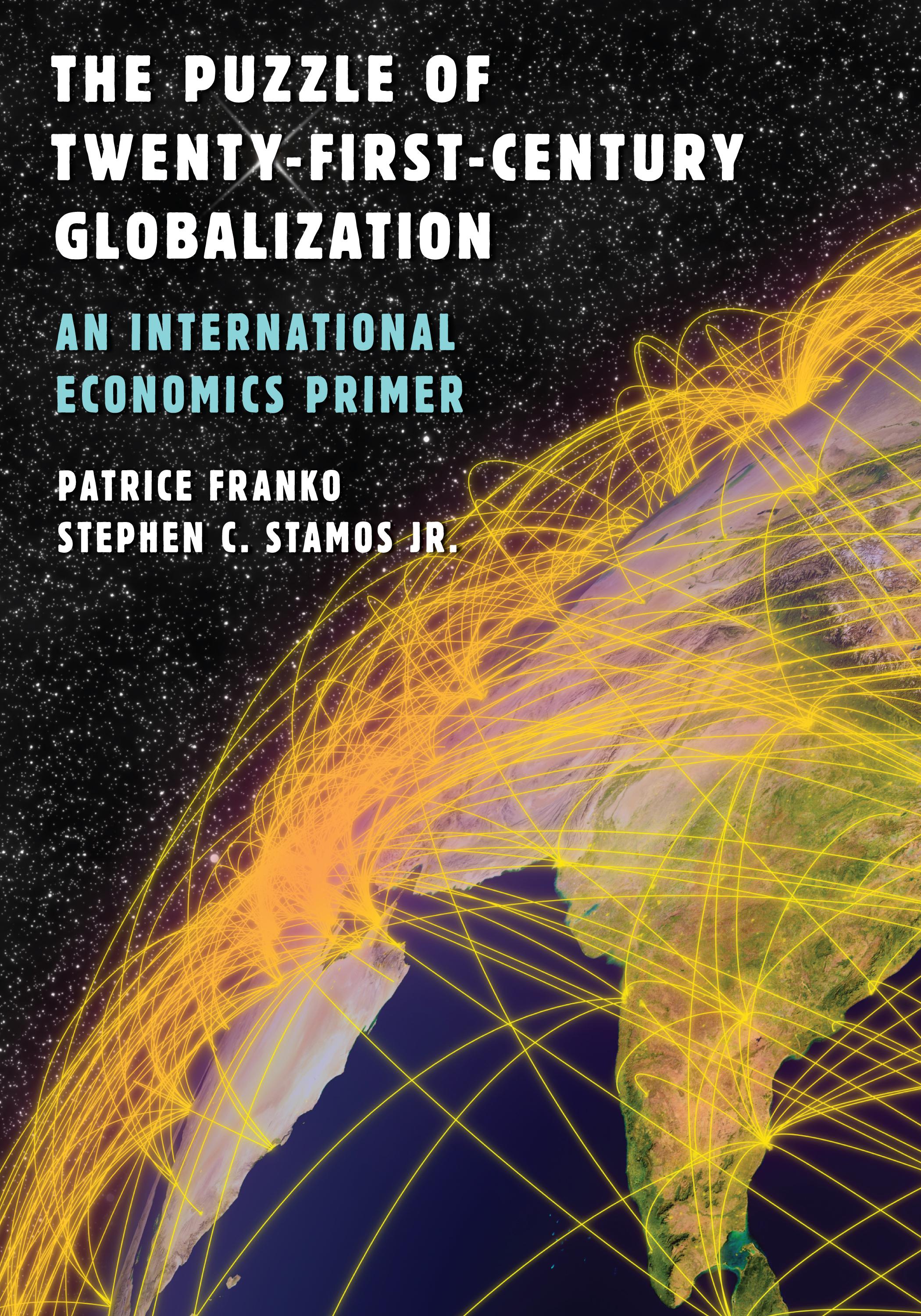
The Puzzle of Twenty-First-Century Globalization explores the opportunities and challenges of our international economic system. Patrice Franko and Stephen Stamos clearly trace how the ways we produce, finance, and trade goods and services are profoundly shaped by technologies of communication, transportation, and trade. Globalization encourages hyper-specialization—lavishly rewarding those with the skill sets to serve the global marketplace and punishing those poorly positioned to compete. Globalized systems have created great prosperity—along with instability, vulnerability, and backlash.
Few genuinely understand the complex underpinnings of our international economic system—and these specialists tend to operate in isolated silos of finance, trade, and production. But without appreciating how systems come together, we cannot explain political reactions against the costs of globalization such as the Brexit vote or the rise of Donald Trump. We don’t value the changing geo-economic importance of the developing world nor the deep threat to ecosystems.
This book is the first to emphasize the interrelated economic aspects of globalization from an interdisciplinary perspective. By placing an introduction to trade, finance, and multinational production in the same text that discusses the changing role of developing countries and the challenges to the environment, the authors provide the novice with the basics to understand the global economy while also challenging advanced students to appreciate global connectivity.
Closing the knowledge gap in international economics, the authors present the historical context, interdisciplinary grounding, and competing political perspectivesneededto encourage sound critical thinking around contemporary globalization. They provide the essential global economic tools to equip all readers to make decisions that may foster a fairer, more sustainable global system.
Few genuinely understand the complex underpinnings of our international economic system—and these specialists tend to operate in isolated silos of finance, trade, and production. But without appreciating how systems come together, we cannot explain political reactions against the costs of globalization such as the Brexit vote or the rise of Donald Trump. We don’t value the changing geo-economic importance of the developing world nor the deep threat to ecosystems.
This book is the first to emphasize the interrelated economic aspects of globalization from an interdisciplinary perspective. By placing an introduction to trade, finance, and multinational production in the same text that discusses the changing role of developing countries and the challenges to the environment, the authors provide the novice with the basics to understand the global economy while also challenging advanced students to appreciate global connectivity.
Closing the knowledge gap in international economics, the authors present the historical context, interdisciplinary grounding, and competing political perspectivesneededto encourage sound critical thinking around contemporary globalization. They provide the essential global economic tools to equip all readers to make decisions that may foster a fairer, more sustainable global system.
Strony: 282
Kategoria: Ekonomi & Utveckling
e-ISBN: 9781538100264
Waga przesyłki: 1.2 kg
Wysyłka w ciągu: 1-2 dni
Płać wygodnie kartą, Klarną, Apple Pay lub Google Pay. Nie jesteś zadowolony? Zawsze masz 14-dniową gwarancję zwrotu pieniędzy. Więcej przeczytasz w naszych warunkach. Masz pytania? Napisz do nas na hello@memmo.org.
Memmo ułatwia naukę – gdziekolwiek jesteś na świecie. U nas znajdziesz podręczniki i sprytne narzędzia do nauki w jednym miejscu: streszczenia, quizy, podcasty i fiszki. A do tego Ted, Twój kumpel do nauki, który odpowie na wszystko, co Cię nurtuje. Ponad 50 000 studentów już tu się uczy – stworzone, byś uczył się szybciej i mniej stresował.