
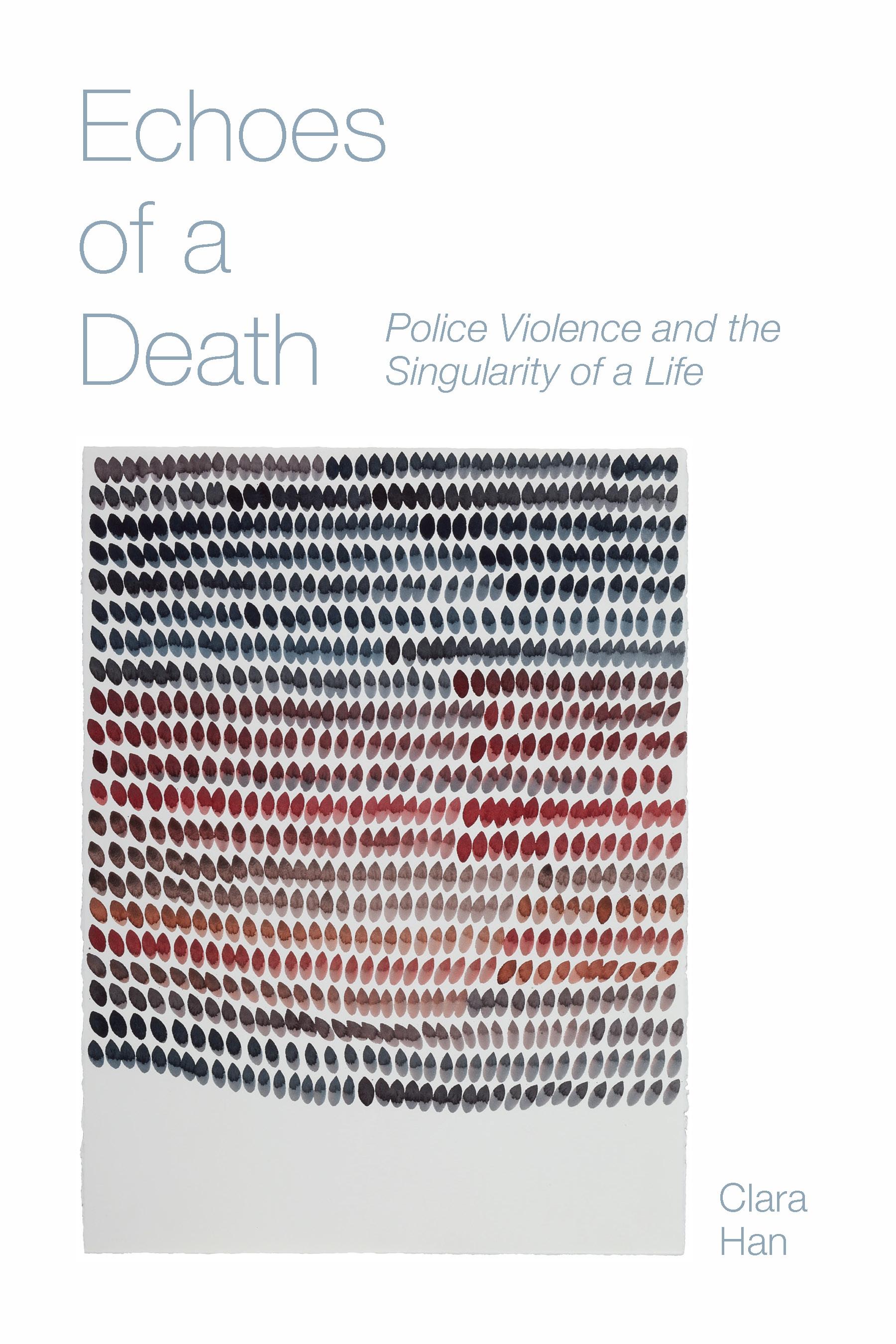
In neighborhoods subject to concentrated policing, deaths at the hands of police have become so pervasive that they are a feature of everyday life. But the loss of a human being—a child, sibling, parent, lover, or neighbor—cannot be normalized. It is always lived in the singular. Echoes of a Death traces how a police killing unfolds in a low-income neighborhood in Santiago, Chile that has been under a police occupation for decades as part of the country’s war on drugs and on crime.
Attending to women’s voices and actions, Han points towards a new way to study policing that departs from a saturation in state categories that continually settle the gaze on male figures and bounded institutional spaces. Instead, Echoes of a Death shows how scenes of domestic and neighborhood life are crisscrossed by policing practices, courts, municipal social services, clinics, the prison, and the media. Neither are the boundaries of the public and private defined in advance, nor is policing under democracy neatly bound off from policing under dictatorship.
Following how this death reverberates in a life, Echoes of a Death asks what it is to live in a house that has become not one’s own, in wounded kinship, and in a neighborhood marked again and again by state violence. In doing so, Han shows a method by which anthropology can render the diffused character of violence that is the signature of policing and how we can give importance to the continual work to reinhabit a life marked by it.
Płać wygodnie kartą, Klarną, Apple Pay lub Google Pay. Nie jesteś zadowolony? Zawsze masz 14-dniową gwarancję zwrotu pieniędzy. Więcej przeczytasz w naszych warunkach. Masz pytania? Napisz do nas na hello@memmo.org.
Memmo ułatwia naukę – gdziekolwiek jesteś na świecie. U nas znajdziesz podręczniki i sprytne narzędzia do nauki w jednym miejscu: streszczenia, quizy, podcasty i fiszki. A do tego Ted, Twój kumpel do nauki, który odpowie na wszystko, co Cię nurtuje. Ponad 50 000 studentów już tu się uczy – stworzone, byś uczył się szybciej i mniej stresował.