
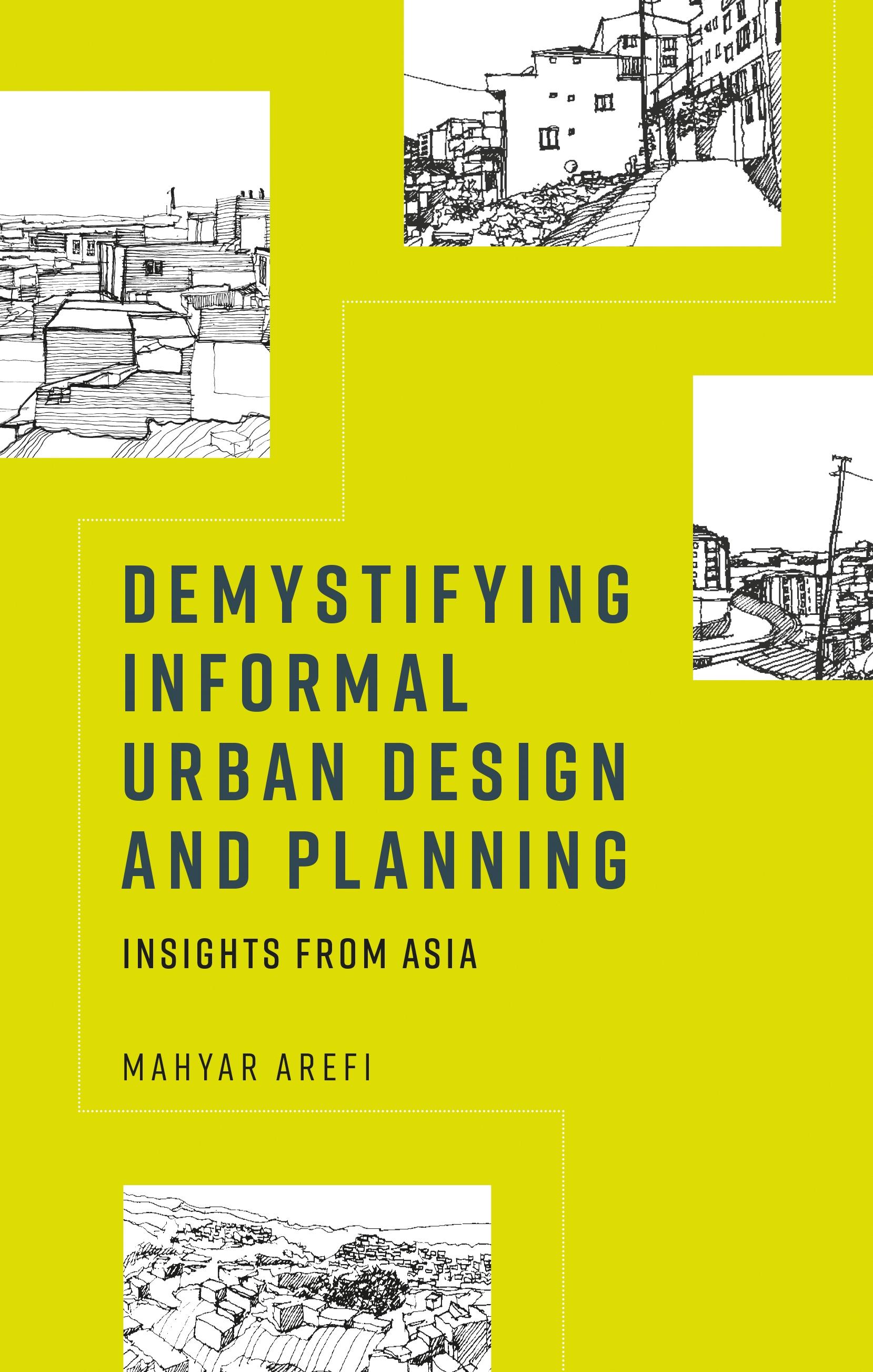
With more than half of the world’s population living in cities, informal settlements, or slums, continue to expand. This book explores the informality-urban design nexus, and asks why formal urban designers and planners have remained largely reluctant to address these challenges facing our cities.
What distinguishes the formal vs. informal urban design paradigm? While urban designers are able to identify and address specific problems like walkability, gentrification, or sense of place, informal settlement problems prove inexorably complex, and harder to fathom to begin with.
Therefore, seeking to demystify these epistemological ambiguities – while difficult – makes sense. The use of abductive reasoning, regulations, aesthetics, and design epitomise the formal, while informal urban planning and design is characterized by information, assets and adaptation. In support of these thematic differentiations, this book uses case studies to better contextualize and unpack the metaphorical distinctions of the two theoretical entities.
Conceptualizing these two schools of thought this way, the book engages urban designers with these debates, and explores how informal settlement residents see themselves, act collectively, care about their settlements, and leverage opportunities.
Płać wygodnie kartą, Klarną, Apple Pay lub Google Pay. Nie jesteś zadowolony? Zawsze masz 14-dniową gwarancję zwrotu pieniędzy. Więcej przeczytasz w naszych warunkach. Masz pytania? Napisz do nas na hello@memmo.org.
Memmo ułatwia naukę – gdziekolwiek jesteś na świecie. U nas znajdziesz podręczniki i sprytne narzędzia do nauki w jednym miejscu: streszczenia, quizy, podcasty i fiszki. A do tego Ted, Twój kumpel do nauki, który odpowie na wszystko, co Cię nurtuje. Ponad 50 000 studentów już tu się uczy – stworzone, byś uczył się szybciej i mniej stresował.