
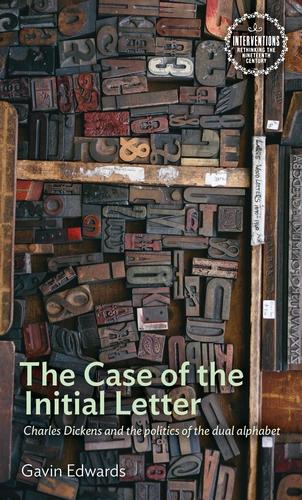
The book analyses attempts by Dickens and other nineteenth-century writers to challenge established ways of using the distinction between upper and lower case letters, in the interests of a wider radicalism. It discusses Dickens’s satire - on ‘Shares’ in Our Mutual Friend, on Paul Dombey’s position as the ‘Son’ of Dombey and Son - alongside the proto-modernist typography of suffragist poet Augusta Webster and the work of Marx’s translators transforming German conventions of capitalisation into English under the influence of Dickens and Carlyle. Placing these innovations within the history of the dual alphabet from its invention by Carolingian scribes to its rejection by modernist poets and the Bauhaus printers, the book tracks the dual alphabet through Dickens’s manuscripts, corrected proofs, and the ‘prompt copies’ for his public Readings, highlighting distinct ways in which writing, printing and speech produce meaning.
Płać wygodnie kartą, Klarną, Apple Pay lub Google Pay. Nie jesteś zadowolony? Zawsze masz 14-dniową gwarancję zwrotu pieniędzy. Więcej przeczytasz w naszych warunkach. Masz pytania? Napisz do nas na hello@memmo.org.
Memmo ułatwia naukę – gdziekolwiek jesteś na świecie. U nas znajdziesz podręczniki i sprytne narzędzia do nauki w jednym miejscu: streszczenia, quizy, podcasty i fiszki. A do tego Ted, Twój kumpel do nauki, który odpowie na wszystko, co Cię nurtuje. Ponad 50 000 studentów już tu się uczy – stworzone, byś uczył się szybciej i mniej stresował.
Może Ci się spodobać
Kup książkę0