
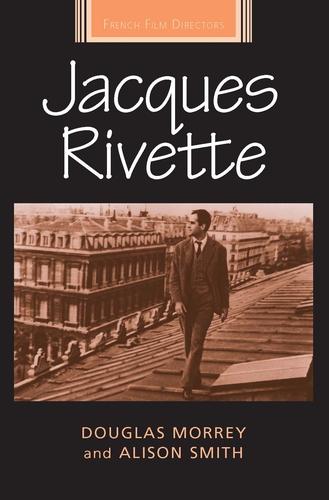
Jacques Rivette is perhaps the best-kept secret of French cinema. A founding figure in the New Wave, and at the centre of the Cahiers du cinéma team, he developed into one of the most unusual and adventurous French directors of the last sixty years, yet his work remains little-known in comparison with his contemporaries, and this study is the first in English to look at the full span of his career. Starting with his decisively influential film criticism of the 1950s, it moves from the New Wave through the complex, experimental films of the 1970s to the challenging, playful dramas which ensured his visibility during the following two decades, and ends in the present, including Rivette’s most recent films, Histoire de Marie et Julien (2003) and Ne touchez pas la hache (2007).
The book takes a thematic approach, offering detailed discussion of key elements of Rivette’s film world, including games, conspiracy and jealousy, as well as a study of what Rivette’s cinema adds to our understanding of key theoretical concepts in Film Studies such as narrative, space and adaptation. There are many close analyses of sequences from Rivette’s films including Paris nous appartient (1961), Céline et Julie vont en bateau (1974) and La Belle Noiseuse (1991).
Płać wygodnie kartą, Klarną, Apple Pay lub Google Pay. Nie jesteś zadowolony? Zawsze masz 14-dniową gwarancję zwrotu pieniędzy. Więcej przeczytasz w naszych warunkach. Masz pytania? Napisz do nas na hello@memmo.org.
Memmo ułatwia naukę – gdziekolwiek jesteś na świecie. U nas znajdziesz podręczniki i sprytne narzędzia do nauki w jednym miejscu: streszczenia, quizy, podcasty i fiszki. A do tego Ted, Twój kumpel do nauki, który odpowie na wszystko, co Cię nurtuje. Ponad 50 000 studentów już tu się uczy – stworzone, byś uczył się szybciej i mniej stresował.