
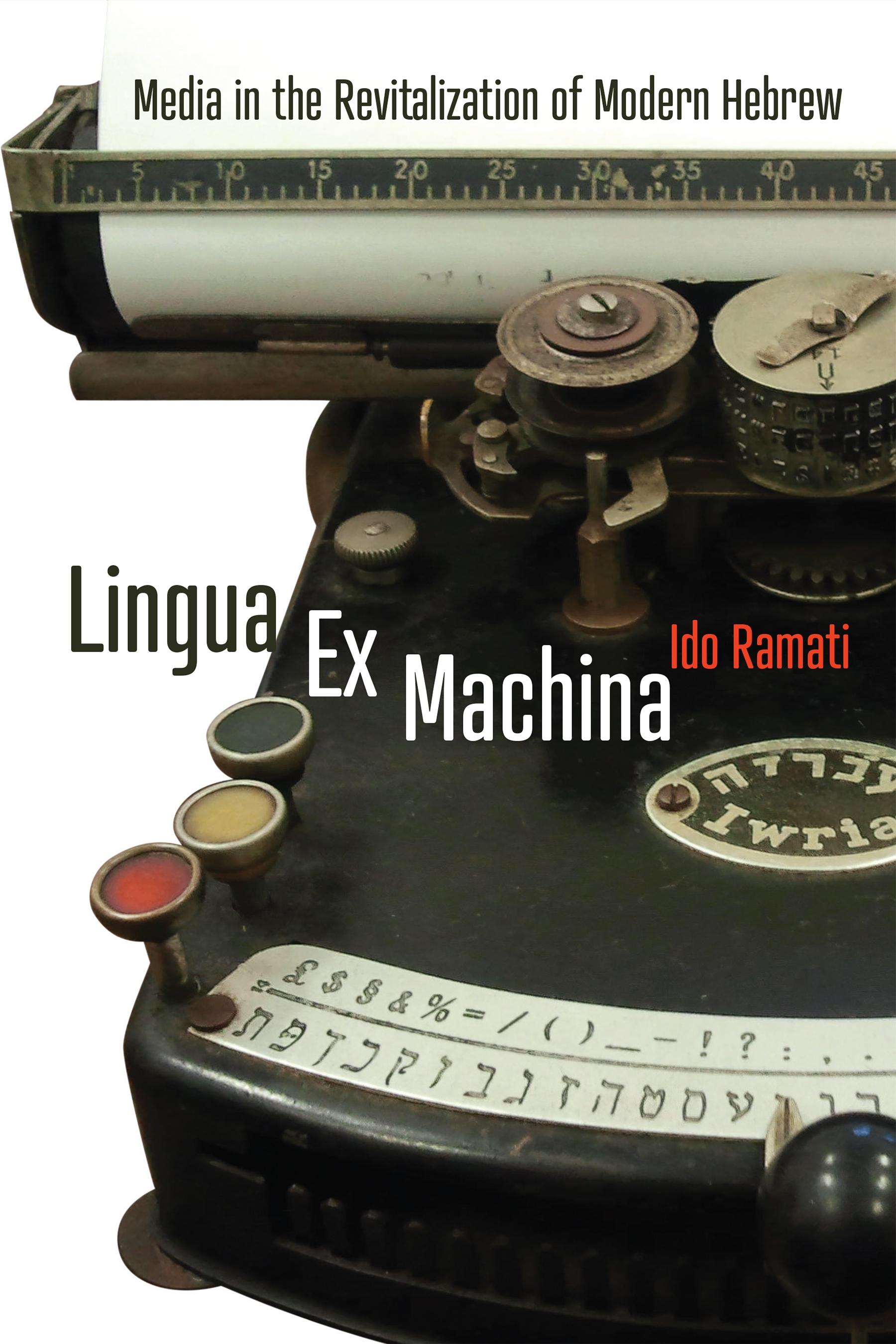
An investigation of the connections between the parallel rise of modern Hebrew and modern media
After lying dormant for two millennia as a mainly written language, Hebrew awoke from its literary slumber to become a living modern vernacular. This revitalization is unique and unprecedented in world history, and its success has been studied in fields from linguistics to cultural history. However, the role of modern technologies in mediating this revival has not yet been considered.
What happens when an ancient language meets modern technology? Lingua Ex Machina explores such a moment in its investigation of the role media technologies—including typewriters, phonographs, and computers—played in the revitalization and modernization of Hebrew from the end of the nineteenth century into the present day.
Ido Ramati examines the role sound recording technologies played in shaping the reemergence of modern Hebrew speech, reveals how the Hebraized typewriter pushed for the modernization of writing in Hebrew, and ultimately argues that these media—whose development and adoption paralleled the revitalization of Hebrew—were an active force in shaping the language as a modern communicative medium. This case study of Hebrew furnishes researchers with a rare opportunity to investigate the complex relation between language, its speakers, and technology at a decisive moment, and sheds new light on the study of media technologies and their theoretical, lingual, and social implications.
Płać wygodnie kartą, Klarną, Apple Pay lub Google Pay. Nie jesteś zadowolony? Zawsze masz 14-dniową gwarancję zwrotu pieniędzy. Więcej przeczytasz w naszych warunkach. Masz pytania? Napisz do nas na hello@memmo.org.
Memmo ułatwia naukę – gdziekolwiek jesteś na świecie. U nas znajdziesz podręczniki i sprytne narzędzia do nauki w jednym miejscu: streszczenia, quizy, podcasty i fiszki. A do tego Ted, Twój kumpel do nauki, który odpowie na wszystko, co Cię nurtuje. Ponad 50 000 studentów już tu się uczy – stworzone, byś uczył się szybciej i mniej stresował.