
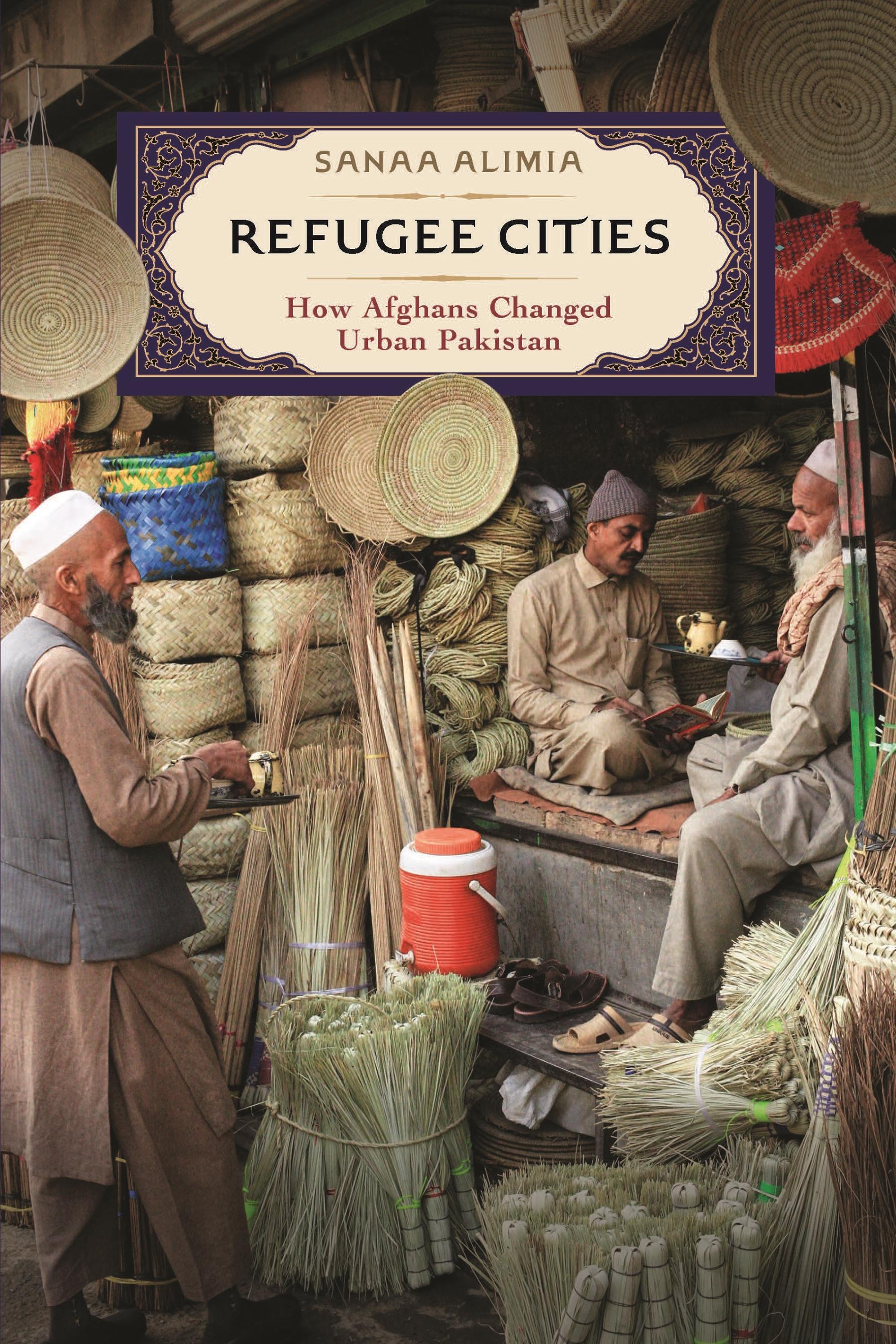
Situated between the 1970s Soviet Union’s invasion of Afghanistan and the post–2001 War on Terror, Refugee Cities tells the story of how global wars affect everyday life for Afghans who have been living as refugees in Pakistan. This book provides a necessary glimpse of what ordinary life looks like for a long-term refugee population, beyond the headlines of war, terror, or helpless suffering. It also increases our understanding of how cities—rather than the nation—are important sites of identity-making for people of migrant origins.
In Refugee Cities, Sanaa Alimia reconstructs local microhistories to chronicle the lives of ordinary people living in low-income neighborhoods in Peshawar and Karachi and the ways in which they have transformed the cities of which they are a part. In Pakistan, formal citizenship is almost impossible for Afghans to access; despite this, Afghans have made new neighborhoods, expanded city boundaries, built cities through their labor in construction projects, and created new urban identities—and often they have done so alongside Pakistanis. Their struggles are a crucial, neglected dimension of Pakistan’s urban history. Yet given that the Afghan experience in Pakistan is profoundly shaped by geopolitics, the book also documents how, in the War-on-Terror era, many Afghans have been forced to leave Pakistan. This book, then, is also a documentation of the multiple displacements migrants are subject to and the increased normalization of deportation as a part of “refugee management.”
Płać wygodnie kartą, Klarną, Apple Pay lub Google Pay. Nie jesteś zadowolony? Zawsze masz 14-dniową gwarancję zwrotu pieniędzy. Więcej przeczytasz w naszych warunkach. Masz pytania? Napisz do nas na hello@memmo.org.
Memmo ułatwia naukę – gdziekolwiek jesteś na świecie. U nas znajdziesz podręczniki i sprytne narzędzia do nauki w jednym miejscu: streszczenia, quizy, podcasty i fiszki. A do tego Ted, Twój kumpel do nauki, który odpowie na wszystko, co Cię nurtuje. Ponad 50 000 studentów już tu się uczy – stworzone, byś uczył się szybciej i mniej stresował.