
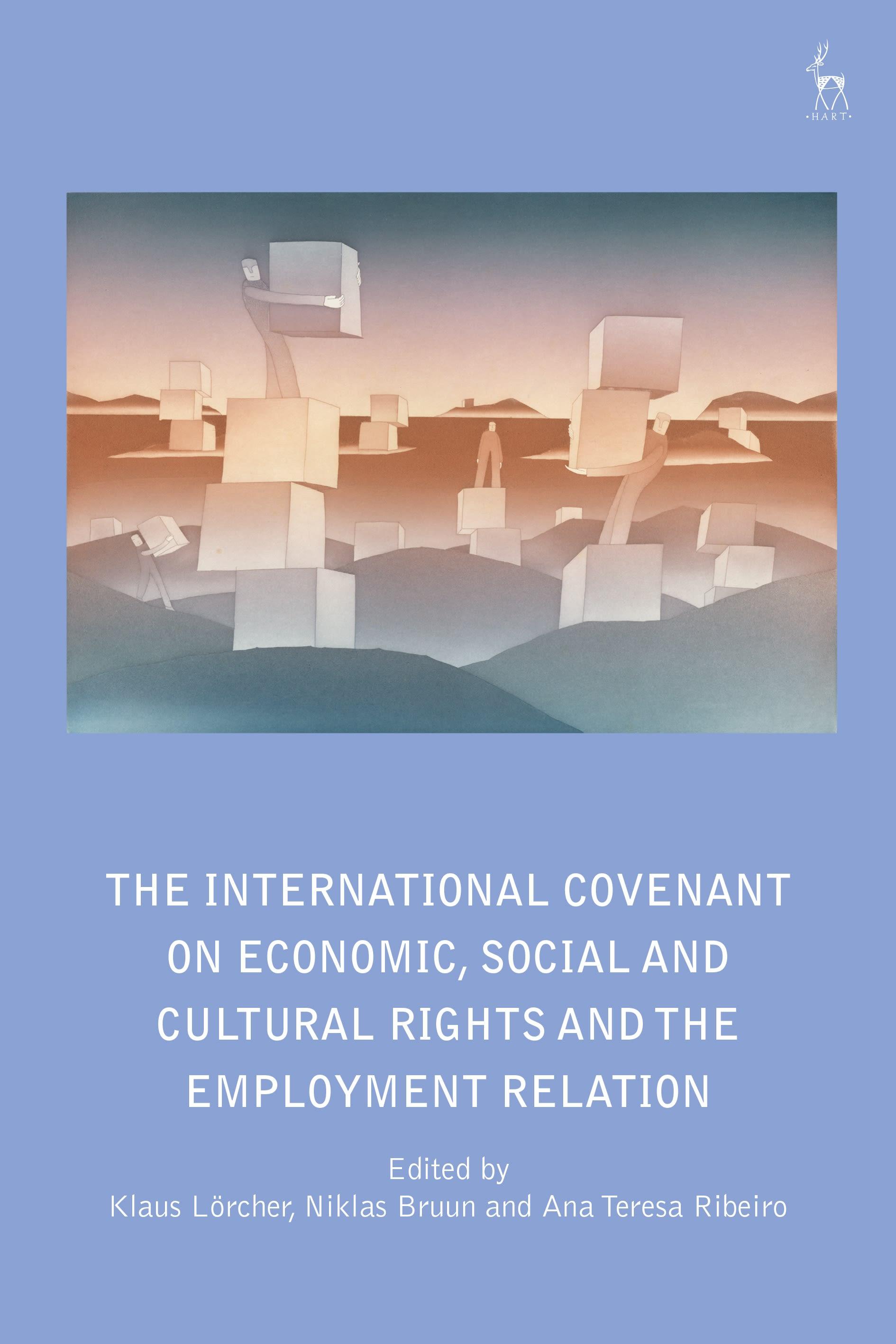
This book is the first comprehensive academic treatment of the International Covenant on Economic, Social and Cultural Rights (ICESCR) and employment rights, which has a global vocation demonstrated by having been ratified by 173 States since it was adopted in 1966.
Workers' rights need protection and reinforcement. To achieve this aim, international human rights standards can play an important role. The ICESCR is the most important global UN instrument in this respect. It covers a wide range of employment rights, including the right to strike, and has global application. But it is not sufficiently developed and used, and national implementation often needs improvement.
Part 1 of the book analyses general issues related to the Covenant, such as context, development, challenges, influences at the global and regional levels, interpretation and procedural elements. Part 2 deals with the specific provisions which are directly linked to the employment relation.
The book is based on a thorough analysis, mainly, but not exclusively, of the case law of the Committee on Economic, Social and Cultural Rights (CESCR), that is monitoring the national implementation of the Covenant. Together, the chapters in this book will empower academics and practitioners in labour law to find answers to relevant and practical problems in order to better enforce and improve workers' rights.
The book is the result of a project by the 'Transnational Trade Union Rights' experts Network (TTUR), linked to the European Trade Union Institute (ETUI).
Workers' rights need protection and reinforcement. To achieve this aim, international human rights standards can play an important role. The ICESCR is the most important global UN instrument in this respect. It covers a wide range of employment rights, including the right to strike, and has global application. But it is not sufficiently developed and used, and national implementation often needs improvement.
Part 1 of the book analyses general issues related to the Covenant, such as context, development, challenges, influences at the global and regional levels, interpretation and procedural elements. Part 2 deals with the specific provisions which are directly linked to the employment relation.
The book is based on a thorough analysis, mainly, but not exclusively, of the case law of the Committee on Economic, Social and Cultural Rights (CESCR), that is monitoring the national implementation of the Covenant. Together, the chapters in this book will empower academics and practitioners in labour law to find answers to relevant and practical problems in order to better enforce and improve workers' rights.
The book is the result of a project by the 'Transnational Trade Union Rights' experts Network (TTUR), linked to the European Trade Union Institute (ETUI).
Płać wygodnie kartą, Klarną, Apple Pay lub Google Pay. Nie jesteś zadowolony? Zawsze masz 14-dniową gwarancję zwrotu pieniędzy. Więcej przeczytasz w naszych warunkach. Masz pytania? Napisz do nas na hello@memmo.org.
Memmo ułatwia naukę – gdziekolwiek jesteś na świecie. U nas znajdziesz podręczniki i sprytne narzędzia do nauki w jednym miejscu: streszczenia, quizy, podcasty i fiszki. A do tego Ted, Twój kumpel do nauki, który odpowie na wszystko, co Cię nurtuje. Ponad 50 000 studentów już tu się uczy – stworzone, byś uczył się szybciej i mniej stresował.