
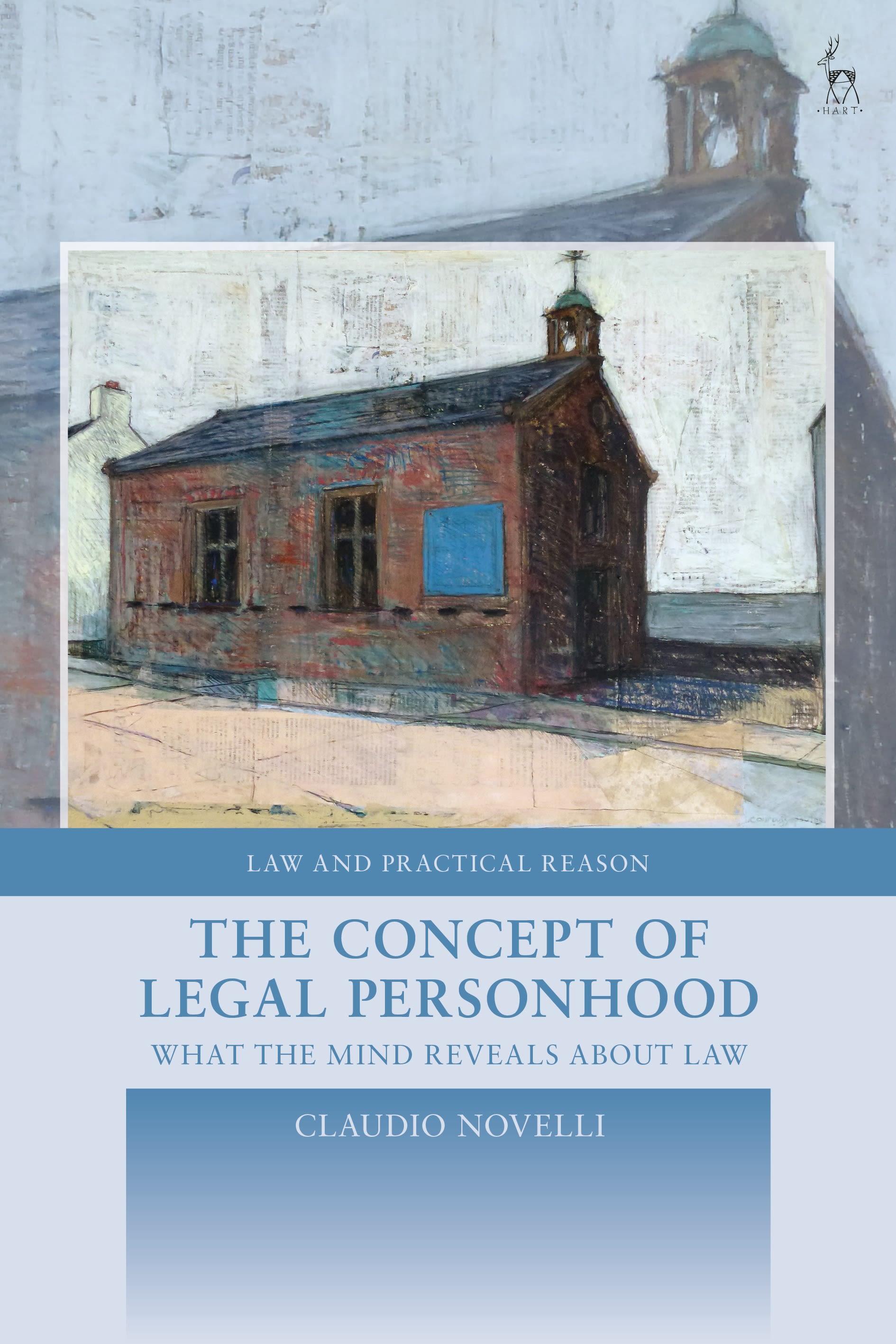
What does it take for someone-or something-to count as a legal person? Is it a matter of biology, ideology, or both?
This book explores how societies determine who or what qualifies as a legal person, from individual humans to corporations, from nation-states to environmental entities.
The author argues that legal personhood is not grounded in fixed, mind-independent properties or logical entailments. Instead, it develops from how humans experience their physical and cultural worlds through embodied cognition. Mapping these experiences onto seemingly discrete (legal) concepts yields a categorisation process that is creative yet patterned by culturally entrenched models and institutional aims.
The book introduces the “radial conception,” which posits that legal personhood is a flexible, context-dependent category centred around a core case. The core case – often, in many legal systems, the adult citizen of sound mind – is a mental model that helps define the category and influences how we think about it. This makes the most typical features of a category the default ones we think of when encountering it. As new situations arise or social needs evolve, legal personhood expands outward from the core case to include a diverse range of entities. However, this expansion does not follow rigid rules; rather, it relies on conceptual mappings that derive much of their persuasive power from cognitive tools like metaphors, metonymies, and image schemas.
Of interest to students engaged in legal philosophy, academics exploring the interplay between cognitive science and law, practitioners aiming to deepen their knowledge of legal personhood, or anyone intrigued by the merging of legal concepts and psychological insights, this book charts new territory in understanding law's persons.
This book explores how societies determine who or what qualifies as a legal person, from individual humans to corporations, from nation-states to environmental entities.
The author argues that legal personhood is not grounded in fixed, mind-independent properties or logical entailments. Instead, it develops from how humans experience their physical and cultural worlds through embodied cognition. Mapping these experiences onto seemingly discrete (legal) concepts yields a categorisation process that is creative yet patterned by culturally entrenched models and institutional aims.
The book introduces the “radial conception,” which posits that legal personhood is a flexible, context-dependent category centred around a core case. The core case – often, in many legal systems, the adult citizen of sound mind – is a mental model that helps define the category and influences how we think about it. This makes the most typical features of a category the default ones we think of when encountering it. As new situations arise or social needs evolve, legal personhood expands outward from the core case to include a diverse range of entities. However, this expansion does not follow rigid rules; rather, it relies on conceptual mappings that derive much of their persuasive power from cognitive tools like metaphors, metonymies, and image schemas.
Of interest to students engaged in legal philosophy, academics exploring the interplay between cognitive science and law, practitioners aiming to deepen their knowledge of legal personhood, or anyone intrigued by the merging of legal concepts and psychological insights, this book charts new territory in understanding law's persons.
Płać wygodnie kartą, Klarną, Apple Pay lub Google Pay. Nie jesteś zadowolony? Zawsze masz 14-dniową gwarancję zwrotu pieniędzy. Więcej przeczytasz w naszych warunkach. Masz pytania? Napisz do nas na hello@memmo.org.
Memmo ułatwia naukę – gdziekolwiek jesteś na świecie. U nas znajdziesz podręczniki i sprytne narzędzia do nauki w jednym miejscu: streszczenia, quizy, podcasty i fiszki. A do tego Ted, Twój kumpel do nauki, który odpowie na wszystko, co Cię nurtuje. Ponad 50 000 studentów już tu się uczy – stworzone, byś uczył się szybciej i mniej stresował.