
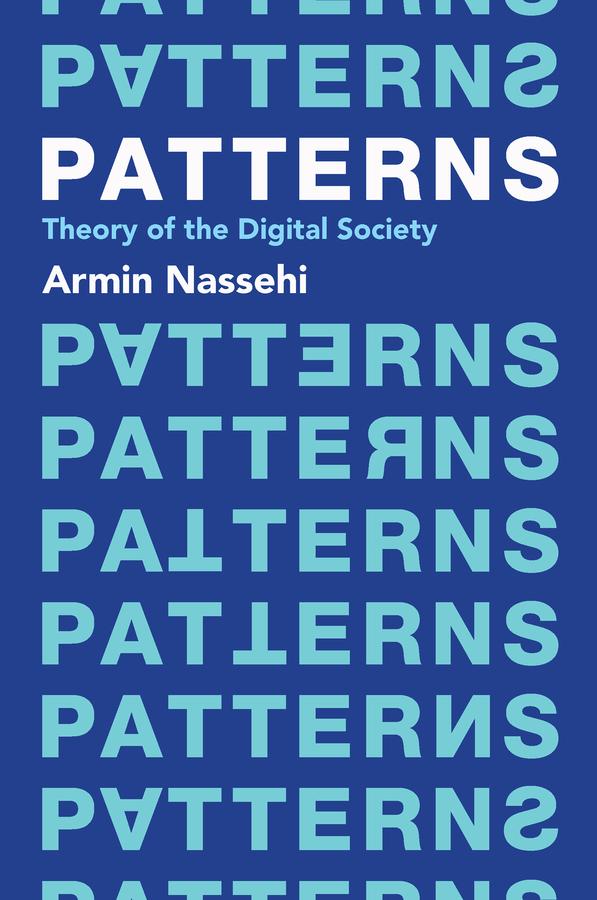
We are inclined to assume that digital technologies have suddenly revolutionized everything – including our relationships, our forms of work and leisure, and even our democracies – in just a few years. Armin Nassehi puts forward a new theory of digital society that turns this assumption on its head. Rather than treating digital technologies as an independent causal force that is transforming social life, he asks: what problem does digitalization solve?
When we pose the question in this way, we can see, argues Nassehi, that digitalization helps societies to deal with and reduce complexity by using coded numbers to process information. We can also see that modern societies had a digital structure long before computer technologies were developed – already in the nineteenth century, for example, statistical pattern recognition technologies were being used in functionally differentiated societies in order to recognize, monitor and control forms of human behaviour. Digital technologies were so successful in such a short period of time and were able to penetrate so many areas of society so quickly precisely because of a pre-existing sensitivity that prepared modern societies for digital development.
This highly original book lays the foundations for a theory of the digital society that will be of value to everyone interested in the growing presence of digital technologies in our lives.
When we pose the question in this way, we can see, argues Nassehi, that digitalization helps societies to deal with and reduce complexity by using coded numbers to process information. We can also see that modern societies had a digital structure long before computer technologies were developed – already in the nineteenth century, for example, statistical pattern recognition technologies were being used in functionally differentiated societies in order to recognize, monitor and control forms of human behaviour. Digital technologies were so successful in such a short period of time and were able to penetrate so many areas of society so quickly precisely because of a pre-existing sensitivity that prepared modern societies for digital development.
This highly original book lays the foundations for a theory of the digital society that will be of value to everyone interested in the growing presence of digital technologies in our lives.
Płać wygodnie kartą, Klarną, Apple Pay lub Google Pay. Nie jesteś zadowolony? Zawsze masz 14-dniową gwarancję zwrotu pieniędzy. Więcej przeczytasz w naszych warunkach. Masz pytania? Napisz do nas na hello@memmo.org.
Memmo ułatwia naukę – gdziekolwiek jesteś na świecie. U nas znajdziesz podręczniki i sprytne narzędzia do nauki w jednym miejscu: streszczenia, quizy, podcasty i fiszki. A do tego Ted, Twój kumpel do nauki, który odpowie na wszystko, co Cię nurtuje. Ponad 50 000 studentów już tu się uczy – stworzone, byś uczył się szybciej i mniej stresował.
Może Ci się spodobać
Kup książkę0