
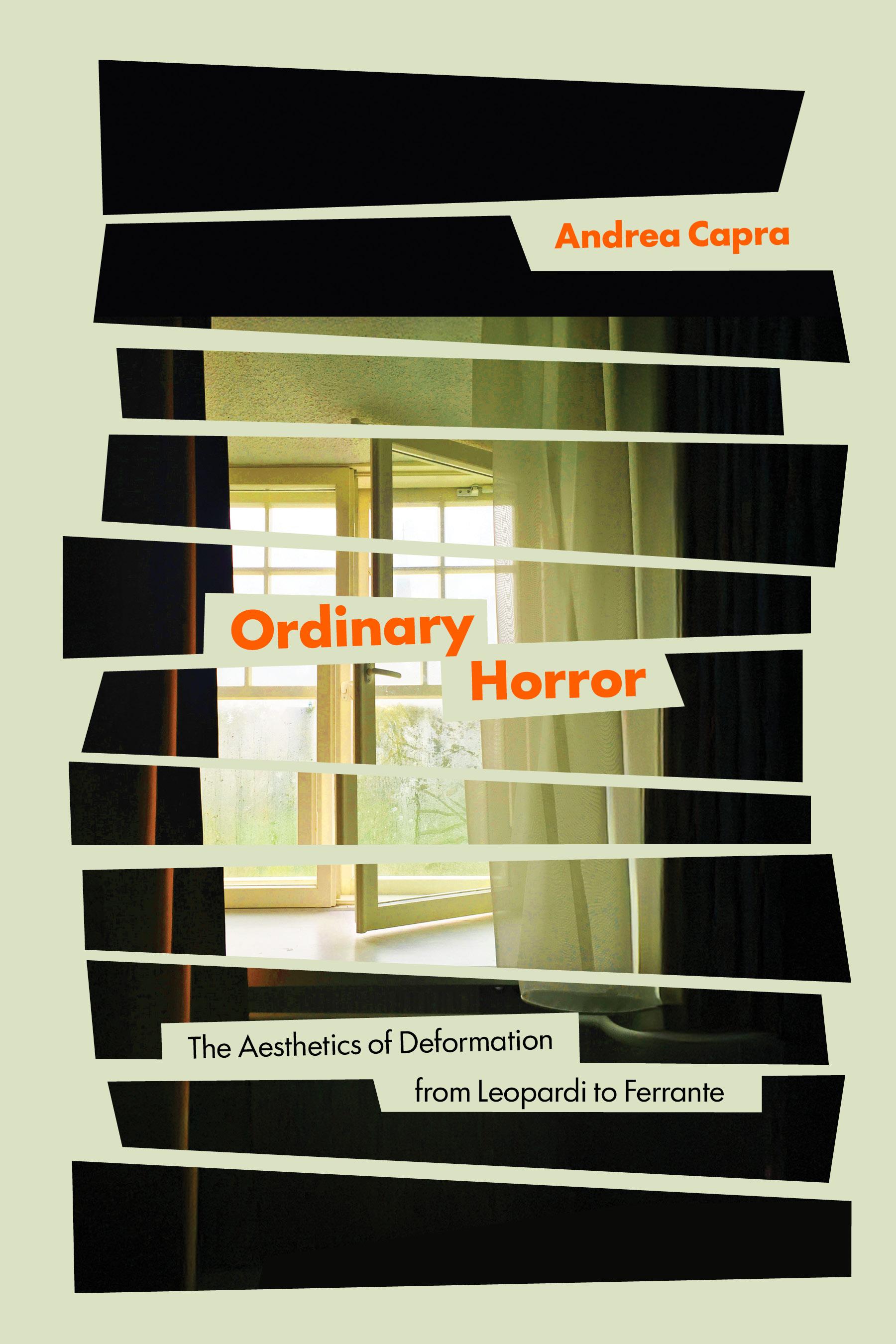
What is horror? Setting aside the implausible circumstances typical of the horror genre, Capra investigates what he terms "ordinary horror"—the horror that haunts our world, and that we may encounter firsthand. Drawing from ordinary language philosophy and phenomenology, he reframes horror as a common human experience tied to a sense of forced powerlessness—the shattering moment when our control over a given situation, and our very sense of reality, unravels. By tracing this experience across texts beyond the horror genre, Capra reveals its significance for our time.
Centering on modern Italian literature, Ordinary Horror shows a tradition not typically associated with horror to be rife with it. To this end, Capra emphasizes the centrality of the experience in canonical authors, as seen, for instance, in Giacomo Leopardi's pages on existential suffering, Primo Levi's writings on Auschwitz, and Elena Ferrante's descriptions of sexual violence. Literature, Capra argues, can convey horror's experiential magnitude through what he calls the "aesthetics of deformation"—scenes when otherwise realistic texts depart from verisimilitude and embrace a more disquieting style. Weaving together aesthetics and phenomenology, Capra shows that just as horror may rupture the fabric of everyday life, so too may it rupture the fabric of a literary text.
Płać wygodnie kartą, Klarną, Apple Pay lub Google Pay. Nie jesteś zadowolony? Zawsze masz 14-dniową gwarancję zwrotu pieniędzy. Więcej przeczytasz w naszych warunkach. Masz pytania? Napisz do nas na hello@memmo.org.
Memmo ułatwia naukę – gdziekolwiek jesteś na świecie. U nas znajdziesz podręczniki i sprytne narzędzia do nauki w jednym miejscu: streszczenia, quizy, podcasty i fiszki. A do tego Ted, Twój kumpel do nauki, który odpowie na wszystko, co Cię nurtuje. Ponad 50 000 studentów już tu się uczy – stworzone, byś uczył się szybciej i mniej stresował.