
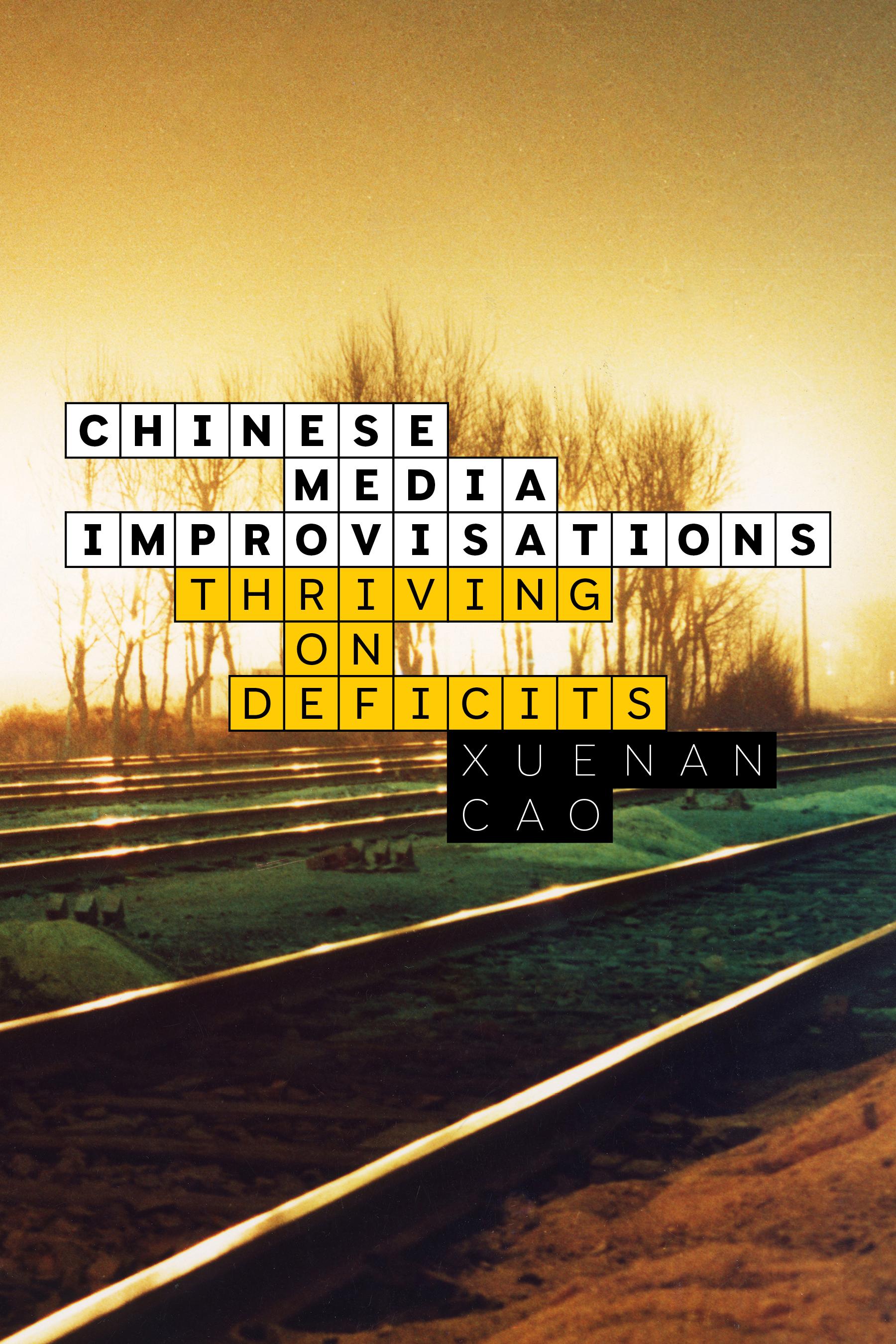
Xuenan Cao offers an unexpected angle on China's technological rise, spotlighting the role of deficit-driven improvisation. As Cao demonstrates, where printing paper, computers, and microchips have been in shortage, media improvisations and AI gadgetry have filled the gap and become the unlikeliest accelerants of tech imaginaries.
Equal parts media-historical and literary analysis, the book connects several moments in Chinese history: Mao's Great Leap Forward that demanded the country produce mountains of books, notwithstanding the shortage of papers and printers; the compressed development that pushed key industries—such as China Railway—to informatize amidst hazards; the information-theoretical explosion in which scientists impersonated computing devices when there were none for them to access; and the ironic present, when municipals have scrambled to update their smart-cities with low-budget AI gadget theatrics, such as facial recognition toilet paper dispensers. These are scenarios in which media practitioners—from print to information technologies and to AI—have had to improvise in response to political pressure and thrive on a deficiency of funding and materials. Drawing on Chinese communist party archival records, China Railway local archives, newspapers, ersatz college reference books, science journals, and AI-related technical documents, each book section combines archival research and literary readings, narrated through personal history with media-theoretical extrapolation. Ultimately, Cao persuades that the critique and deconstruction of the canonicity of Western media theory requires an understanding of media improvisations in China.
Płać wygodnie kartą, Klarną, Apple Pay lub Google Pay. Nie jesteś zadowolony? Zawsze masz 14-dniową gwarancję zwrotu pieniędzy. Więcej przeczytasz w naszych warunkach. Masz pytania? Napisz do nas na hello@memmo.org.
Memmo ułatwia naukę – gdziekolwiek jesteś na świecie. U nas znajdziesz podręczniki i sprytne narzędzia do nauki w jednym miejscu: streszczenia, quizy, podcasty i fiszki. A do tego Ted, Twój kumpel do nauki, który odpowie na wszystko, co Cię nurtuje. Ponad 50 000 studentów już tu się uczy – stworzone, byś uczył się szybciej i mniej stresował.