
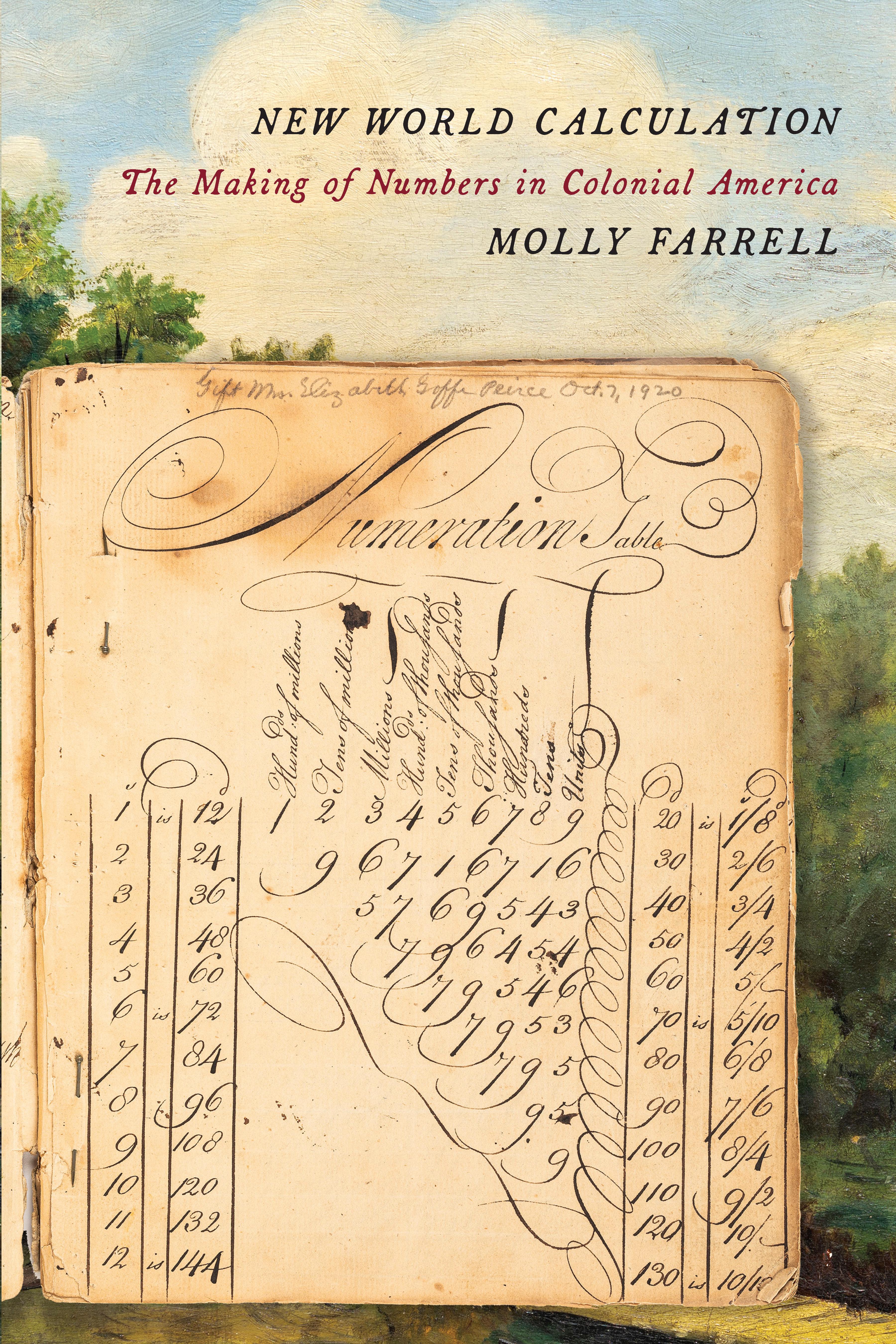
Molly Farrell tells the story of colonial America as a testing ground for new ways of conceptualizing numbers, uncovering overlooked forms of numerical thinking to argue that colonialism and the rise of racial capitalism incited a struggle about what exactly a number is and what it can do.
When English settlers began colonizing Indigenous lands, they confronted groups of people with very different beliefs about numbers. Meanwhile, Atlantic colonialism required tremendous accounting work, especially to support the trade in enslaved Africans. Numeracy, then, seems to be deeply complicit with the colonial project. Farrell, however, follows the circulation of arithmetic primers, cipher books, and other material traces to show how everyday people repurposed numeracy to serve their own ends—ranging from making a living as a fugitive from enslavement to measuring medicine for at-home abortion.
Drawing on book history and Black feminist science and technology studies, New World Calculation argues that we need to restore the math book into its social space in order to disentangle the relationship between quantification and oppression in America's cultural history.
Płać wygodnie kartą, Klarną, Apple Pay lub Google Pay. Nie jesteś zadowolony? Zawsze masz 14-dniową gwarancję zwrotu pieniędzy. Więcej przeczytasz w naszych warunkach. Masz pytania? Napisz do nas na hello@memmo.org.
Memmo ułatwia naukę – gdziekolwiek jesteś na świecie. U nas znajdziesz podręczniki i sprytne narzędzia do nauki w jednym miejscu: streszczenia, quizy, podcasty i fiszki. A do tego Ted, Twój kumpel do nauki, który odpowie na wszystko, co Cię nurtuje. Ponad 50 000 studentów już tu się uczy – stworzone, byś uczył się szybciej i mniej stresował.