
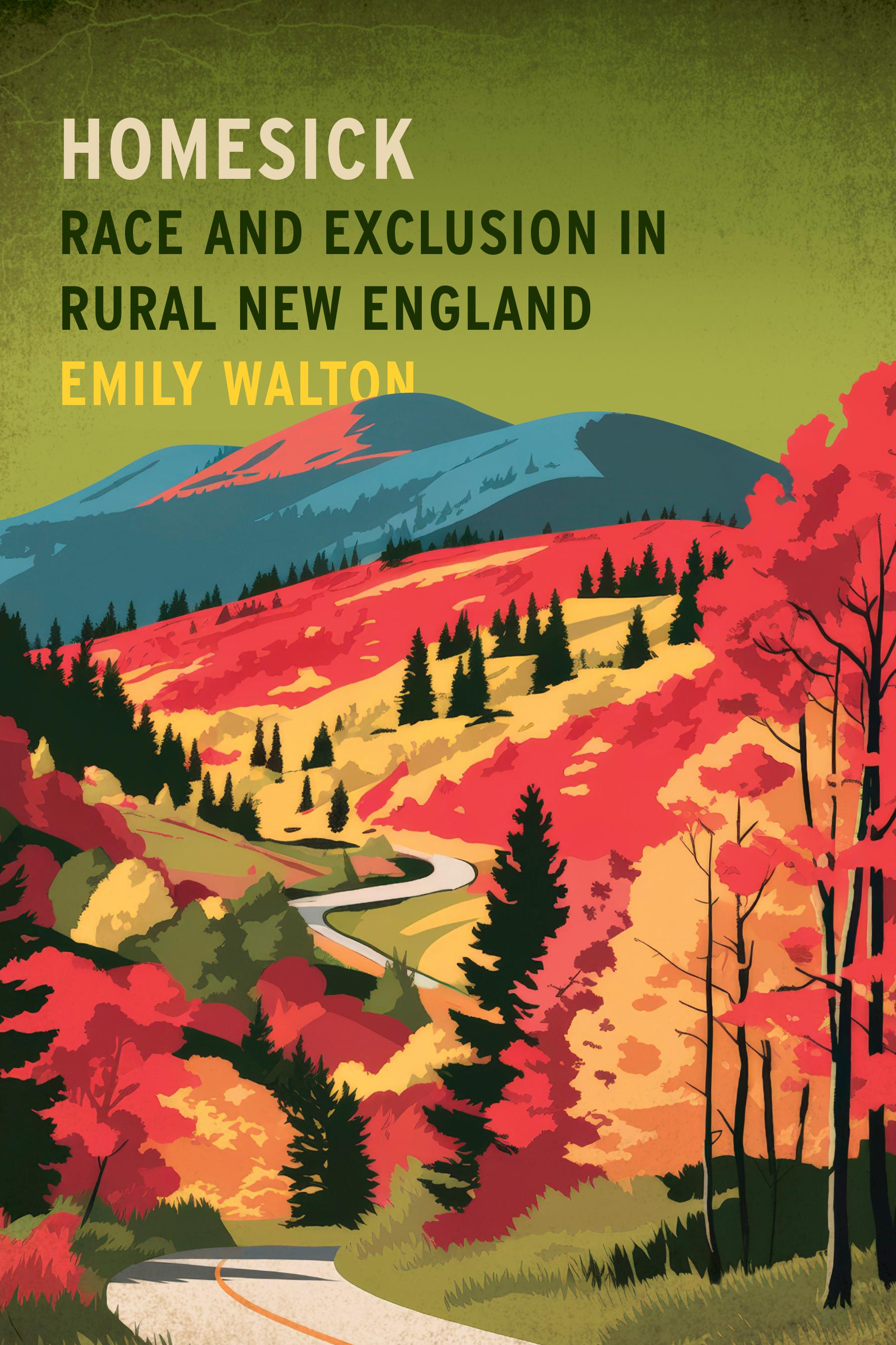
A racial demographic transition has come to rural northern New England. White population losses sit alongside racial and ethnic minority population gains in nearly all of the small towns of the Upper Valley region spanning New Hampshire and Vermont. Homesick considers these trends in a part of the country widely considered to be progressive, offering new insights on the ways white residents maintain racial hierarchies even there.
Walton focuses on the experiences of mostly well-educated migrants of color moving to the area to take well-paid jobs – in this case in health care, higher education, software development, and engineering. Walton shows that white residents maintain their social position through misrecognition—a failure or unwillingness to see people of color as legitimate, welcome, and valuable members of the community. The ultimate impact of such misrecognition is a profound sense of homesickness, a deep longing for a place in which one can feel safe, wanted, and accepted.
Tightly and sensitively argued, this book helps us better understand how to recognize and unsettle such processes of exclusion in diversifying spaces in general.
Płać wygodnie kartą, Klarną, Apple Pay lub Google Pay. Nie jesteś zadowolony? Zawsze masz 14-dniową gwarancję zwrotu pieniędzy. Więcej przeczytasz w naszych warunkach. Masz pytania? Napisz do nas na hello@memmo.org.
Memmo ułatwia naukę – gdziekolwiek jesteś na świecie. U nas znajdziesz podręczniki i sprytne narzędzia do nauki w jednym miejscu: streszczenia, quizy, podcasty i fiszki. A do tego Ted, Twój kumpel do nauki, który odpowie na wszystko, co Cię nurtuje. Ponad 50 000 studentów już tu się uczy – stworzone, byś uczył się szybciej i mniej stresował.