
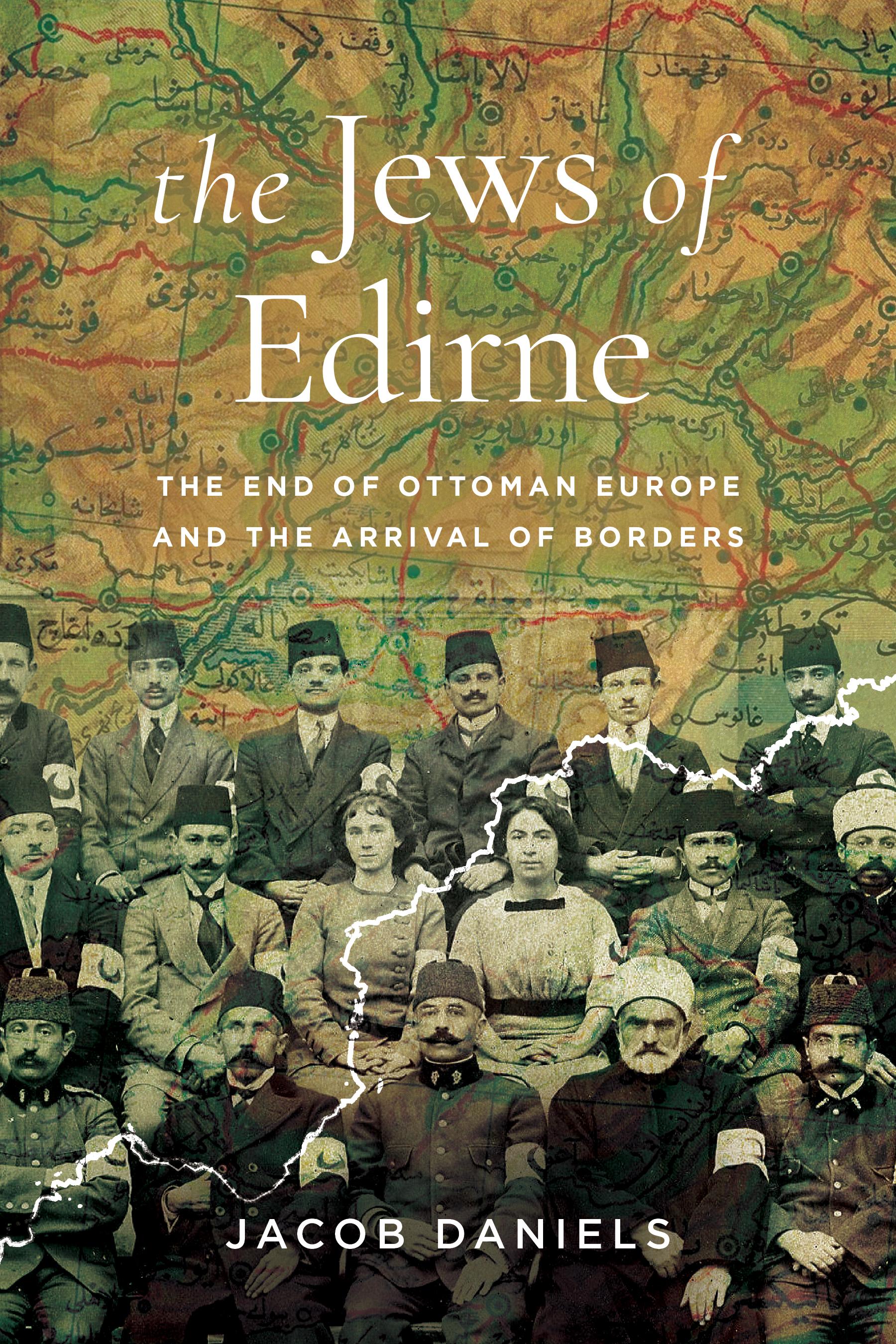
At the turn of the twentieth century, the city of Edirne was a bustling center linking Istanbul to Ottoman Europe. It was also the capital of Edirne Province—among the most religiously diverse regions of the Ottoman Empire. But by 1923, the city had become a Turkish border town, and the province had lost much of its non-Muslim population. With this book, Jacob Daniels explores how one of the world's largest Sephardi communities dealt with the encroachment of modern borders.
Using Ladino, French, English, and Turkish sources, Daniels offers a new take on the ways in which ethno-religious minorities experienced the transition "from empire to nation-state." Rather than tracing a linear path, Edirne Jews zigzagged between the Ottoman Empire and three nation-states—without moving a mile. And by maintaining interstate Sephardi networks, they resisted pressure to treat the shifting border as a limit to their zone of belonging. Ultimately, proximity to the border would undo Edirne's Jewish community, but the way this ending came about—local Jews were rarely killed or deported—challenges common assumptions about state borders and Jewish history. By studying Jewish encounters with the nation-state alongside the emergence of modern borders, Daniels sheds light on both phenomena.
Płać wygodnie kartą, Klarną, Apple Pay lub Google Pay. Nie jesteś zadowolony? Zawsze masz 14-dniową gwarancję zwrotu pieniędzy. Więcej przeczytasz w naszych warunkach. Masz pytania? Napisz do nas na hello@memmo.org.
Memmo ułatwia naukę – gdziekolwiek jesteś na świecie. U nas znajdziesz podręczniki i sprytne narzędzia do nauki w jednym miejscu: streszczenia, quizy, podcasty i fiszki. A do tego Ted, Twój kumpel do nauki, który odpowie na wszystko, co Cię nurtuje. Ponad 50 000 studentów już tu się uczy – stworzone, byś uczył się szybciej i mniej stresował.