
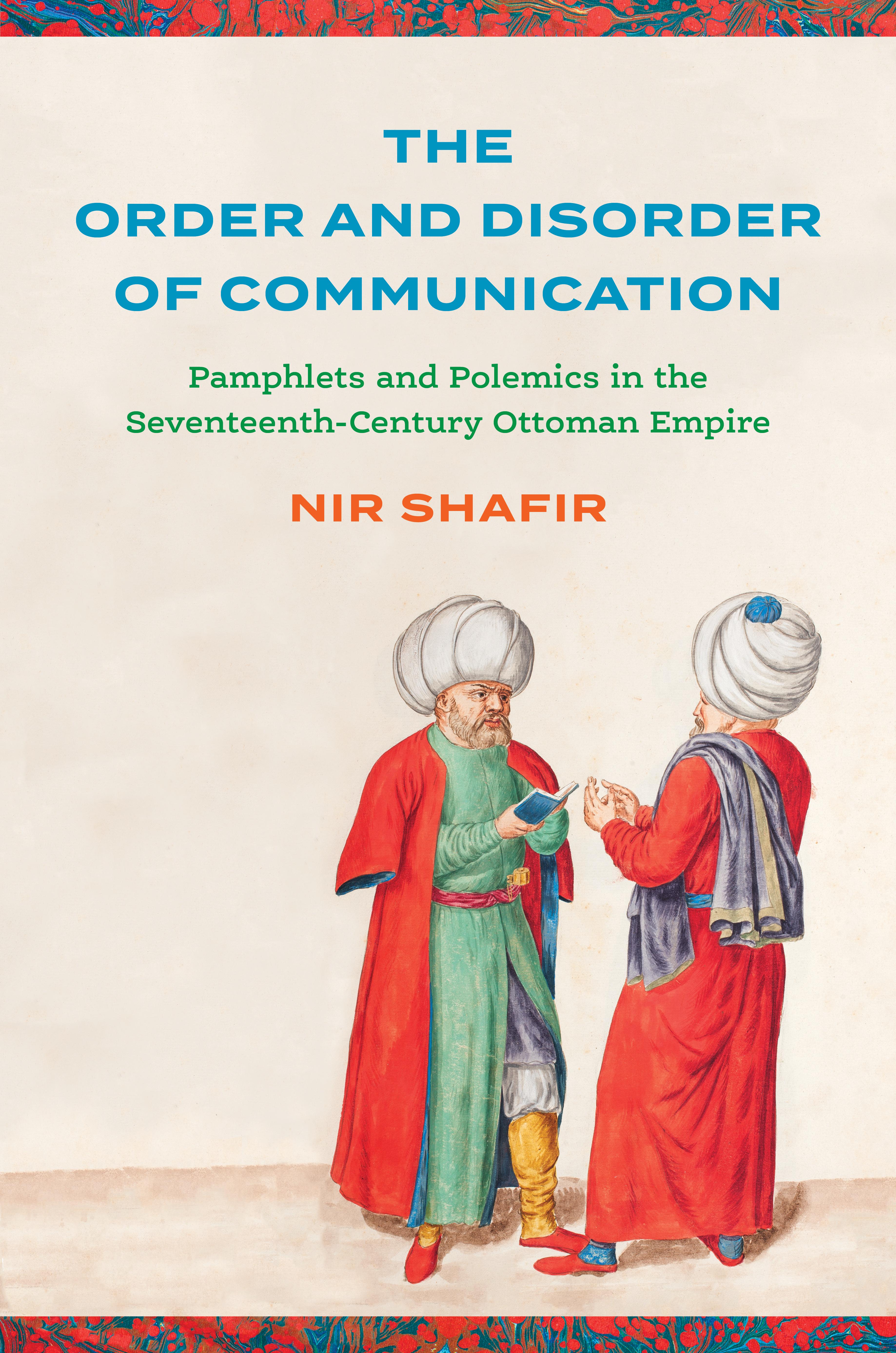
The seventeenth-century Ottoman Empire was rife with polemical debate, around worshipping at saints' graves, medical procedures, smoking tobacco, and other everyday practices. Fueling these debates was a new form of writing—the pamphlet, a cheap, short, and mobile text that provided readers with simplified legal arguments. These pamphlets were more than simply a novel way to disseminate texts, they made a consequential shift in the way Ottoman subjects communicated. This book offers the first comprehensive look at a new communication order that flourished in seventeenth-century manuscript culture.
Through the example of the pamphlet, Nir Shafir investigates the political and cultural institutions used to navigate, regulate, and encourage the circulation of information in a society in which all books were copied by hand. He sketches an ecology of books, examining how books were produced, the movement of texts regulated, education administered, reading conducted, and publics cultivated. Pamphlets invited both the well and poorly educated to participate in public debates, thus expanding the Ottoman body politic. They also spurred an epidemic of fake authors and popular forms of reading. Thus, pamphlets became both the forum and the fuel for the polarization of Ottoman society. Based on years of research in Islamic manuscript libraries worldwide, this book illuminates a vibrant and evolving premodern manuscript culture.
Płać wygodnie kartą, Klarną, Apple Pay lub Google Pay. Nie jesteś zadowolony? Zawsze masz 14-dniową gwarancję zwrotu pieniędzy. Więcej przeczytasz w naszych warunkach. Masz pytania? Napisz do nas na hello@memmo.org.
Memmo ułatwia naukę – gdziekolwiek jesteś na świecie. U nas znajdziesz podręczniki i sprytne narzędzia do nauki w jednym miejscu: streszczenia, quizy, podcasty i fiszki. A do tego Ted, Twój kumpel do nauki, który odpowie na wszystko, co Cię nurtuje. Ponad 50 000 studentów już tu się uczy – stworzone, byś uczył się szybciej i mniej stresował.