
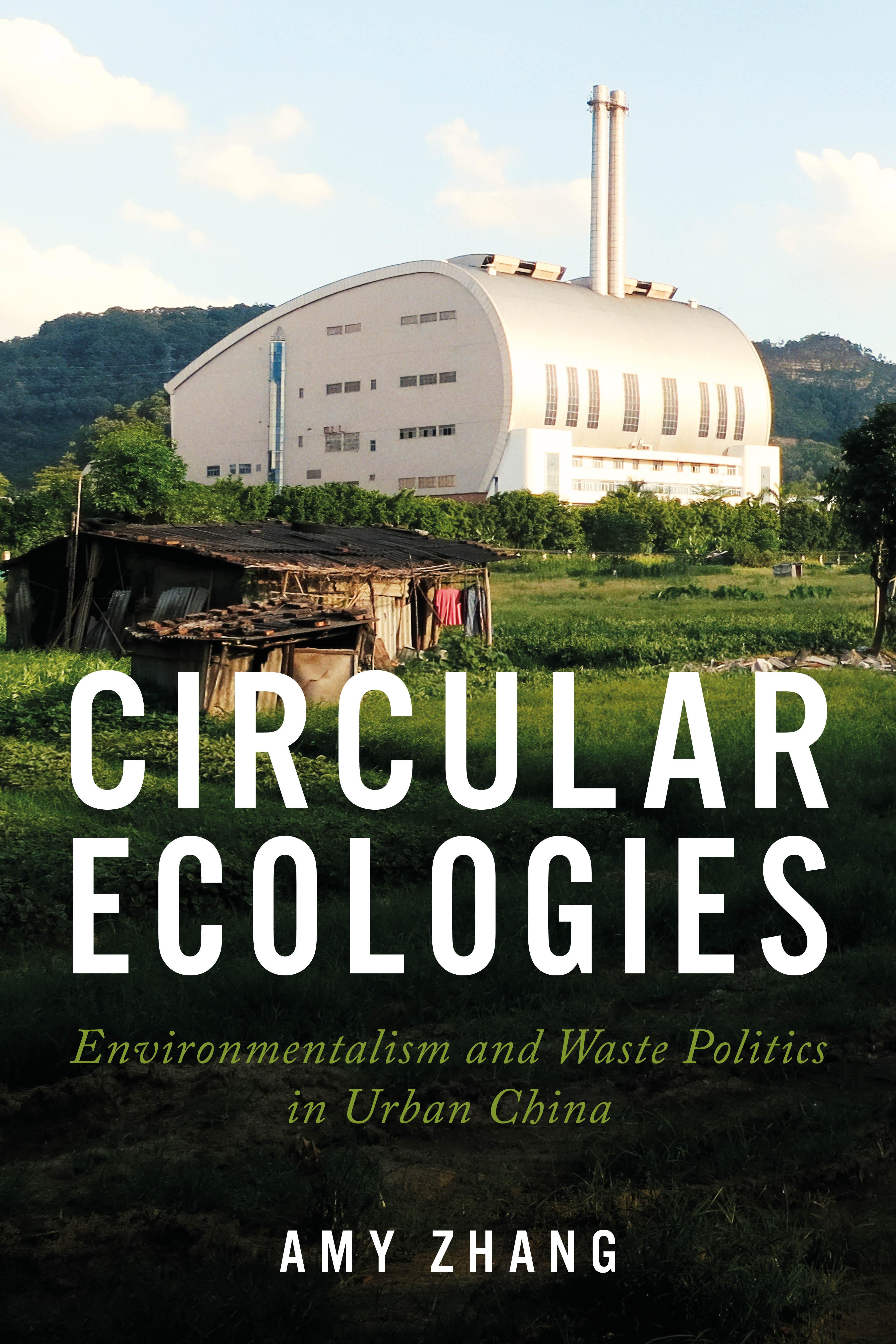
After four decades of reform and development, China is confronting a domestic waste crisis. As the world's largest waste-generating nation, the World Economic Forum projects that by 2030, the volume of household waste in China will be double that of the United States. Starting in the early 2000s, Chinese policymakers came to see waste management as an object of environmental governance central to the creation of "modern" cities, and experimented with the circular economy, in which technology and policy could convert all forms of waste back into resources. Based on long-term research in Guangzhou, Circular Ecologies critically analyzes the implementation of technologies and infrastructures to modernize a mega-city's waste management system, and the grassroots ecological politics that emerged in response. In Guangzhou, waste's transformation revealed uncomfortable truths about China's environmental governance: a preference for technology over labor, the aestheticization of order, and the expropriation of value in service of an ecological vision.
Amy Zhang argues that in post-reform China, waste—the material vestige of decades of growth and increasing consumption—is a systemic irritant that troubles China's technocratic governance. Waste provoked an unlikely coalition of urban communities, from the middle class to precarious migrant workers, that came to constitute a nascent, bottom-up environmental politics, and offers a model for conceptualizing ecological action under authoritarian conditions.
Płać wygodnie kartą, Klarną, Apple Pay lub Google Pay. Nie jesteś zadowolony? Zawsze masz 14-dniową gwarancję zwrotu pieniędzy. Więcej przeczytasz w naszych warunkach. Masz pytania? Napisz do nas na hello@memmo.org.
Memmo ułatwia naukę – gdziekolwiek jesteś na świecie. U nas znajdziesz podręczniki i sprytne narzędzia do nauki w jednym miejscu: streszczenia, quizy, podcasty i fiszki. A do tego Ted, Twój kumpel do nauki, który odpowie na wszystko, co Cię nurtuje. Ponad 50 000 studentów już tu się uczy – stworzone, byś uczył się szybciej i mniej stresował.