
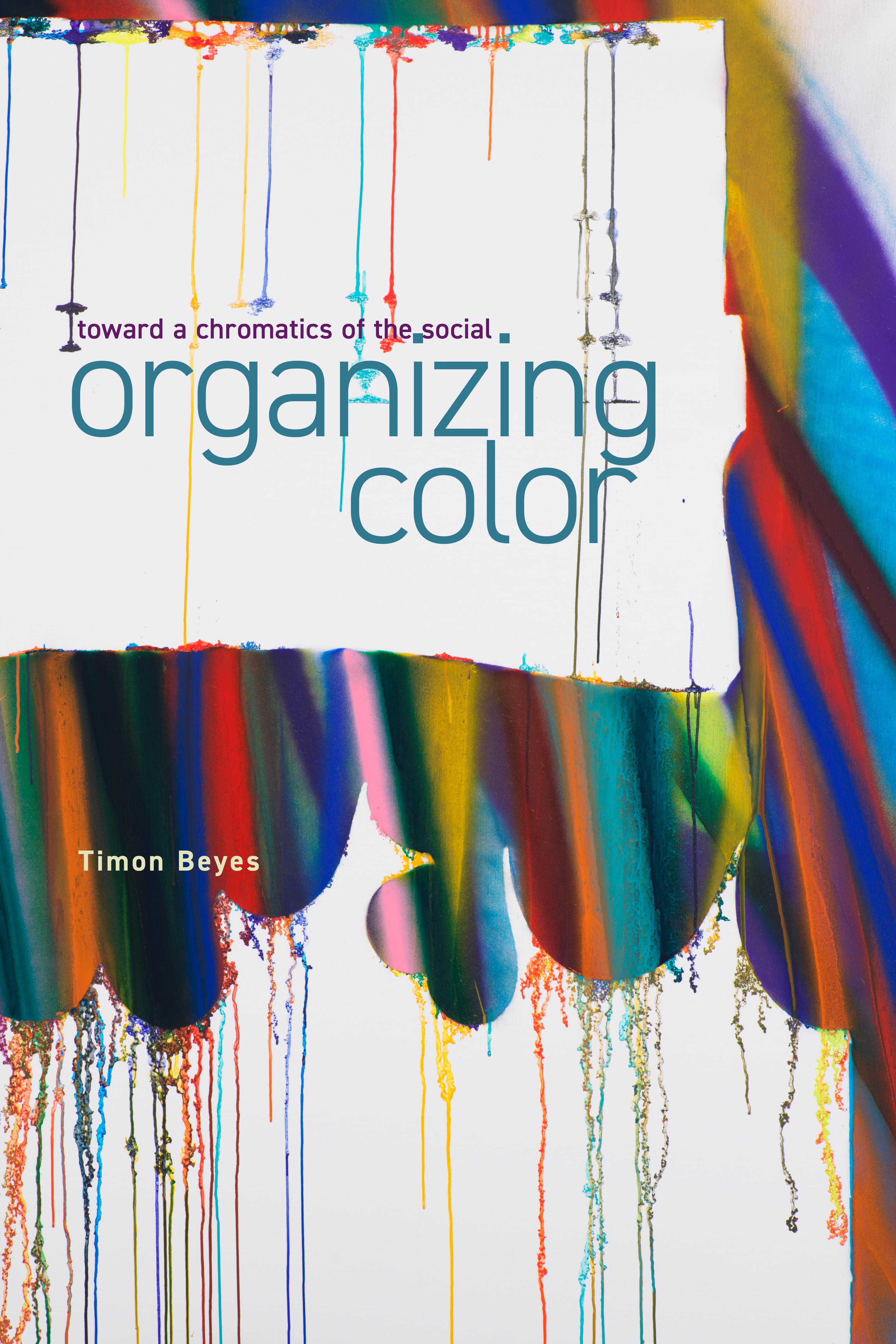
We live in a world that is saturated with color, but how should we make sense of color's force and capacities? This book develops a theory of color as fundamental medium of the social.
Constructed as a montage of scenes from the past two hundred years, Organizing Color demonstrates how the interests of capital, management, governance, science, and the arts have wrestled with color's allure and flux. Beyes takes readers from Goethe's chocolate experiments in search of chromatic transformation to nineteenth-century Scottish cotton mills designed to modulate workers' moods and productivity, from the colonial production of indigo in India to globalized categories of skin colorism and their disavowal. Tracing the consumption, control and excess of industrial and digital color, other chapters stage encounters with the literary chromatics of Pynchon's Gravity's Rainbow processing the machinery of the chemical industries, the red of political revolt in Godard's films, and the blur of education and critique in Steyerl's Adorno's Grey.
Contributing to a more general reconsideration of aesthetic capitalism and the role of sensory media, this book seeks to pioneer a theory of social organization—a "chromatics of organizing"—that is attuned to the protean and world-making capacity of color.
Płać wygodnie kartą, Klarną, Apple Pay lub Google Pay. Nie jesteś zadowolony? Zawsze masz 14-dniową gwarancję zwrotu pieniędzy. Więcej przeczytasz w naszych warunkach. Masz pytania? Napisz do nas na hello@memmo.org.
Memmo ułatwia naukę – gdziekolwiek jesteś na świecie. U nas znajdziesz podręczniki i sprytne narzędzia do nauki w jednym miejscu: streszczenia, quizy, podcasty i fiszki. A do tego Ted, Twój kumpel do nauki, który odpowie na wszystko, co Cię nurtuje. Ponad 50 000 studentów już tu się uczy – stworzone, byś uczył się szybciej i mniej stresował.