
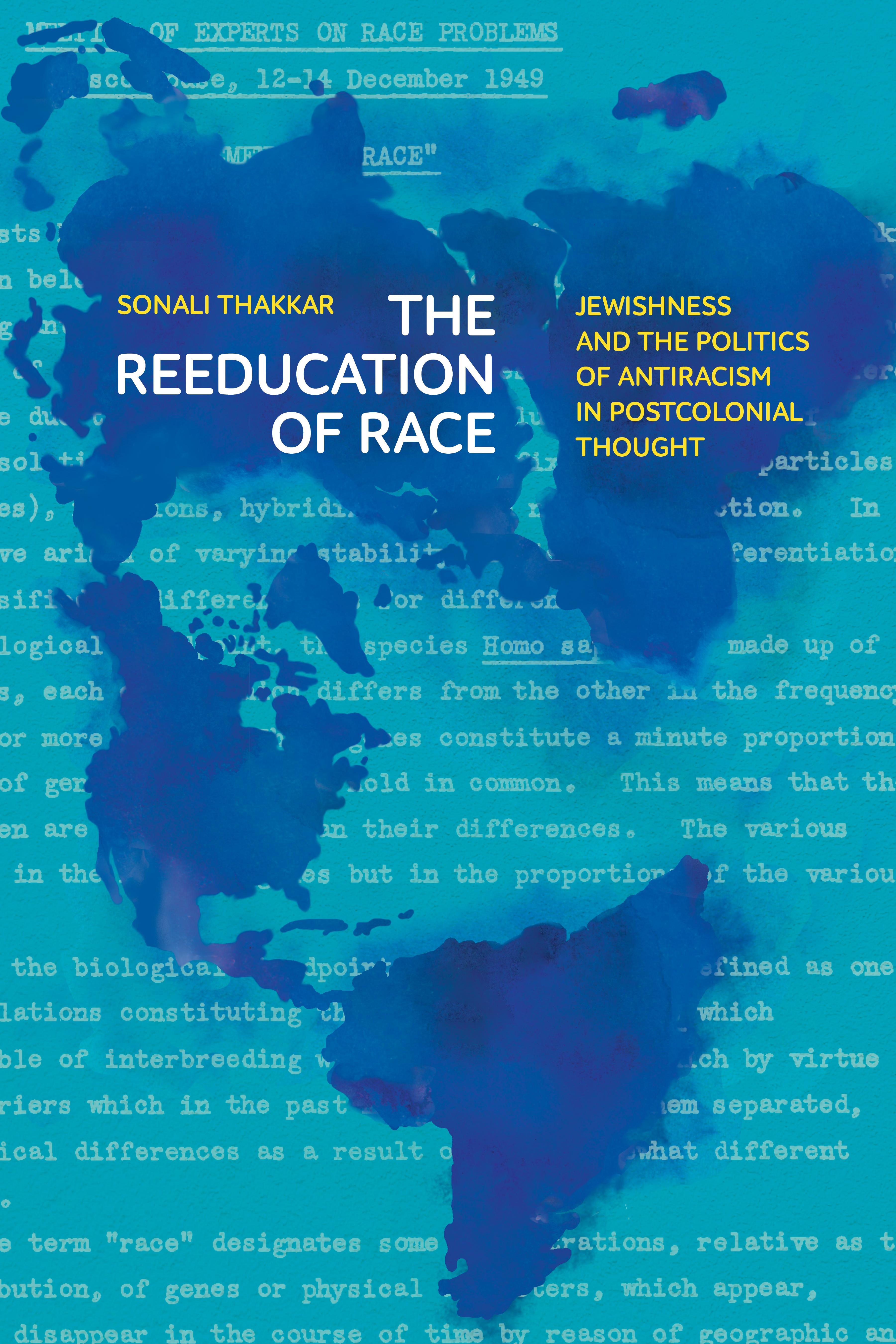
World War II produced a fundamental shift in modern racial discourse. In the postwar period, racism was situated for the first time at the center of international political life, and race's status as conceptual common sense and a justification for colonial rule was challenged with new intensity. In response to this crisis of race, the UN and UNESCO initiated a project of racial reeducation. This global antiracist campaign was framed by the persecution of Europe's Jews and anchored by UNESCO's epochal 1950 Statement on Race, which redefined the race concept and canonized the midcentury liberal antiracist consensus that continues to shape our present.
In this book, Sonali Thakkar tells the story of how UNESCO's race project directly influenced anticolonial thought and made Jewish difference and the Holocaust enduring preoccupations for anticolonial and postcolonial writers. Drawing on UNESCO's rich archival resources and shifting between the scientific, social scientific, literary, and cultural, Thakkar offers new readings of a varied collection of texts from the postcolonial, Jewish, and Black diasporic traditions. Anticolonial thought and postcolonial literature critically recast liberal scientific antiracism, Thakkar argues, and the concepts central to this new moral economy were the medium for postcolonialism's engagement with Jewishness. By recovering these connections, she shows how the midcentury crisis of racial meaning shaped the kinds of solidarities between racialized subjects that are thinkable today.
Płać wygodnie kartą, Klarną, Apple Pay lub Google Pay. Nie jesteś zadowolony? Zawsze masz 14-dniową gwarancję zwrotu pieniędzy. Więcej przeczytasz w naszych warunkach. Masz pytania? Napisz do nas na hello@memmo.org.
Memmo ułatwia naukę – gdziekolwiek jesteś na świecie. U nas znajdziesz podręczniki i sprytne narzędzia do nauki w jednym miejscu: streszczenia, quizy, podcasty i fiszki. A do tego Ted, Twój kumpel do nauki, który odpowie na wszystko, co Cię nurtuje. Ponad 50 000 studentów już tu się uczy – stworzone, byś uczył się szybciej i mniej stresował.