
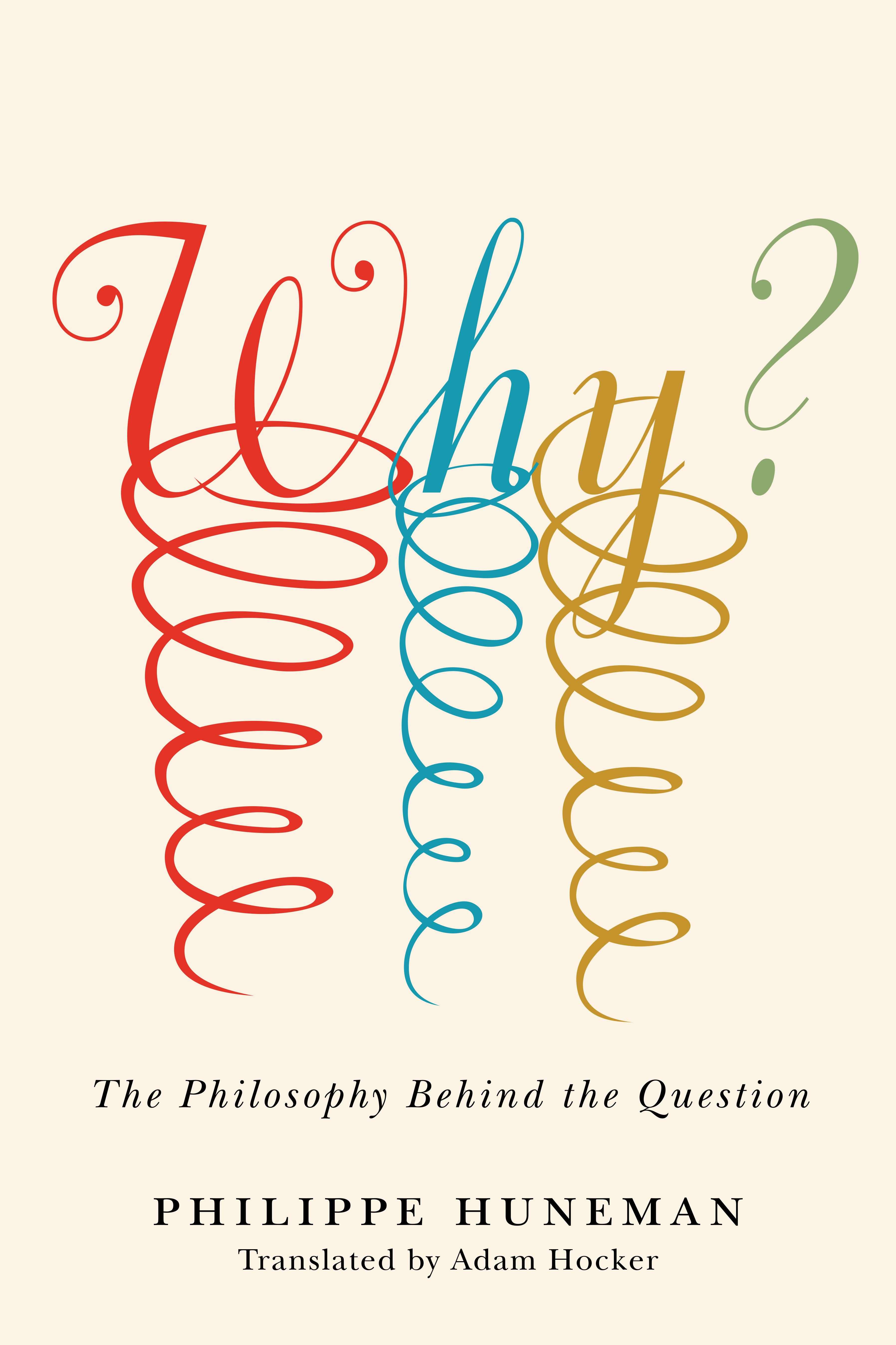
A philosopher explores the many dimensions of a beguilingly simple question.
Why did triceratops have horns? Why did World War I occur? Why does Romeo love Juliet? And, most importantly, why ask why? Through an analysis of these questions and others, philosopher Philippe Huneman describes the different meanings of "why," and how those meanings can, and should (or should not), be conflated.
As Huneman outlines, there are three basic meanings of why: the cause of an event, the reason of a belief, and the reason why I do what I do (the purpose). Each of these meanings, in turn, impacts how we approach knowledge in a wide array of disciplines: science, history, psychology, and metaphysics. Exhibiting a rare combination of conversational ease and intellectual rigor, Huneman teases out the hidden dimensions of questions as seemingly simple as "Why did Mickey Mouse open the refrigerator?" or as seemingly unanswerable as "Why am I me?" In doing so, he provides an extraordinary tour of canonical and contemporary philosophical thought, from Plato and Aristotle, through Descartes and Spinoza, to Elizabeth Anscombe and Ruth Millikan, and beyond.
Of course, no proper reckoning with the question "why?" can afford not to acknowledge its limits, which are the limits, and the ends, of reason itself. Huneman thus concludes with a provocative elaboration of what Kant called the "natural need for metaphysics," the unallayed instinct we have to ask the question even when we know there can be no unequivocal answer.
Płać wygodnie kartą, Klarną, Apple Pay lub Google Pay. Nie jesteś zadowolony? Zawsze masz 14-dniową gwarancję zwrotu pieniędzy. Więcej przeczytasz w naszych warunkach. Masz pytania? Napisz do nas na hello@memmo.org.
Memmo ułatwia naukę – gdziekolwiek jesteś na świecie. U nas znajdziesz podręczniki i sprytne narzędzia do nauki w jednym miejscu: streszczenia, quizy, podcasty i fiszki. A do tego Ted, Twój kumpel do nauki, który odpowie na wszystko, co Cię nurtuje. Ponad 50 000 studentów już tu się uczy – stworzone, byś uczył się szybciej i mniej stresował.