
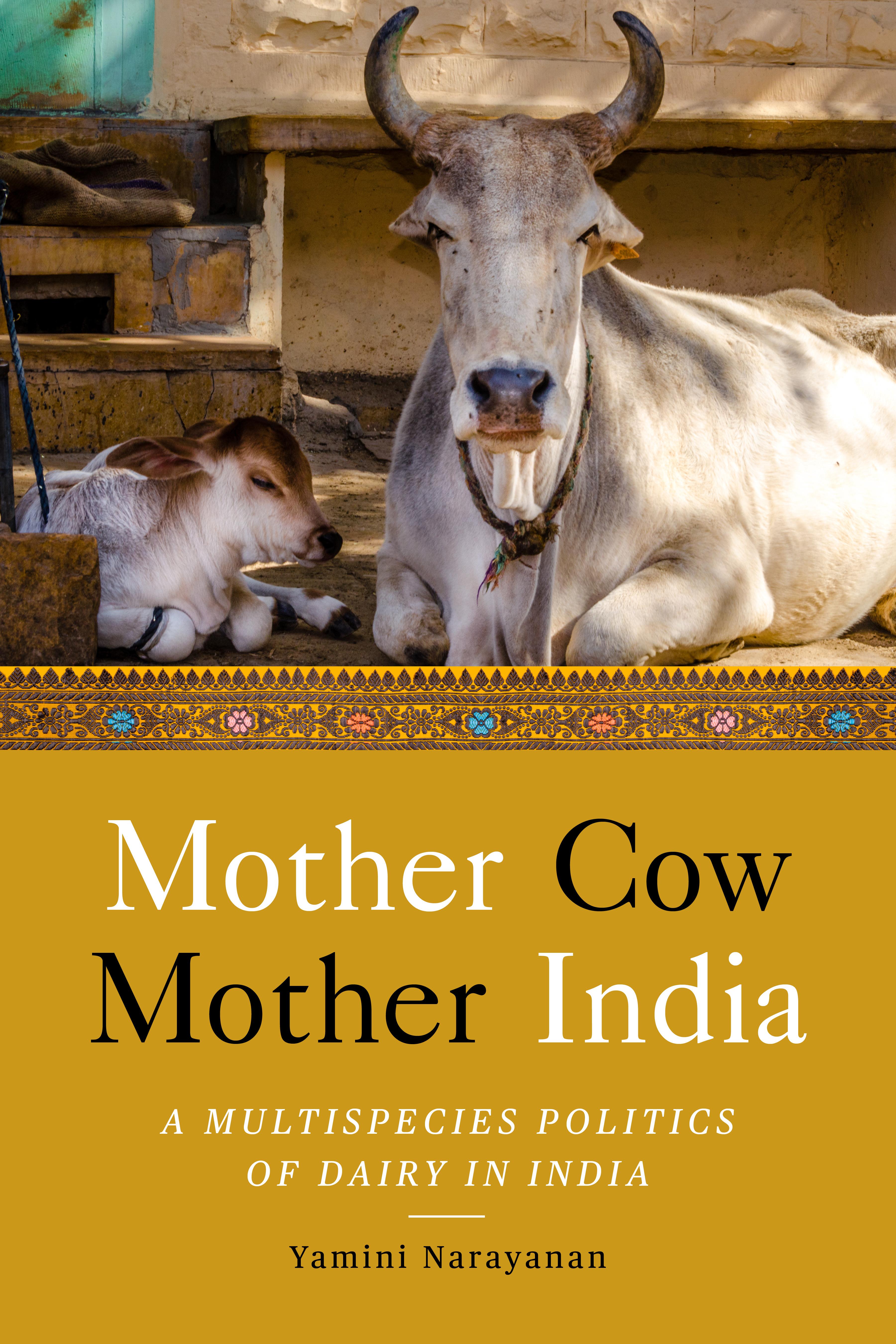
India imposes stringent criminal penalties, including life imprisonment in some states, for cow slaughter, based on a Hindu ethic of revering the cow as sacred. And yet India is among the world's leading producers of beef, leather, and milk, industries sustained by the mass slaughter of bovines. What is behind this seeming contradiction? What do bovines, deemed holy in Hinduism, experience in the Indian milk and beef industries? Yamini Narayanan asks and answers these questions, introducing cows and buffaloes as key subjects in India's cow protectionism, rather than their treatment hitherto as mere objects of political analysis.
Emphasizing human–animal hierarchical relations, Narayanan argues that the Hindu framing of the cow as "mother" is one of human domination, wherein bovine motherhood is simultaneously capitalized for dairy production and weaponized by right-wing Hindu nationalists to violently oppress Muslims and Dalits. Using ethnographic and empirical data gathered across India, this book reveals the harms caused to buffaloes, cows, bulls, and calves in dairying, and the exploitation required of the diverse, racialized labor throughout India's dairy production continuum to obscure such violence. Ultimately, Narayanan traces how the unraveling of human domination and exploitation of farmed animals is integral to progressive multispecies democratic politics, speculating on the real possibility of a post-dairy society, based on vegan agricultural policies for livelihoods and food security.
Płać wygodnie kartą, Klarną, Apple Pay lub Google Pay. Nie jesteś zadowolony? Zawsze masz 14-dniową gwarancję zwrotu pieniędzy. Więcej przeczytasz w naszych warunkach. Masz pytania? Napisz do nas na hello@memmo.org.
Memmo ułatwia naukę – gdziekolwiek jesteś na świecie. U nas znajdziesz podręczniki i sprytne narzędzia do nauki w jednym miejscu: streszczenia, quizy, podcasty i fiszki. A do tego Ted, Twój kumpel do nauki, który odpowie na wszystko, co Cię nurtuje. Ponad 50 000 studentów już tu się uczy – stworzone, byś uczył się szybciej i mniej stresował.