
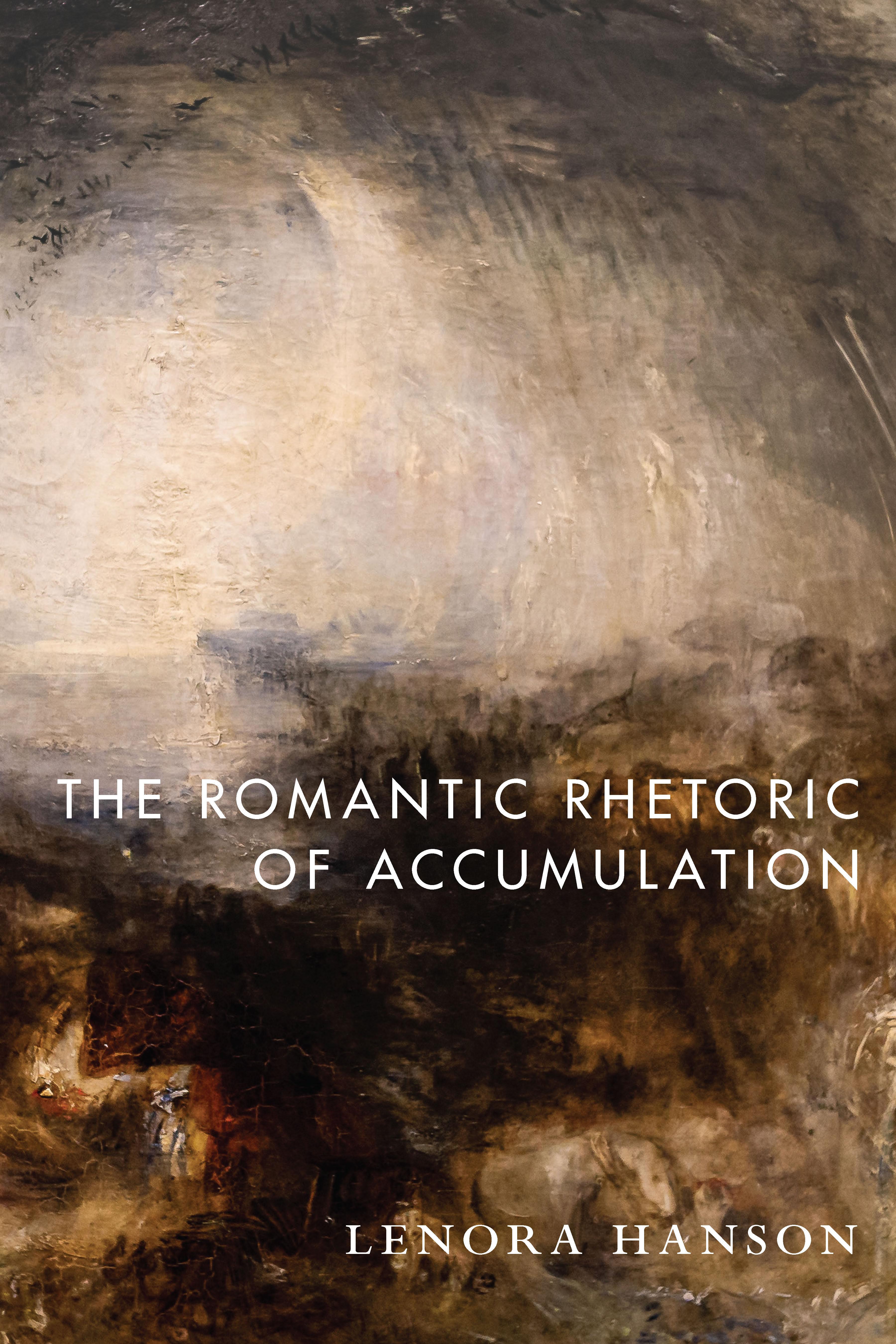
The Romantic Rhetoric of Accumulation provides an account of the long arc of dispossession from the British Romantic period to today. Lenora Hanson glimpses histories of subsistence (such as reproductive labor, vagrancy and criminality, and unwaged labor) as figural ways of living that are superfluous—simultaneously more than enough to live and less than what is necessary for capitalism.
Hanson treats rhetorical language as an archive of capital's accumulation through dispossession, in works by S.T. Coleridge, Edmund Burke, Mary Robinson, William Wordsworth, Benjamin Moseley, Joseph Priestley, and Alexander von Humboldt, as well as in contemporary film and critical theory. Reading riots through apostrophe, enclosure through anachronism, superstition and witchcraft through tautology, and the paradoxical coincidence of subsistence living with industrialization, Hanson shows the figural to be a material record of the survival of non-capitalist forms of life within capitalism. But this survival is not always-already resistant to capitalism, nor are the origins of capital accumulation confined to the Romantic past. Hanson reveals rhetorical figure as entwined in deeply ambivalent ways with the circuitous, ongoing process of dispossession.
Reading both historically and rhetorically, Hanson argues that rhetorical language records histories of dispossession and the racialized, gendered distribution of the labor of subsistence. Romanticism, they show, is more contemporary than ever.
Płać wygodnie kartą, Klarną, Apple Pay lub Google Pay. Nie jesteś zadowolony? Zawsze masz 14-dniową gwarancję zwrotu pieniędzy. Więcej przeczytasz w naszych warunkach. Masz pytania? Napisz do nas na hello@memmo.org.
Memmo ułatwia naukę – gdziekolwiek jesteś na świecie. U nas znajdziesz podręczniki i sprytne narzędzia do nauki w jednym miejscu: streszczenia, quizy, podcasty i fiszki. A do tego Ted, Twój kumpel do nauki, który odpowie na wszystko, co Cię nurtuje. Ponad 50 000 studentów już tu się uczy – stworzone, byś uczył się szybciej i mniej stresował.