
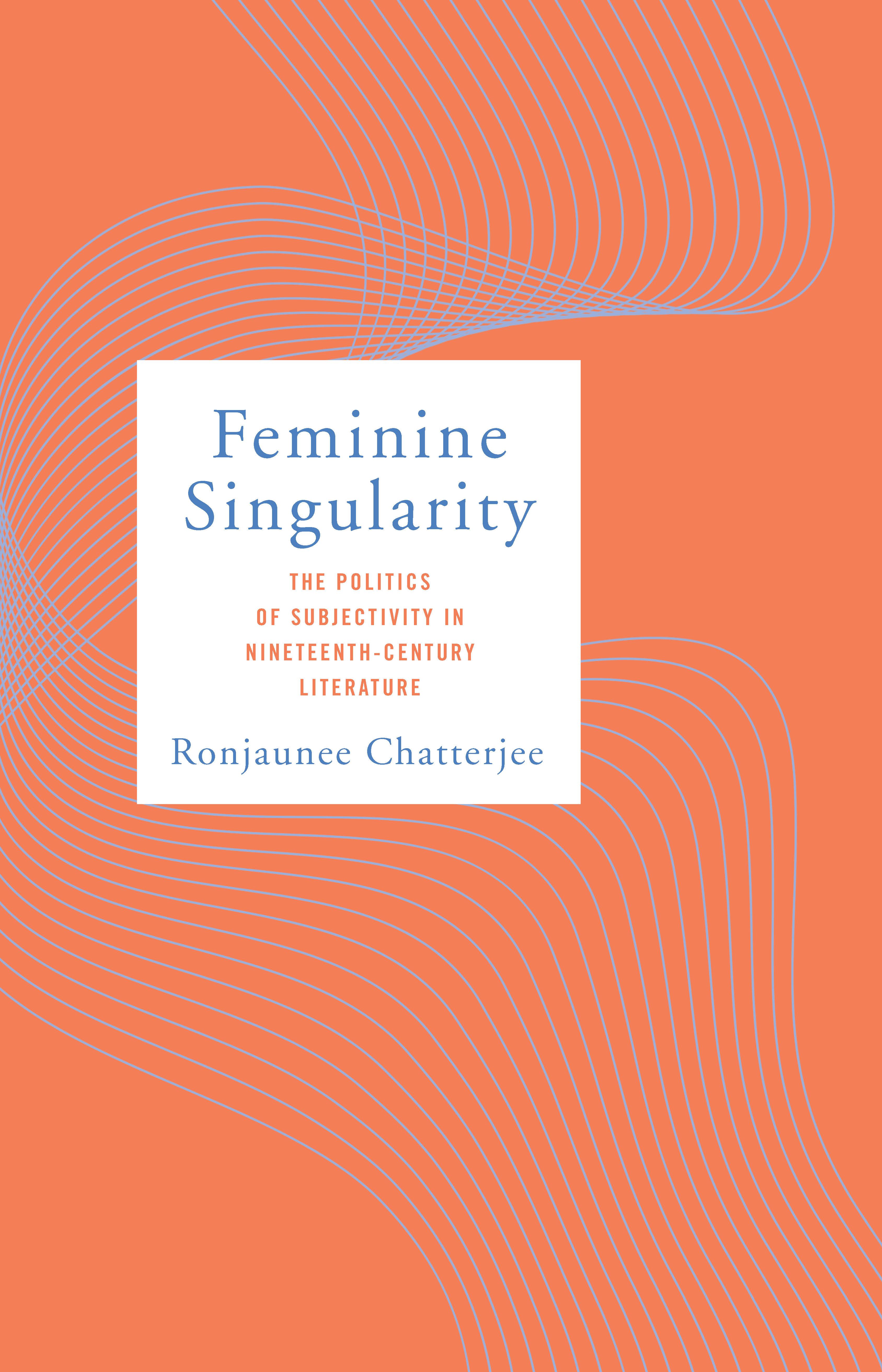
What happens if we read nineteenth-century and Victorian texts not for the autonomous liberal subject, but for singularity—for what is partial, contingent, and in relation, rather than what is merely "alone"? Feminine Singularity offers a powerful feminist theory of the subject—and shows us paths to thinking subjectivity, race, and gender anew in literature and in our wider social world.
Through fresh, sophisticated readings of Lewis Carroll, Christina Rossetti, Charles Baudelaire, and Wilkie Collins in conversation with psychoanalysis, Black feminist and queer-of-color theory, and continental philosophy, Ronjaunee Chatterjee uncovers a lexicon of feminine singularity that manifests across poetry and prose through likeness and minimal difference, rather than individuality and identity. Reading for singularity shows us the ways femininity is fundamentally entangled with racial difference in the nineteenth century and well into the contemporary, as well as how rigid categories can be unsettled and upended.
Grappling with the ongoing violence embedded in the Western liberal imaginary, Feminine Singularity invites readers to commune with the subversive potentials in nineteenth-century literature for thinking subjectivity today.
Płać wygodnie kartą, Klarną, Apple Pay lub Google Pay. Nie jesteś zadowolony? Zawsze masz 14-dniową gwarancję zwrotu pieniędzy. Więcej przeczytasz w naszych warunkach. Masz pytania? Napisz do nas na hello@memmo.org.
Memmo ułatwia naukę – gdziekolwiek jesteś na świecie. U nas znajdziesz podręczniki i sprytne narzędzia do nauki w jednym miejscu: streszczenia, quizy, podcasty i fiszki. A do tego Ted, Twój kumpel do nauki, który odpowie na wszystko, co Cię nurtuje. Ponad 50 000 studentów już tu się uczy – stworzone, byś uczył się szybciej i mniej stresował.