
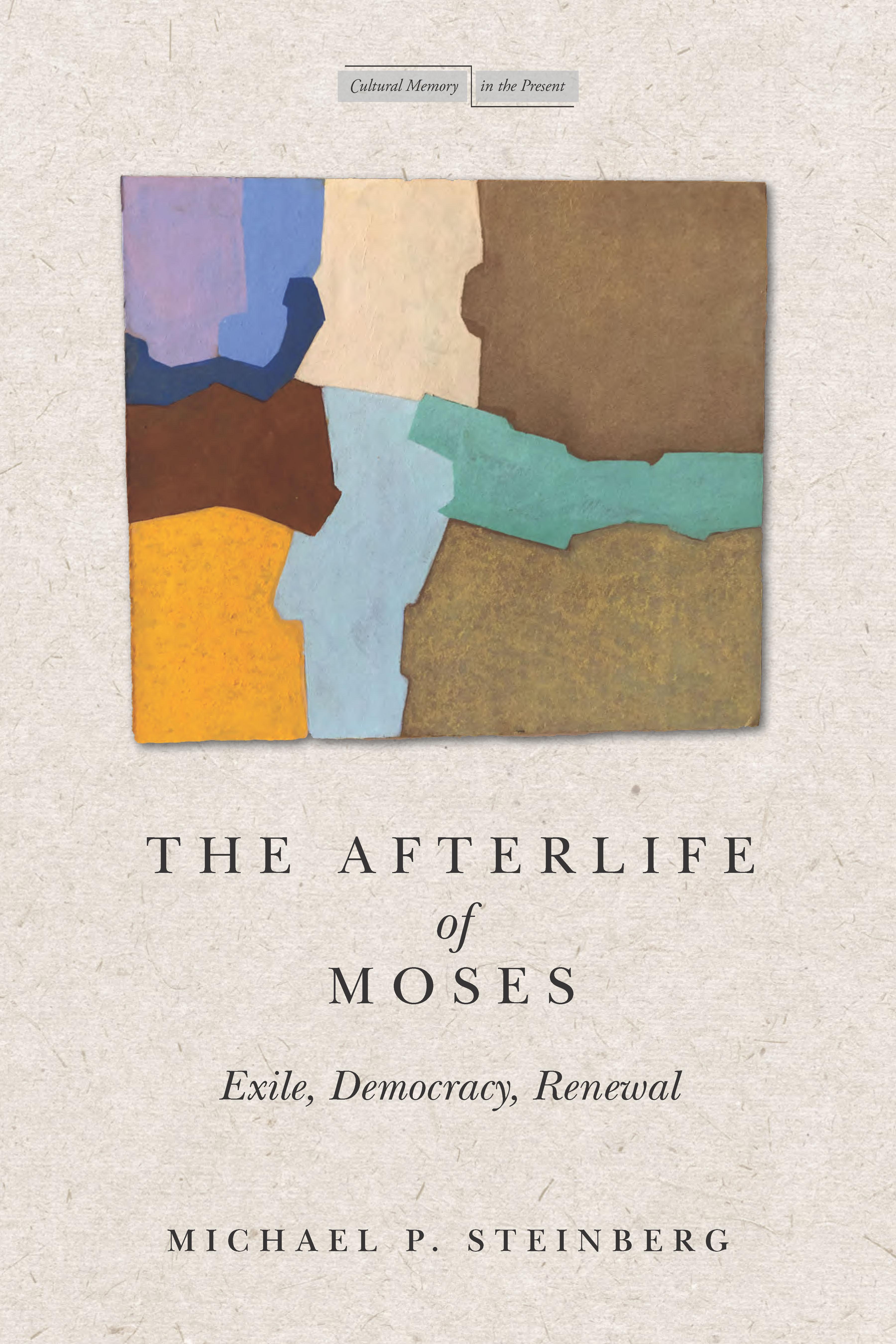
In this elegant and personal new work, Michael P. Steinberg reflects on the story of Moses and the Exodus as a foundational myth of politics—of the formation not of a nation but of a political community grounded in universal law.
Modern renderings of the story of Moses, from Michelangelo to Spinoza to Freud to Schoenberg to Derrida, have seized on the story's ambivalences, its critical and self-critical power. These literal returns form the first level of the afterlife of Moses. They spin a persistent critical and self-critical thread of European and transatlantic art and argument. And they enable the second strand of Steinberg's argument, namely the depersonalization of the Moses and Exodus story, its evolving abstraction and modulation into a varied modern history of political beginnings. Beginnings, as distinct from origins, are human and historical, writes Steinberg. Political constitutions, as a form of beginning, imply the eventuality of their own renewals and their own reconstitutions.
Motivated in part by recent reactionary insurgencies in the US, Europe, and Israel, this astute work of intellectual history posits the critique of myths of origin as a key principle of democratic government, affect, and citizenship, of their endurance as well as their fragility.
Płać wygodnie kartą, Klarną, Apple Pay lub Google Pay. Nie jesteś zadowolony? Zawsze masz 14-dniową gwarancję zwrotu pieniędzy. Więcej przeczytasz w naszych warunkach. Masz pytania? Napisz do nas na hello@memmo.org.
Memmo ułatwia naukę – gdziekolwiek jesteś na świecie. U nas znajdziesz podręczniki i sprytne narzędzia do nauki w jednym miejscu: streszczenia, quizy, podcasty i fiszki. A do tego Ted, Twój kumpel do nauki, który odpowie na wszystko, co Cię nurtuje. Ponad 50 000 studentów już tu się uczy – stworzone, byś uczył się szybciej i mniej stresował.