
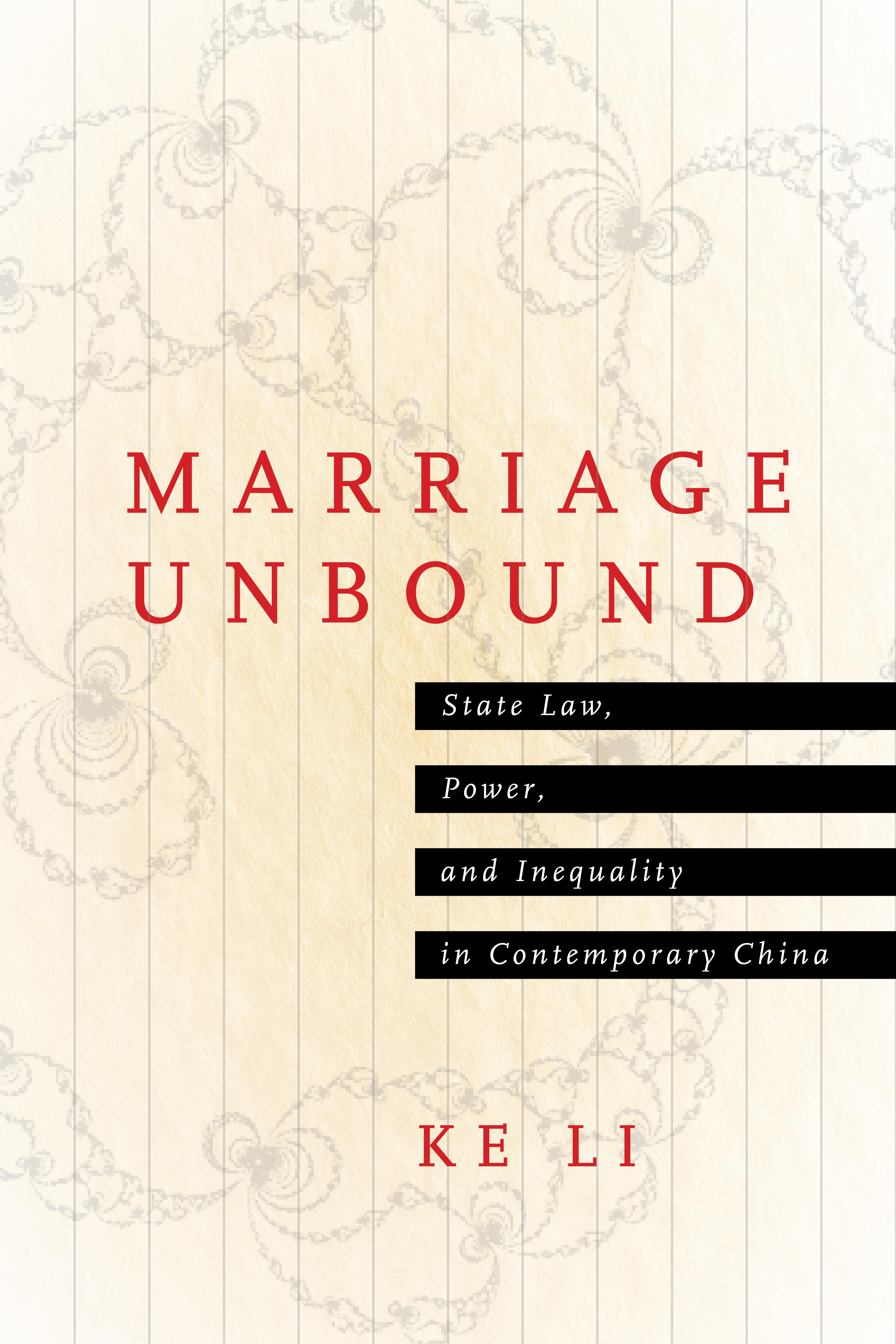
China after Mao has undergone vast transformations, including massive rural-to-urban migration, rising divorce rates, and the steady expansion of the country's legal system. Today, divorce may appear a private concern, when in fact it is a profoundly political matter—especially in a national context where marriage was and has continued to be a key vehicle for nation-state building. Marriage Unbound focuses on the politics of divorce cases in contemporary China, following a group of women seeking judicial remedies for conjugal grievances and disputes.
Drawing on extensive archival and ethnographic data, paired with unprecedented access to rural Chinese courtrooms, Ke Li presents not only a stirring portrayal of how these women navigate divorce litigation, but also a uniquely in-depth account of the modern Chinese legal system. With sensitive and fluid prose, Li reveals the struggles between the powerful and the powerless at the front lines of dispute management; the complex interplay between culture and the state; and insidious statecraft that far too often sacrifices women's rights and interests. Ultimately, this book shows how women's legal mobilization and rights contention can forge new ground for our understanding of law, politics, and inequality in an authoritarian regime.
Płać wygodnie kartą, Klarną, Apple Pay lub Google Pay. Nie jesteś zadowolony? Zawsze masz 14-dniową gwarancję zwrotu pieniędzy. Więcej przeczytasz w naszych warunkach. Masz pytania? Napisz do nas na hello@memmo.org.
Memmo ułatwia naukę – gdziekolwiek jesteś na świecie. U nas znajdziesz podręczniki i sprytne narzędzia do nauki w jednym miejscu: streszczenia, quizy, podcasty i fiszki. A do tego Ted, Twój kumpel do nauki, który odpowie na wszystko, co Cię nurtuje. Ponad 50 000 studentów już tu się uczy – stworzone, byś uczył się szybciej i mniej stresował.