
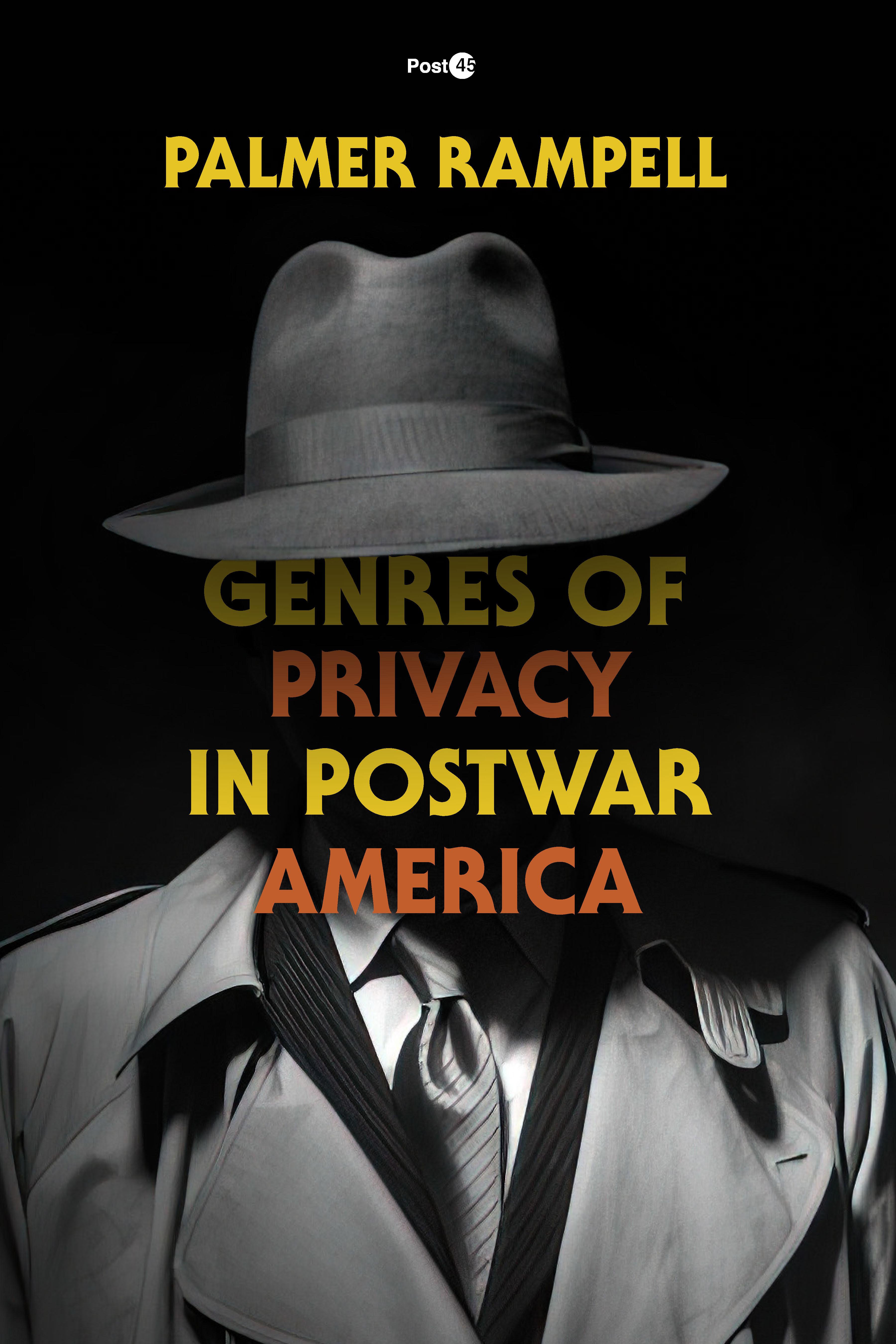
With this incisive work, Palmer Rampell reveals the surprising role genre fiction played in redefining the category of the private person in the postwar period. Especially after the Supreme Court established a constitutional right to privacy in 1965, legal scholars, judges, and the public scrambled to understand the scope of that right. Before and after the Court's ruling, authors of genre fiction and film reformulated their aliens, androids, and monsters to engage in debates about personal privacy as it pertained to issues like abortion, police surveillance, and euthanasia.
Triangulating novels and films with original archival discoveries and historical and legal research, Rampell provides new readings of Patricia Highsmith, Dorothy B. Hughes, Philip K. Dick, Octavia Butler, Chester Himes, Stephen King, Cormac McCarthy, and others. The book pairs the right of privacy for heterosexual sex with queer and proto-feminist crime fiction; racialized police surveillance at midcentury with Black crime fiction; Roe v. Wade (1973) with 1960s and 1970s science fiction; the Child Abuse Prevention and Treatment Act (1974) with horror; and the right to die with westerns. While we are accustomed to defenses of fiction for its capacity to represent fully rendered private life, Rampell suggests that we might value a certain strand of genre fiction for its capacity to theorize the meaning of the protean concept of privacy.
Płać wygodnie kartą, Klarną, Apple Pay lub Google Pay. Nie jesteś zadowolony? Zawsze masz 14-dniową gwarancję zwrotu pieniędzy. Więcej przeczytasz w naszych warunkach. Masz pytania? Napisz do nas na hello@memmo.org.
Memmo ułatwia naukę – gdziekolwiek jesteś na świecie. U nas znajdziesz podręczniki i sprytne narzędzia do nauki w jednym miejscu: streszczenia, quizy, podcasty i fiszki. A do tego Ted, Twój kumpel do nauki, który odpowie na wszystko, co Cię nurtuje. Ponad 50 000 studentów już tu się uczy – stworzone, byś uczył się szybciej i mniej stresował.