
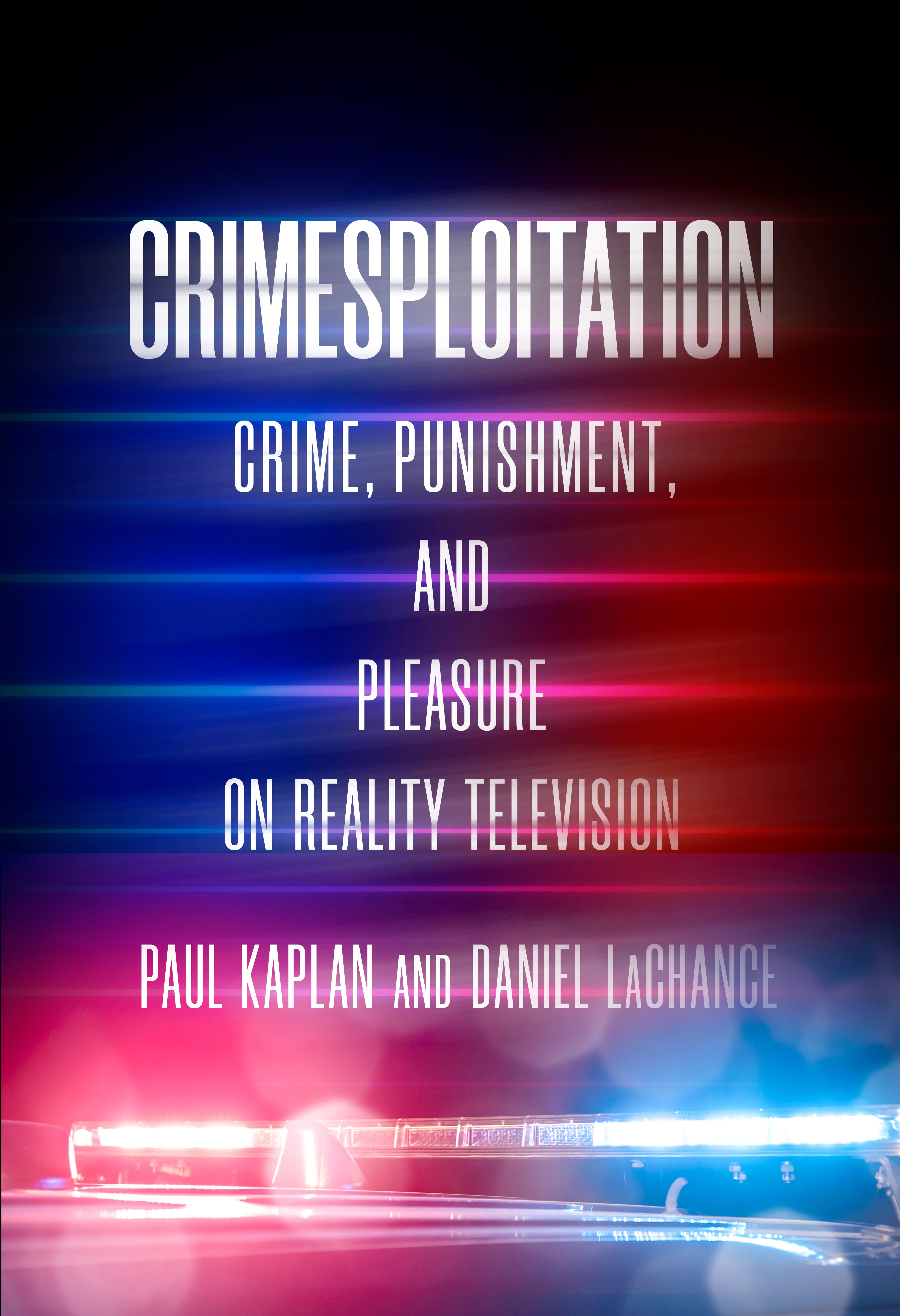
"Due to the graphic nature of this program, viewer discretion is advised." Most of us have encountered this warning while watching television at some point. It is typically attached to a brand of reality crime TV that Paul Kaplan and Daniel LaChance call "crimesploitation": spectacles designed to entertain mass audiences by exhibiting "real" criminal behavior and its consequences. This book examines their enduring popularity in American culture. Analyzing the structure and content of several popular crimesploitation shows, including Cops, Dog: The Bounty Hunter, and To Catch a Predator, as well as newer examples like Making a Murderer and Don't F**K with Cats, Kaplan and LaChance highlight the troubling nature of the genre: though it presents itself as ethical and righteous, its entertainment value hinges upon suffering. Viewers can imagine themselves as deviant and ungovernable like the criminals in the show, thereby escaping a law-abiding lifestyle. Alternatively, they can identify with law enforcement officials, exercising violence, control, and "justice" on criminal others. Crimesploitation offers a sobering look at the depictions of criminals, policing, and punishment in modern America.
Płać wygodnie kartą, Klarną, Apple Pay lub Google Pay. Nie jesteś zadowolony? Zawsze masz 14-dniową gwarancję zwrotu pieniędzy. Więcej przeczytasz w naszych warunkach. Masz pytania? Napisz do nas na hello@memmo.org.
Memmo ułatwia naukę – gdziekolwiek jesteś na świecie. U nas znajdziesz podręczniki i sprytne narzędzia do nauki w jednym miejscu: streszczenia, quizy, podcasty i fiszki. A do tego Ted, Twój kumpel do nauki, który odpowie na wszystko, co Cię nurtuje. Ponad 50 000 studentów już tu się uczy – stworzone, byś uczył się szybciej i mniej stresował.