
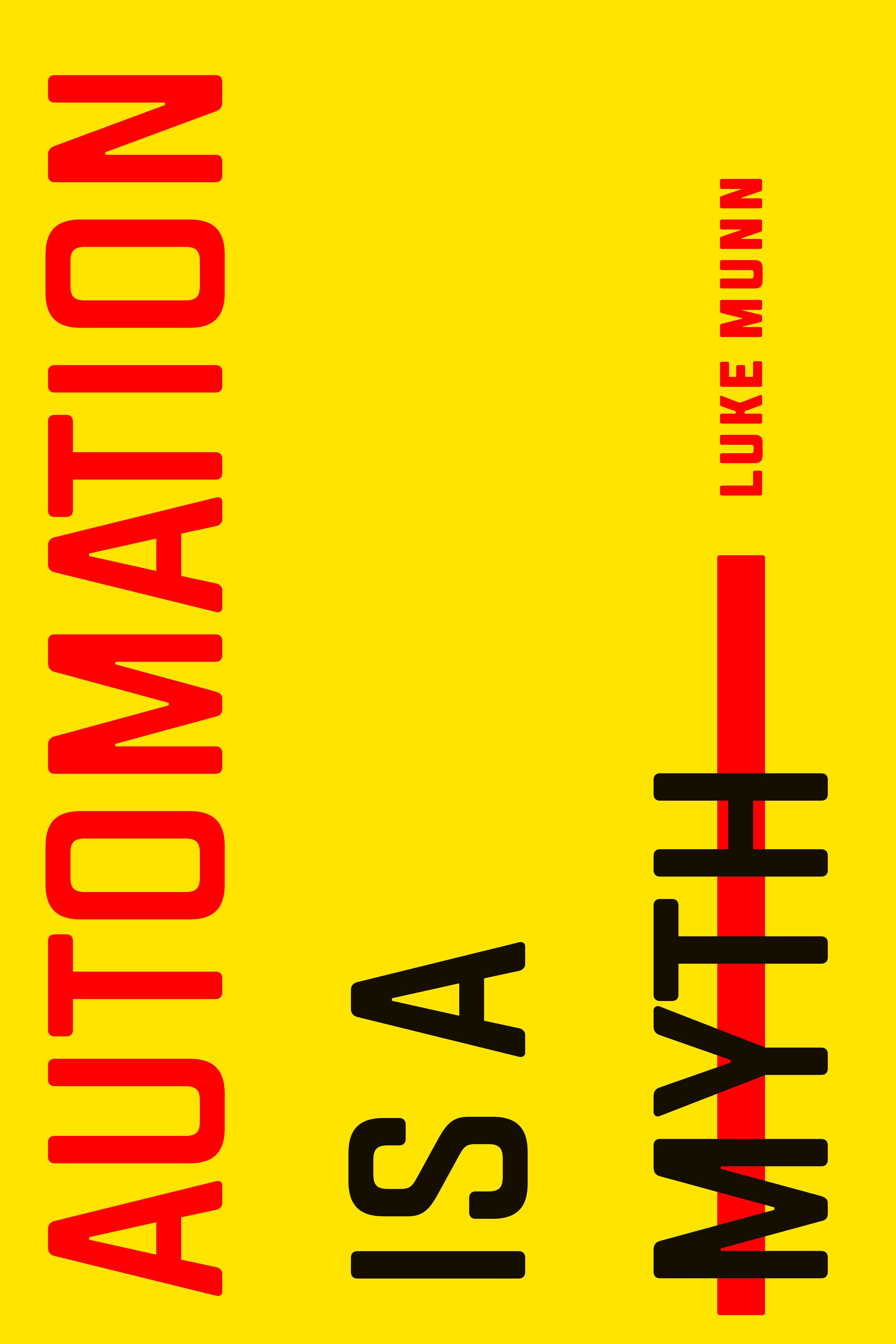
For some, automation will usher in a labor-free utopia; for others, it signals a disastrous age-to-come. Yet whether seen as dream or nightmare, automation, argues Munn, is ultimately a fable that rests on a set of triple fictions. There is the myth of full autonomy, claiming that machines will take over production and supplant humans. But far from being self-acting, technical solutions are piecemeal; their support and maintenance reveals the immense human labor behind "autonomous" processes. There is the myth of universal automation, with technologies framed as a desituated force sweeping the globe. But this fiction ignores the social, cultural, and geographical forces that shape technologies at a local level. And, there is the myth of automating everyone, the generic figure of "the human" at the heart of automation claims. But labor is socially stratified and so automation's fallout will be highly uneven, falling heavier on some (immigrants, people of color, women) than others. Munn moves from machine minders in China to warehouse pickers in the United States to explore the ways that new technologies do (and don't) reconfigure labor. Combining this rich array of human stories with insights from media and cultural studies, Munn points to a more nuanced, localized, and racialized understanding of the "future of work."
Płać wygodnie kartą, Klarną, Apple Pay lub Google Pay. Nie jesteś zadowolony? Zawsze masz 14-dniową gwarancję zwrotu pieniędzy. Więcej przeczytasz w naszych warunkach. Masz pytania? Napisz do nas na hello@memmo.org.
Memmo ułatwia naukę – gdziekolwiek jesteś na świecie. U nas znajdziesz podręczniki i sprytne narzędzia do nauki w jednym miejscu: streszczenia, quizy, podcasty i fiszki. A do tego Ted, Twój kumpel do nauki, który odpowie na wszystko, co Cię nurtuje. Ponad 50 000 studentów już tu się uczy – stworzone, byś uczył się szybciej i mniej stresował.