
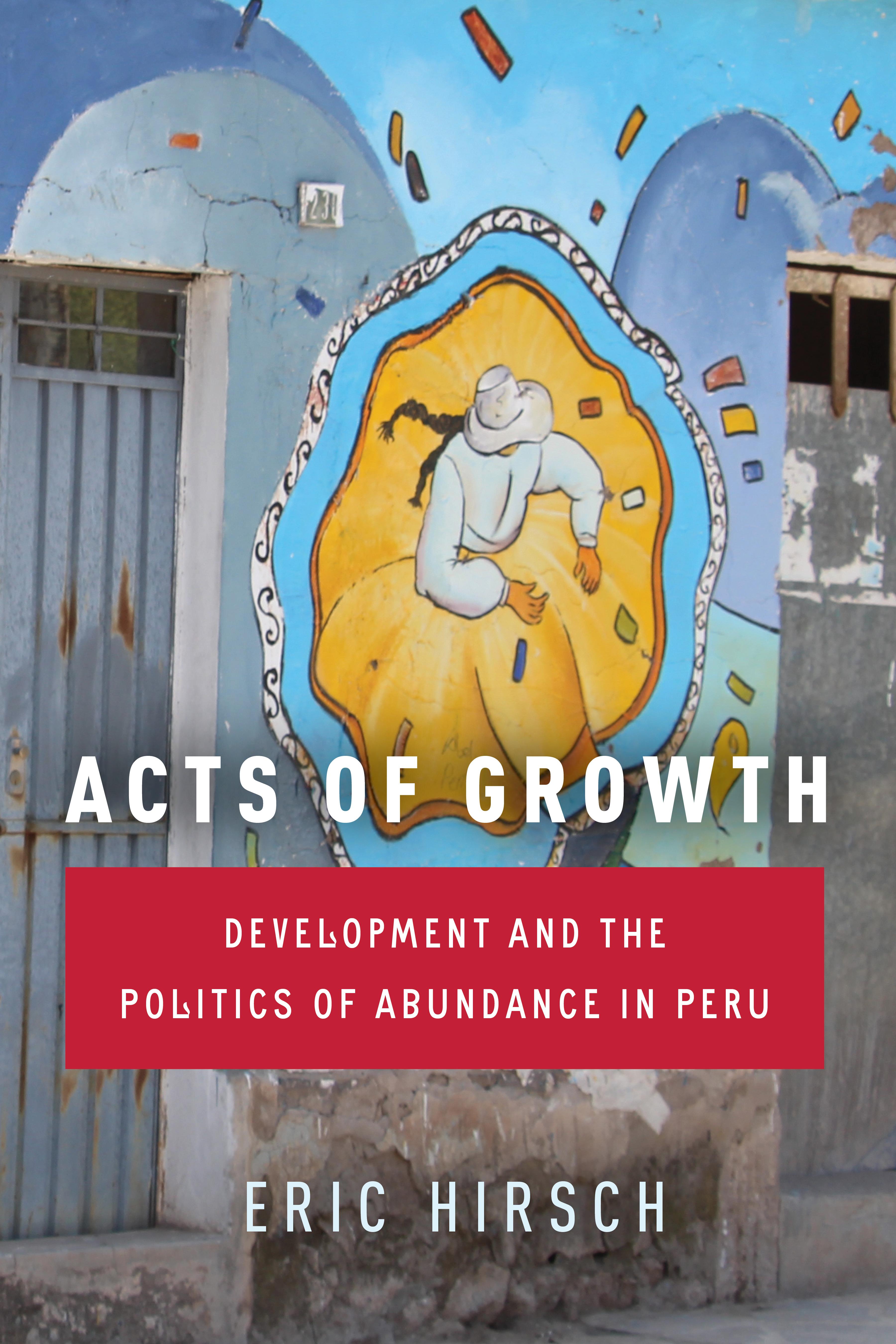
Over the last decade, Peru has experienced a spectacular mining boom and astronomical economic growth. Yet, for villagers in Peru's southern Andes, few have felt the material benefits. With this book, Eric Hirsch considers what growth means—and importantly how it feels. Hirsch proposes an analysis of boom-time capitalism that starts not from considerations of poverty, but from the premise that Peru is wealthy. He situates his work in a network of villages near new mining sites, agricultural export markets, and tourist attractions, where Peruvian prosperity appears tantalizingly close, yet just out of reach.
This book centers on small-scale development investments working to transform villagers into Indigenous entrepreneurs ready to capitalize on Peru's new national brand and access the constantly deferred promise of national growth. That meant identifying as Indigenous, where few actively did so; identifying as an entrepreneur, in a place where single-minded devotion to a business went against the tendency to diversify income sources; and identifying every dimension of one's daily life as a resource, despite the unwelcome intimacy this required. Theorizing growth as an affective project that requires constant physical and emotional labor, Acts of Growth follows a diverse group of Andean residents through the exhausting work of making an economy grow.
Płać wygodnie kartą, Klarną, Apple Pay lub Google Pay. Nie jesteś zadowolony? Zawsze masz 14-dniową gwarancję zwrotu pieniędzy. Więcej przeczytasz w naszych warunkach. Masz pytania? Napisz do nas na hello@memmo.org.
Memmo ułatwia naukę – gdziekolwiek jesteś na świecie. U nas znajdziesz podręczniki i sprytne narzędzia do nauki w jednym miejscu: streszczenia, quizy, podcasty i fiszki. A do tego Ted, Twój kumpel do nauki, który odpowie na wszystko, co Cię nurtuje. Ponad 50 000 studentów już tu się uczy – stworzone, byś uczył się szybciej i mniej stresował.