
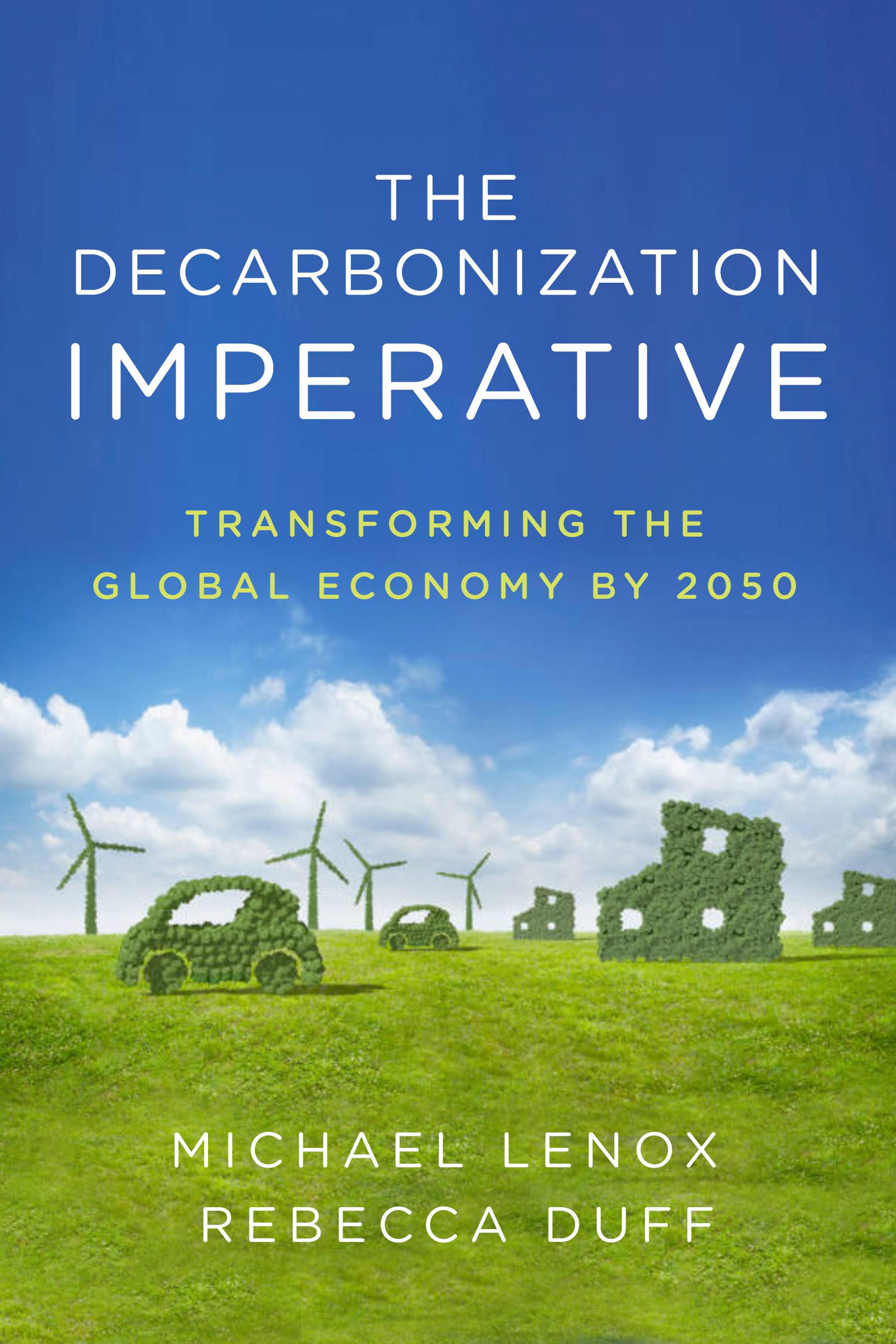
Time is of the essence. Climate change looms as a malignant force that will reshape our economy and society for generations to come. If we are going to avoid the worst effects of climate change, we are going to need to effectively "decarbonize" the global economy by 2050.
This doesn't mean a modest, or even a drastic, improvement in fuel efficiency standards for automobiles. It means 100 percent of the cars on the road being battery-powered or powered by some other non-carbon-emitting powertrain. It means 100 percent of our global electricity needs being met by renewables and other non-carbon-emitting sources such as nuclear power. It means electrifying the global industrials sector and replacing carbon-intensive chemical processes with green alternatives, eliminating scope-one emissions—emissions in production—across all industries, particularly steel, cement, petrochemicals, which are the backbone of the global economy. It means sustainable farming while still feeding a growing global population.
Responding to the existential threat of climate change, Michael Lenox and Rebecca Duff propose a radical reconfiguration of the industries contributing the most, and most harmfully, to this planetary crisis. Disruptive innovation and a particular calibration of industry dynamics will be key to this change. The authors analyze precisely what this might look like for specific sectors of the world economy—ranging from agriculture to industrials and building, energy, and transportation—and examine the possible challenges and obstacles to introducing a paradigm shift in each one. With regards to existent business practices and products, how much and what kind of transformation can be achieved? The authors assert that markets are critical to achieving the needed change, and that they operate within a larger scale of institutional rules and norms. Lenox and Duff conclude with an analysis of policy interventions and strategies that could move us toward clean tech and decarbonization by 2050.
Płać wygodnie kartą, Klarną, Apple Pay lub Google Pay. Nie jesteś zadowolony? Zawsze masz 14-dniową gwarancję zwrotu pieniędzy. Więcej przeczytasz w naszych warunkach. Masz pytania? Napisz do nas na hello@memmo.org.
Memmo ułatwia naukę – gdziekolwiek jesteś na świecie. U nas znajdziesz podręczniki i sprytne narzędzia do nauki w jednym miejscu: streszczenia, quizy, podcasty i fiszki. A do tego Ted, Twój kumpel do nauki, który odpowie na wszystko, co Cię nurtuje. Ponad 50 000 studentów już tu się uczy – stworzone, byś uczył się szybciej i mniej stresował.