
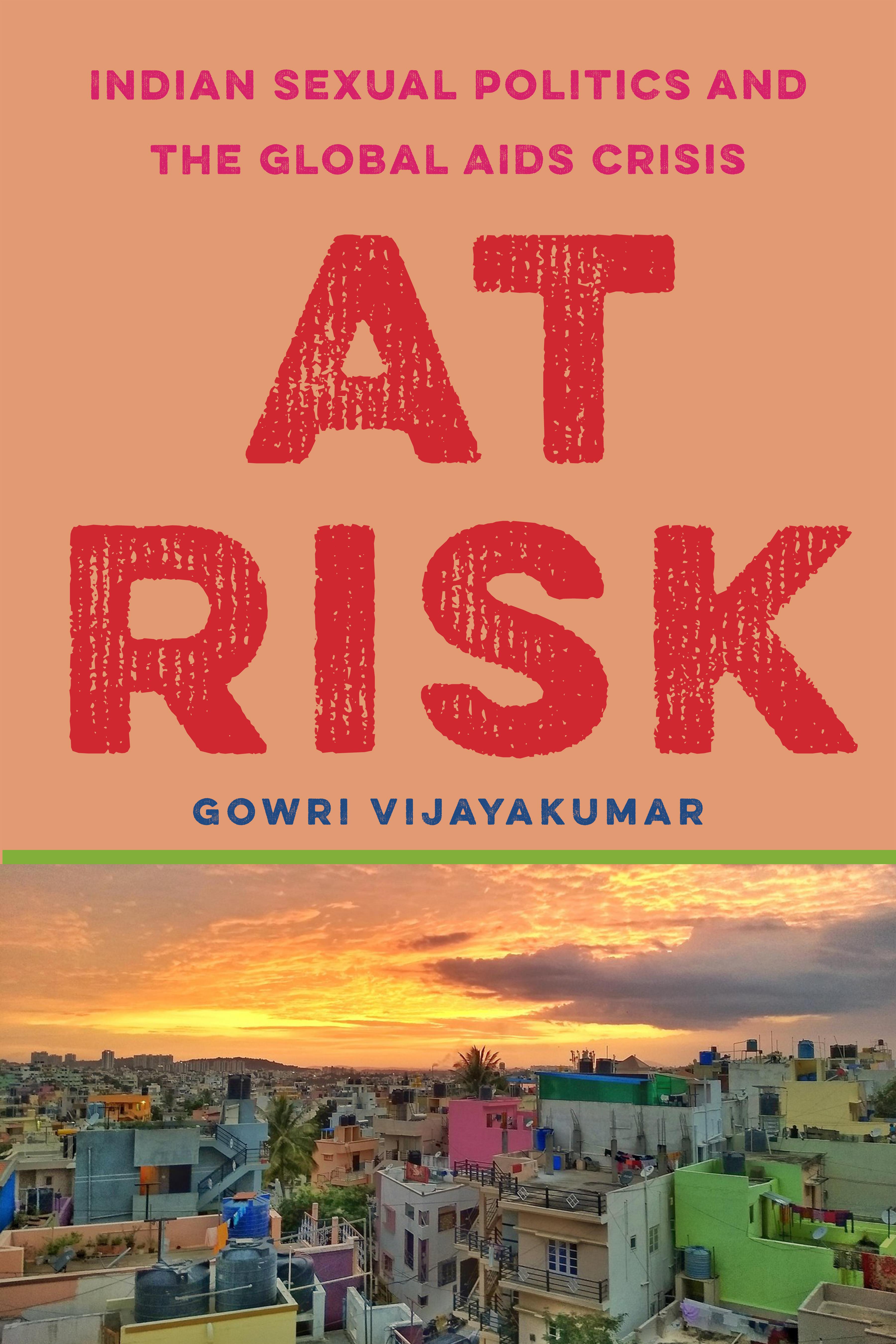
In the mid-1990s, experts predicted that India would face the world's biggest AIDS epidemic by 2000. Though a crisis at this scale never fully materialized, global public health institutions, donors, and the Indian state initiated a massive effort to prevent it. HIV prevention programs channeled billions of dollars toward those groups designated as at-risk—sex workers and men who have sex with men. At Risk captures this unique moment in which these criminalized and marginalized groups reinvented their "at-risk" categorization and became central players in the crisis response. The AIDS crisis created a contradictory, conditional, and temporary opening for sex-worker and LGBTIQ activists to renegotiate citizenship and to make demands on the state.
Working across India and Kenya, Gowri Vijayakumar provides a fine-grained account of the political struggles at the heart of the Indian AIDS response. These range from everyday articulations of sexual identity in activist organizations in Bangalore to new approaches to HIV prevention in Nairobi, where prevention strategies first introduced in India are adapted and circulate, as in the global AIDS field more broadly. Vijayakumar illuminates how the politics of gender, sexuality, and nationalism shape global crisis response. In so doing, she considers the precarious potential for social change in and after a crisis.
Płać wygodnie kartą, Klarną, Apple Pay lub Google Pay. Nie jesteś zadowolony? Zawsze masz 14-dniową gwarancję zwrotu pieniędzy. Więcej przeczytasz w naszych warunkach. Masz pytania? Napisz do nas na hello@memmo.org.
Memmo ułatwia naukę – gdziekolwiek jesteś na świecie. U nas znajdziesz podręczniki i sprytne narzędzia do nauki w jednym miejscu: streszczenia, quizy, podcasty i fiszki. A do tego Ted, Twój kumpel do nauki, który odpowie na wszystko, co Cię nurtuje. Ponad 50 000 studentów już tu się uczy – stworzone, byś uczył się szybciej i mniej stresował.