
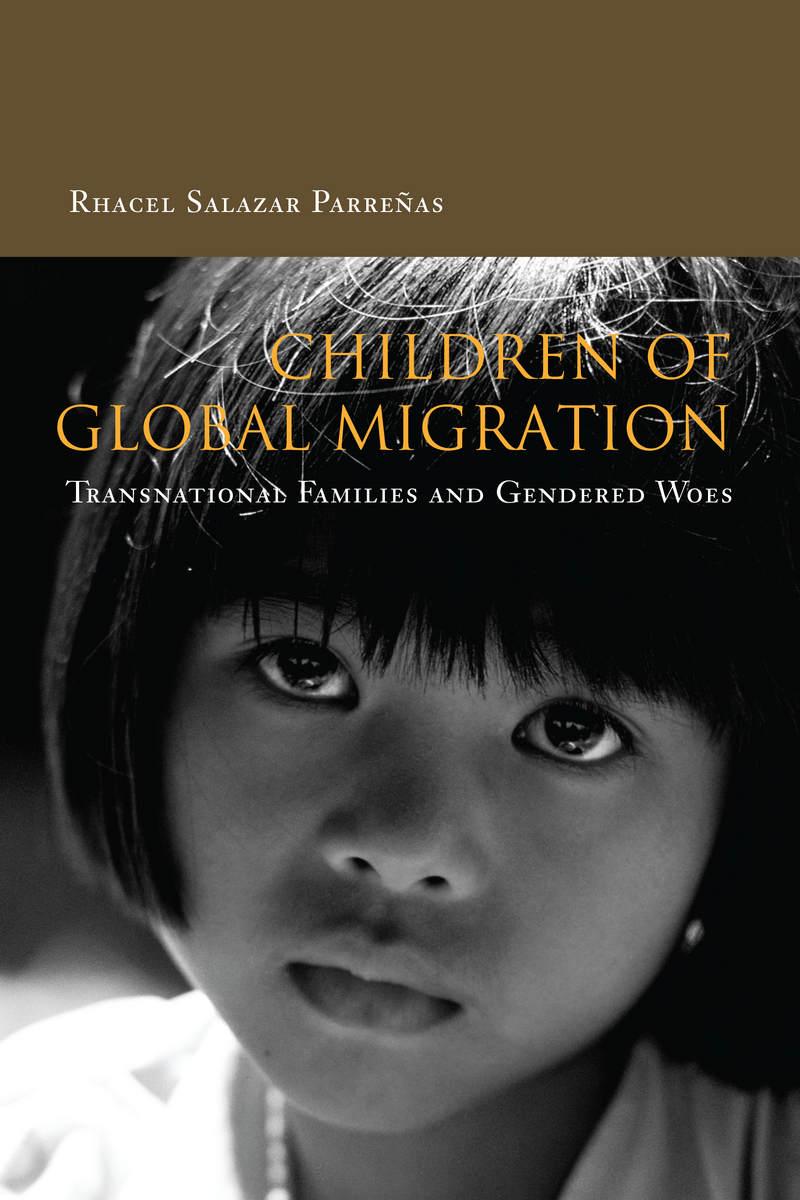
In the Philippines, a dramatic increase in labor migration has created a large population of transnational migrant families. Thousands of children now grow up apart from one or both parents, as the parents are forced to work outside the country in order to send their children to school, give them access to quality health care, or, in some cases, just provide them with enough food. While the issue of transnational families has already generated much interest, this book is the first to offer a close look at the lives of the children in these families.
Drawing on in-depth interviews with the family members left behind, the author examines two dimensions of the transnational family. First, she looks at the impact of distance on the intergenerational relationships, specifically from the children’s perspective. She then analyzes gender norms in these families, both their reifications and transgressions in transnational households. Acknowledging that geographical separation unavoidably strains family intimacy, Parreñas argues that the maintenance of traditional gender ideologies exacerbates and sometimes even creates the tensions that plague many Filipino migrant families.
Płać wygodnie kartą, Klarną, Apple Pay lub Google Pay. Nie jesteś zadowolony? Zawsze masz 14-dniową gwarancję zwrotu pieniędzy. Więcej przeczytasz w naszych warunkach. Masz pytania? Napisz do nas na hello@memmo.org.
Memmo ułatwia naukę – gdziekolwiek jesteś na świecie. U nas znajdziesz podręczniki i sprytne narzędzia do nauki w jednym miejscu: streszczenia, quizy, podcasty i fiszki. A do tego Ted, Twój kumpel do nauki, który odpowie na wszystko, co Cię nurtuje. Ponad 50 000 studentów już tu się uczy – stworzone, byś uczył się szybciej i mniej stresował.