
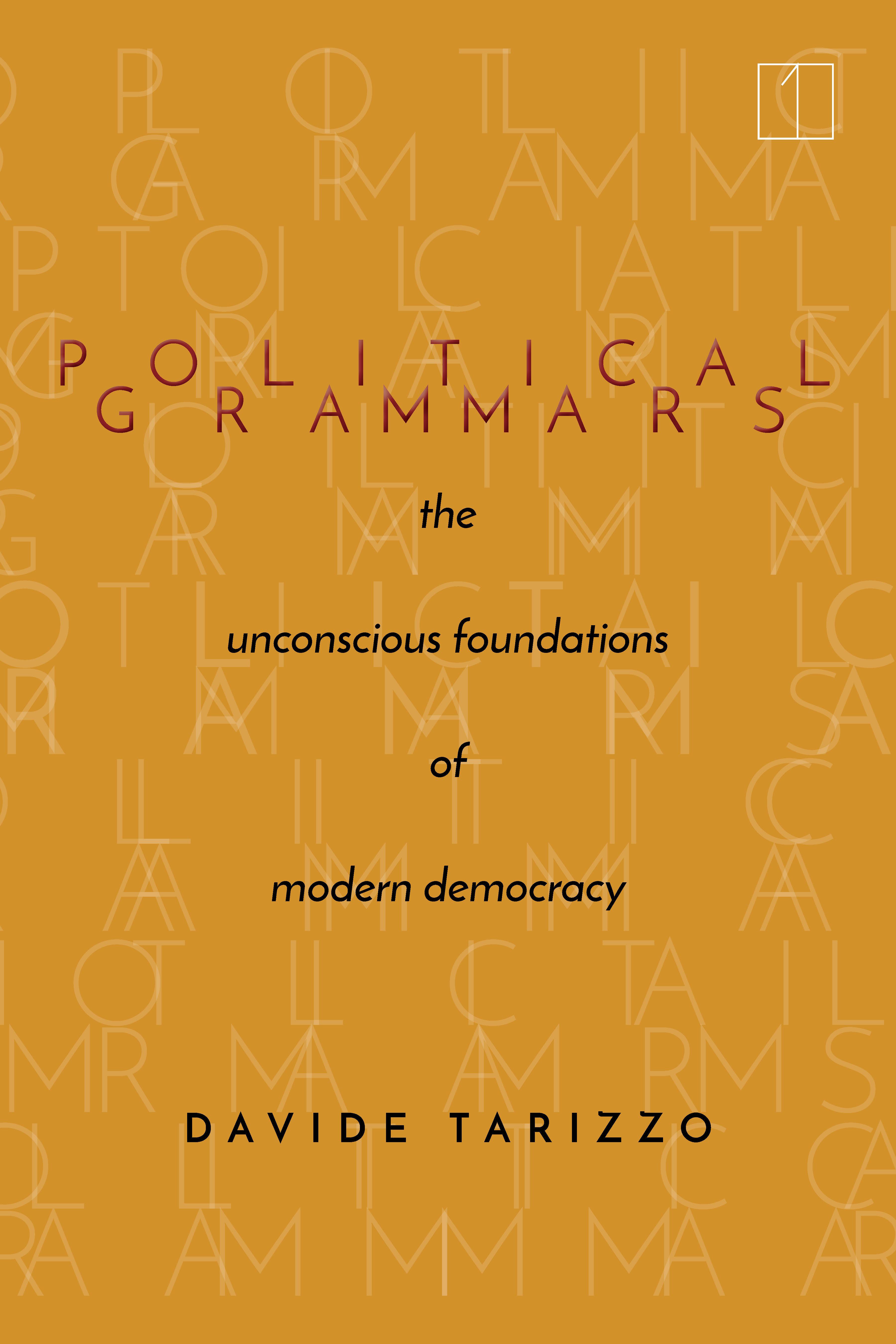
Do we need to be a "people," populus, in order to embrace democracy and live together in peace? If so, what is a populus? Is it by definition a nation? What exactly do we mean by nationality?
In this book, Davide Tarizzo takes up the problem of modern democratic, liberal peoples—how to define them, how to explain their invariance over time, and how to differentiate one people from another. Specifically, Tarizzo proposes that Jacques Lacan's theory of the subject enables us to clearly distinguish between the notion of personal identity and the notion of subjectivity, and that this very distinction is critical to understanding the nature of nations whose sense of nationhood does not rest on any self-evident identity or pre-existent cultural or ethnic homogeneity between individuals. Developing an argument about the birth and rise of modern peoples that draws on the American Declaration of Independence of 1776 and the French Declaration of the Rights of Man and the Citizen of 1789 as examples, Tarizzo introduces the concept of "political grammar"—a phrase that denotes the conditions of political subjectification that enable the enunciation of an emergent "we." Democracy, Tarizzo argues, flourishes when the opening between subjectivity and identity is maintained. And in fact, as he compellingly demonstrates, depending on the political grammar at work, democracy can be productively perceived as a process of never-ending recovery from a lack of clear national identity.
Płać wygodnie kartą, Klarną, Apple Pay lub Google Pay. Nie jesteś zadowolony? Zawsze masz 14-dniową gwarancję zwrotu pieniędzy. Więcej przeczytasz w naszych warunkach. Masz pytania? Napisz do nas na hello@memmo.org.
Memmo ułatwia naukę – gdziekolwiek jesteś na świecie. U nas znajdziesz podręczniki i sprytne narzędzia do nauki w jednym miejscu: streszczenia, quizy, podcasty i fiszki. A do tego Ted, Twój kumpel do nauki, który odpowie na wszystko, co Cię nurtuje. Ponad 50 000 studentów już tu się uczy – stworzone, byś uczył się szybciej i mniej stresował.