
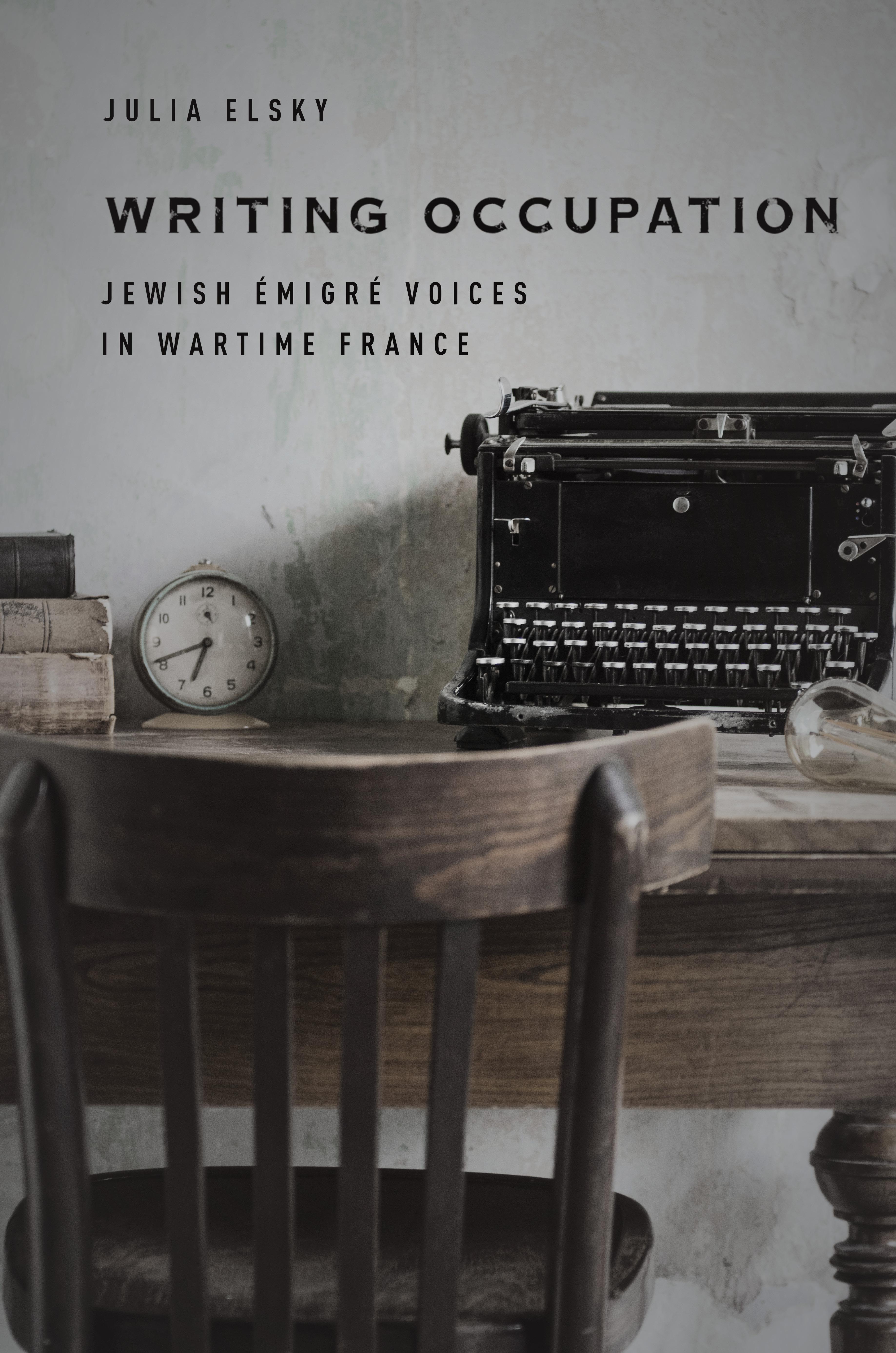
Among the Jewish writers who emigrated from Eastern Europe to France in the 1910s and 1920s, a number chose to switch from writing in their languages of origin to writing primarily in French, a language that represented both a literary center and the promises of French universalism. But under the Nazi occupation of France from 1940 to 1944, these Jewish émigré writers—among them Irène Némirovsky, Benjamin Fondane, Romain Gary, Jean Malaquais, and Elsa Triolet—continued to write in their adopted language, even as the Vichy regime and Nazi occupiers denied their French identity through xenophobic and antisemitic laws. In this book, Julia Elsky argues that these writers reexamined both their Jewishness and their place as authors in France through the language in which they wrote.
The group of authors Elsky considers depicted key moments in the war from their perspective as Jewish émigrés, including the June 1940 civilian flight from Paris, life in the occupied and southern zones, the roundups and internment camps, and the Resistance in France and in London. Writing in French, they expressed multiple cultural, religious, and linguistic identities, challenging the boundaries between center and periphery, between French and foreign, even when their sense of belonging was being violently denied.
Płać wygodnie kartą, Klarną, Apple Pay lub Google Pay. Nie jesteś zadowolony? Zawsze masz 14-dniową gwarancję zwrotu pieniędzy. Więcej przeczytasz w naszych warunkach. Masz pytania? Napisz do nas na hello@memmo.org.
Memmo ułatwia naukę – gdziekolwiek jesteś na świecie. U nas znajdziesz podręczniki i sprytne narzędzia do nauki w jednym miejscu: streszczenia, quizy, podcasty i fiszki. A do tego Ted, Twój kumpel do nauki, który odpowie na wszystko, co Cię nurtuje. Ponad 50 000 studentów już tu się uczy – stworzone, byś uczył się szybciej i mniej stresował.