
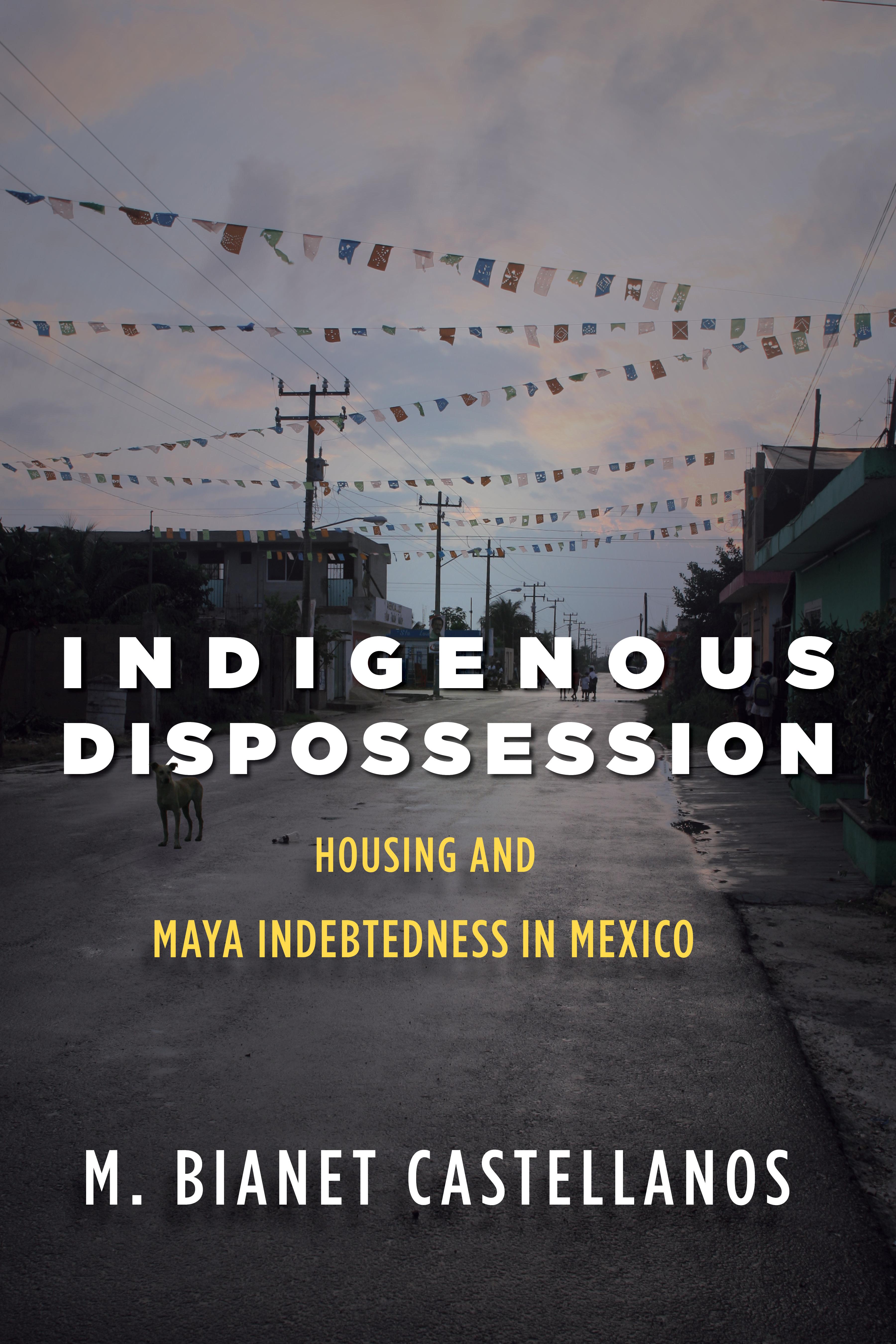
Following the recent global housing boom, tract housing development became a billion-dollar industry in Mexico. At the national level, neoliberal housing policy has overtaken debates around land reform. For Indigenous peoples, access to affordable housing remains crucial to alleviating poverty. But as palapas, traditional thatch and wood houses, are replaced by tract houses in the Yucatán Peninsula, Indigenous peoples' relationship to land, urbanism, and finance is similarly transformed, revealing a legacy of debt and dispossession.
Indigenous Dispossession examines how Maya families grapple with the ramifications of neoliberal housing policies. M. Bianet Castellanos relates Maya migrants' experiences with housing and mortgage finance in Cancún, one of Mexico's fastest-growing cities. Their struggle to own homes reveals colonial and settler colonial structures that underpin the city's economy, built environment, and racial order. But even as Maya people contend with predatory lending practices and foreclosure, they cultivate strategies of resistance—from "waiting out" the state, to demanding Indigenous rights in urban centers. As Castellanos argues, it is through these maneuvers that Maya migrants forge a new vision of Indigenous urbanism.
Płać wygodnie kartą, Klarną, Apple Pay lub Google Pay. Nie jesteś zadowolony? Zawsze masz 14-dniową gwarancję zwrotu pieniędzy. Więcej przeczytasz w naszych warunkach. Masz pytania? Napisz do nas na hello@memmo.org.
Memmo ułatwia naukę – gdziekolwiek jesteś na świecie. U nas znajdziesz podręczniki i sprytne narzędzia do nauki w jednym miejscu: streszczenia, quizy, podcasty i fiszki. A do tego Ted, Twój kumpel do nauki, który odpowie na wszystko, co Cię nurtuje. Ponad 50 000 studentów już tu się uczy – stworzone, byś uczył się szybciej i mniej stresował.