
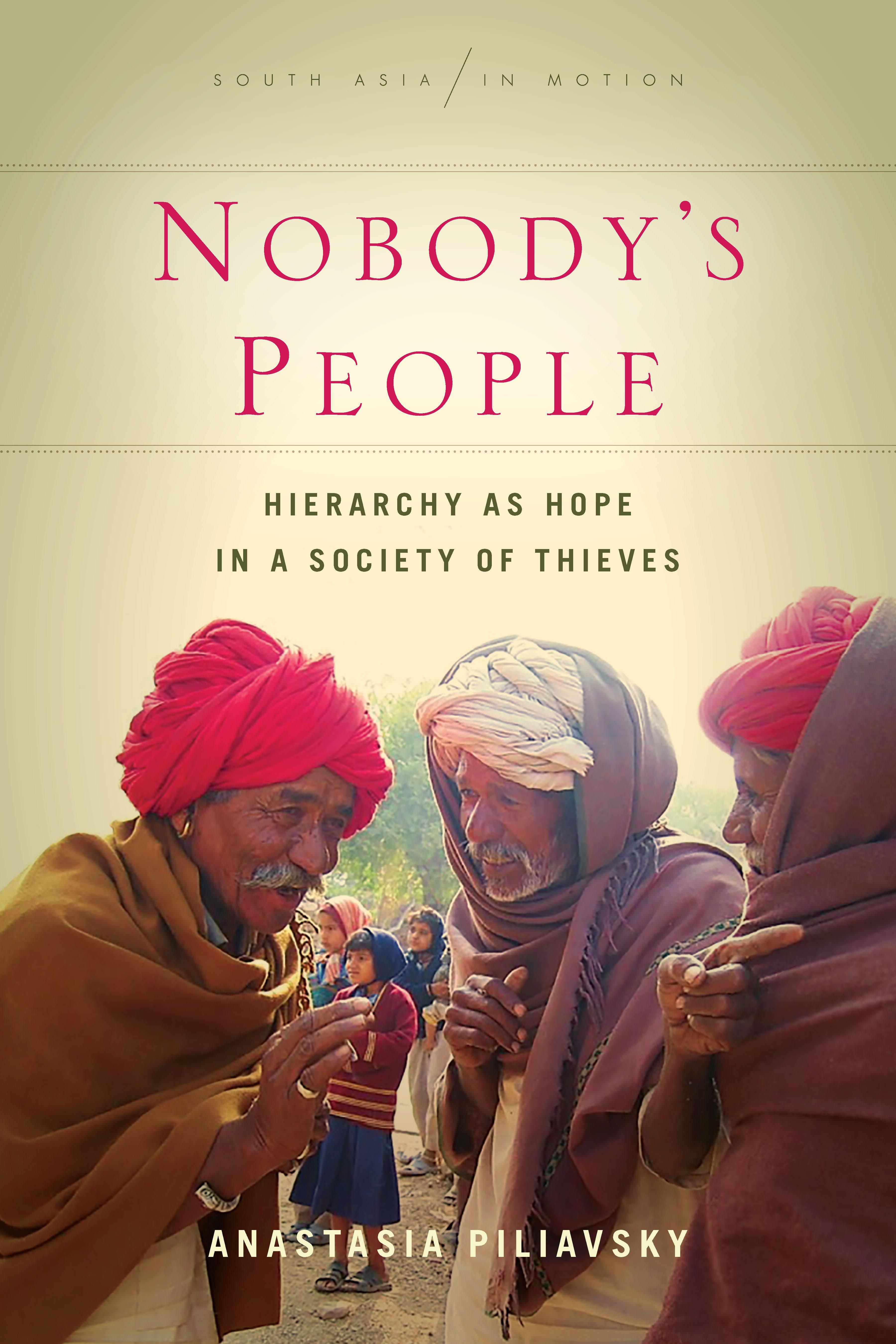
What if we could imagine hierarchy not as a social ill, but as a source of social hope? Taking us into a "caste of thieves" in northern India, Nobody's People depicts hierarchy as a normative idiom through which people imagine better lives and pursue social ambitions. Failing to find a place inside hierarchic relations, the book's heroes are "nobody's people": perceived as worthless, disposable and so open to being murdered with no regret or remorse. Following their journey between death and hope, we learn to perceive vertical, non-equal relations as a social good, not only in rural Rajasthan, but also in much of the world—including settings stridently committed to equality. Challenging egalo-normative commitments, Anastasia Piliavsky asks scholars across the disciplines to recognize hierarchy as a major intellectual resource.
Płać wygodnie kartą, Klarną, Apple Pay lub Google Pay. Nie jesteś zadowolony? Zawsze masz 14-dniową gwarancję zwrotu pieniędzy. Więcej przeczytasz w naszych warunkach. Masz pytania? Napisz do nas na hello@memmo.org.
Memmo ułatwia naukę – gdziekolwiek jesteś na świecie. U nas znajdziesz podręczniki i sprytne narzędzia do nauki w jednym miejscu: streszczenia, quizy, podcasty i fiszki. A do tego Ted, Twój kumpel do nauki, który odpowie na wszystko, co Cię nurtuje. Ponad 50 000 studentów już tu się uczy – stworzone, byś uczył się szybciej i mniej stresował.