
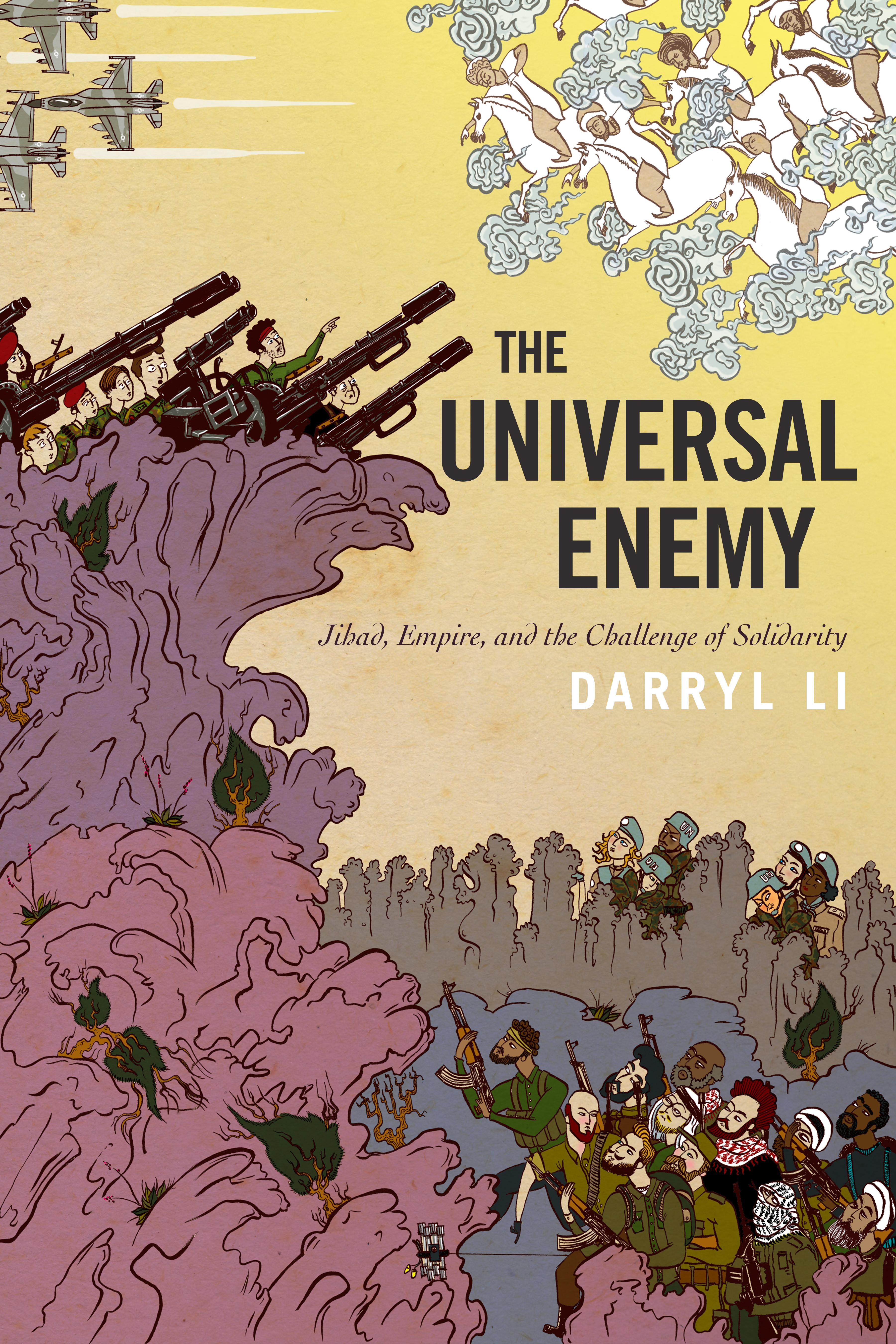
No contemporary figure is more demonized than the Islamist foreign fighter who wages jihad around the world. Spreading violence, disregarding national borders, and rejecting secular norms, so-called jihadists seem opposed to universalism itself. In a radical departure from conventional wisdom on the topic, The Universal Enemy argues that transnational jihadists are engaged in their own form of universalism: these fighters struggle to realize an Islamist vision directed at all of humanity, transcending racial and cultural difference.
Anthropologist and attorney Darryl Li reconceptualizes jihad as armed transnational solidarity under conditions of American empire, revisiting a pivotal moment after the Cold War when ethnic cleansing in the Balkans dominated global headlines. Muslim volunteers came from distant lands to fight in Bosnia-Herzegovina alongside their co-religionists, offering themselves as an alternative to the US-led international community. Li highlights the parallels and overlaps between transnational jihads and other universalisms such as the War on Terror, United Nations peacekeeping, and socialist Non-Alignment. Developed from more than a decade of research with former fighters in a half-dozen countries, The Universal Enemy explores the relationship between jihad and American empire to shed critical light on both.
Płać wygodnie kartą, Klarną, Apple Pay lub Google Pay. Nie jesteś zadowolony? Zawsze masz 14-dniową gwarancję zwrotu pieniędzy. Więcej przeczytasz w naszych warunkach. Masz pytania? Napisz do nas na hello@memmo.org.
Memmo ułatwia naukę – gdziekolwiek jesteś na świecie. U nas znajdziesz podręczniki i sprytne narzędzia do nauki w jednym miejscu: streszczenia, quizy, podcasty i fiszki. A do tego Ted, Twój kumpel do nauki, który odpowie na wszystko, co Cię nurtuje. Ponad 50 000 studentów już tu się uczy – stworzone, byś uczył się szybciej i mniej stresował.