
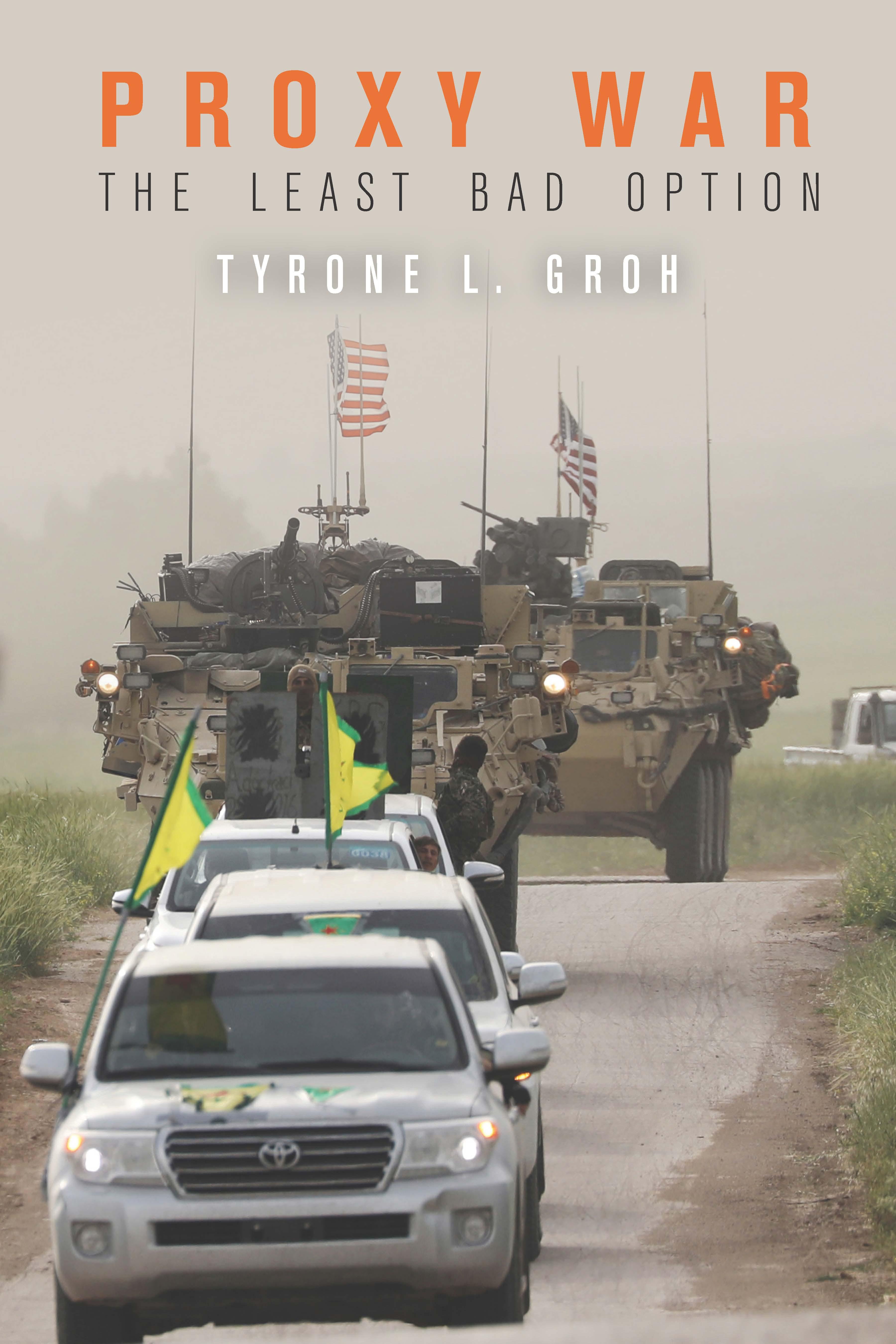
The U.S. has indirectly intervened in international conflicts on a relatively large scale for decades. Yet little is known about the immediate usefulness or long-term effectiveness of contemporary proxy warfare. In cases when neither direct involvement nor total disengagement are viable, proxy warfare is often the best option, or, rather, the least bad option. Tyrone L. Groh describes the hazards and undesirable aspects of this strategy, as well as how to deploy it effectively.
Proxy War explores the circumstances under which indirect warfare works best, how to evaluate it as a policy option, and the possible risks and rewards. Groh offers a fresh look at this strategy, using uncommon and understudied cases to test the concepts presented. These ten case studies investigate and illustrate the different types and uses of proxy war under varying conditions. What arises is a complete theoretical model of proxy warfare that can be applied to a wide range of situations. Proxy war is here to stay and will likely become more common as players on the international stage increasingly challenge U.S. dominance, making it more important than ever to understand how and when to deploy it.
Płać wygodnie kartą, Klarną, Apple Pay lub Google Pay. Nie jesteś zadowolony? Zawsze masz 14-dniową gwarancję zwrotu pieniędzy. Więcej przeczytasz w naszych warunkach. Masz pytania? Napisz do nas na hello@memmo.org.
Memmo ułatwia naukę – gdziekolwiek jesteś na świecie. U nas znajdziesz podręczniki i sprytne narzędzia do nauki w jednym miejscu: streszczenia, quizy, podcasty i fiszki. A do tego Ted, Twój kumpel do nauki, który odpowie na wszystko, co Cię nurtuje. Ponad 50 000 studentów już tu się uczy – stworzone, byś uczył się szybciej i mniej stresował.