
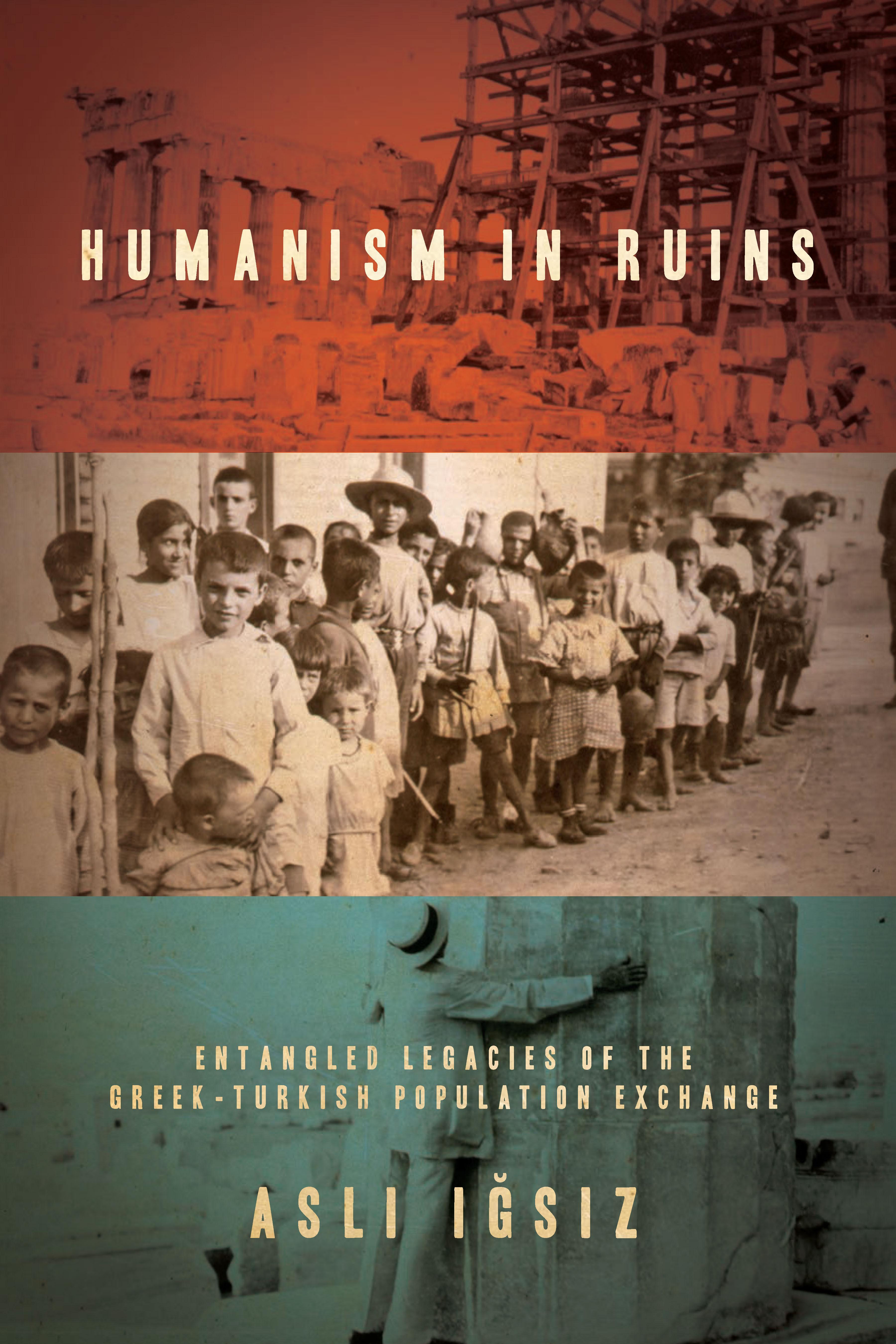
The 1923 Greek-Turkish population exchange forcibly relocated one and a half million people: Muslims in Greece were resettled in Turkey, and Greek Orthodox Christians in Turkey were moved to Greece. This landmark event set a legal precedent for population management on the basis of religious or ethnic difference. Similar segregative policies—such as creating walls, partitions, and apartheids—have followed in its wake. Strikingly, the exchange was purportedly enacted as a means to achieve peace.
Humanism in Ruins maps the links between liberal discourses on peace and the legacies of this forced migration. Aslı Iğsız weaves together past and present, making visible the effects in Turkey across the ensuing century, of the 1923 exchange. Liberal humanism has responded to segregative policies by calling for coexistence and the acceptance of cultural diversity. Yet, as Iğsız makes clear, liberal humanism itself, with its ahistorical emphasis on a shared humanity, fails to confront an underlying racialized logic. This far-reaching and multilayered cultural history investigates what it means to be human—historically, socially, and politically. It delivers an urgent message about the politics of difference at a time when the reincarnation of fascism in different parts of the world invites citizens to participate in perpetuating a racialized and unequal world.
Płać wygodnie kartą, Klarną, Apple Pay lub Google Pay. Nie jesteś zadowolony? Zawsze masz 14-dniową gwarancję zwrotu pieniędzy. Więcej przeczytasz w naszych warunkach. Masz pytania? Napisz do nas na hello@memmo.org.
Memmo ułatwia naukę – gdziekolwiek jesteś na świecie. U nas znajdziesz podręczniki i sprytne narzędzia do nauki w jednym miejscu: streszczenia, quizy, podcasty i fiszki. A do tego Ted, Twój kumpel do nauki, który odpowie na wszystko, co Cię nurtuje. Ponad 50 000 studentów już tu się uczy – stworzone, byś uczył się szybciej i mniej stresował.