
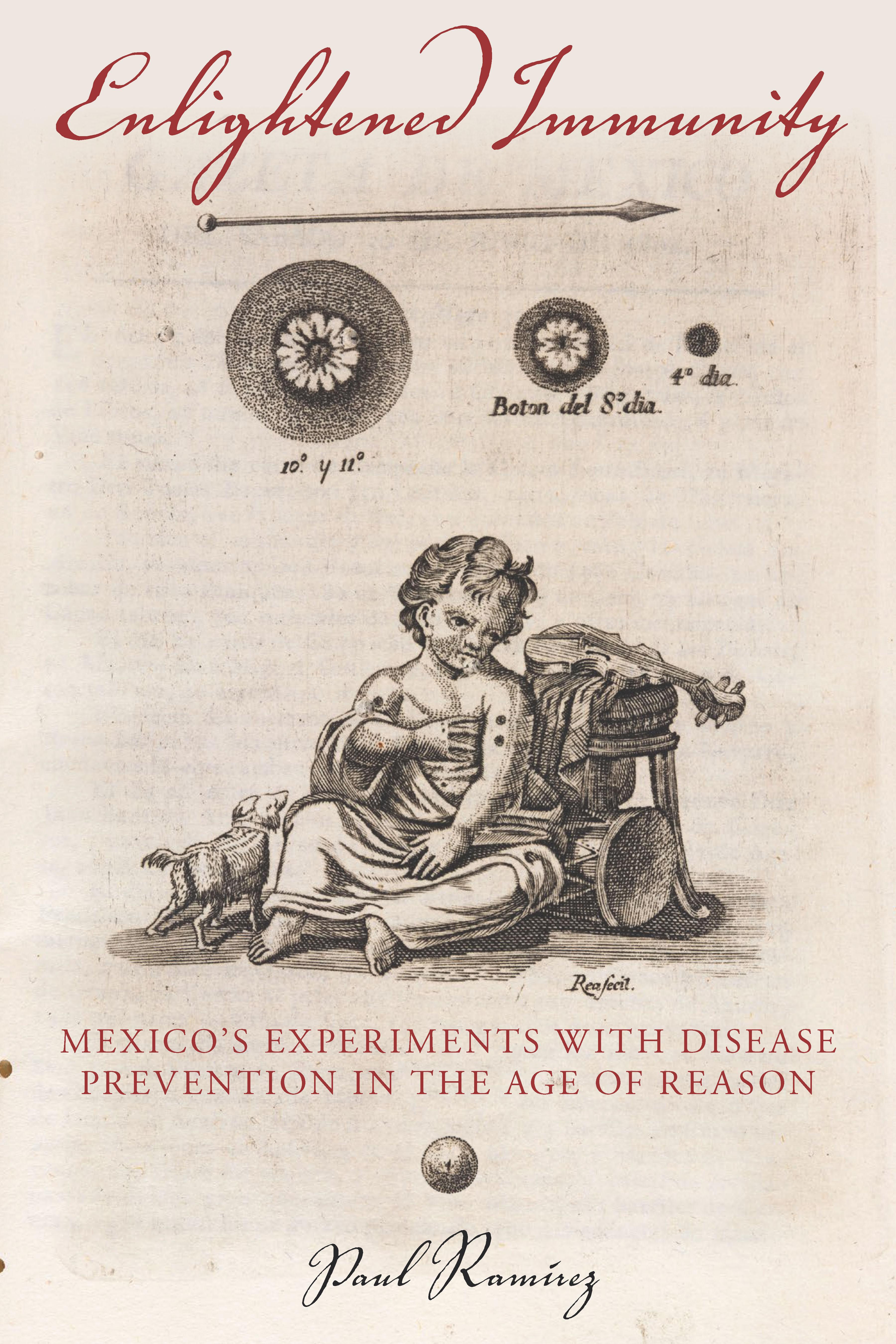
In eighteenth-century Mexico, outbreaks of typhus and smallpox brought ordinary residents together with administrators, priests, and doctors to restore stability and improve the population's health. This book traces the monumental shifts in preventive medicine and public health measures that ensued. Reconstructing the cultural, ritual, and political background of Mexico's early experiments with childhood vaccines, Paul Ramírez steps back to consider how the design of public health programs was thoroughly enmeshed with religion and the church, the spread of Enlightenment ideas about medicine and the body, and the customs and healing practices of indigenous villages.
Ramírez argues that it was not only educated urban elites—doctors and men of science—whose response to outbreaks of disease mattered. Rather, the cast of protagonists crossed ethnic, gender, and class lines: local officials who decided if and how to execute plans that came from Mexico City, rural priests who influenced local practices, peasants and artisans who reckoned with the consequences of quarantine, and parents who decided if they would allow their children to be handed over to vaccinators. By following the multiethnic and multiregional production of medical knowledge in colonial Mexico, Enlightened Immunity explores fundamental questions about trust, uncertainty, and the role of religion in a moment of discovery and innovation.
Płać wygodnie kartą, Klarną, Apple Pay lub Google Pay. Nie jesteś zadowolony? Zawsze masz 14-dniową gwarancję zwrotu pieniędzy. Więcej przeczytasz w naszych warunkach. Masz pytania? Napisz do nas na hello@memmo.org.
Memmo ułatwia naukę – gdziekolwiek jesteś na świecie. U nas znajdziesz podręczniki i sprytne narzędzia do nauki w jednym miejscu: streszczenia, quizy, podcasty i fiszki. A do tego Ted, Twój kumpel do nauki, który odpowie na wszystko, co Cię nurtuje. Ponad 50 000 studentów już tu się uczy – stworzone, byś uczył się szybciej i mniej stresował.